

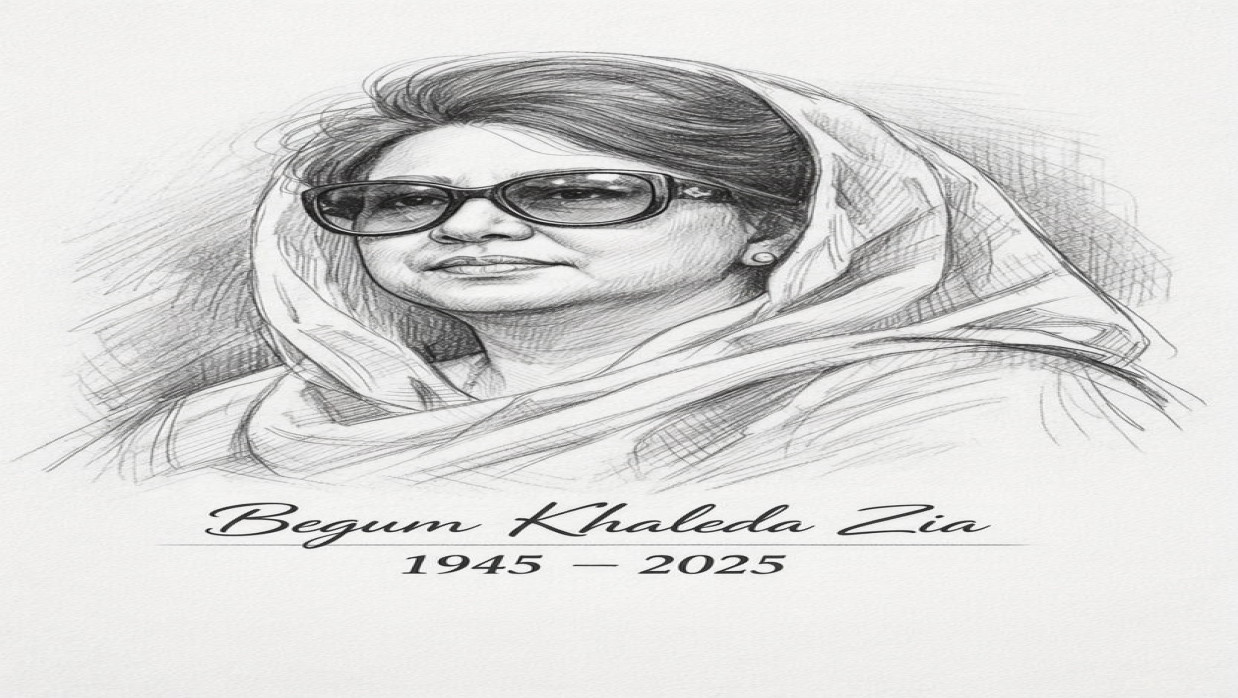
Farewell, Khaleda Zia (1945–2025)
Bangladesh lost a historic leader. Sheikh Hasina extended her “heartfelt sympathy” to Khaleda Zia’s family. It’s not just a former prime minister and an opposition leader. Bangladeshis have lost the last veritable giant of the liberation war generation in politics.
Begum Khaleda Zia died today in Dhaka. For over four decades, the Awami League has faced its sometimes reluctant, sometimes intensely partisan leadership. In the center of Bangladesh’s political gravity, she has remained: loved by millions and hated by many, but ignored by none.
In one sense, she was the Bangladesh of that time. From wealth to grassroots activism, from national unity to persistent conflicts, there was enough to keep hope and disappointment alive together in her story.
Khaleda Zia: From Private Life to National Destiny
Khaleda Zia was born in Dinajpur in 1945 to an affluent family. She is a politician who did not become so by participating in student politics or by being inspired by any movement of the time. She did not have any leaning towards politics in her life.
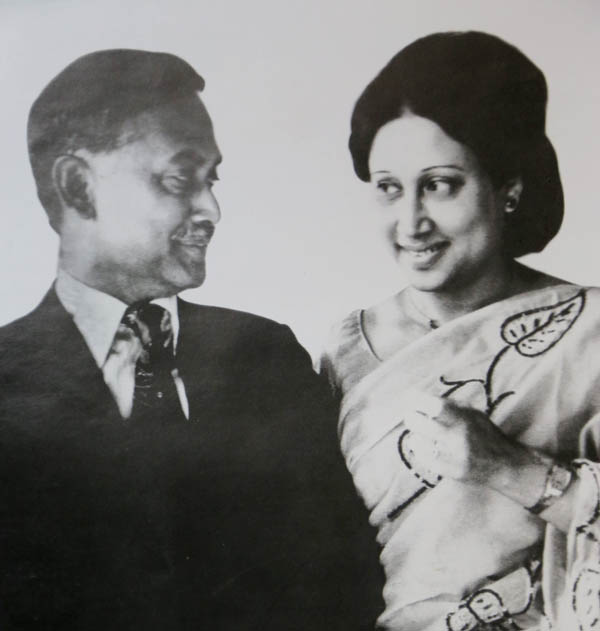
The arrow that ended Khaleda Zia’s private life trajectory also fired Bangladesh’s most dominant women’s era. On May 30, 1981, Khaleda Zia’s husband, then-president Ziaur Rahman, was assassinated. With that bullet, the course of Khaleda Zia’s life and Bangladeshi politics took a decisive turn.
The Ziaur Rahman legacy is like a huge question mark. A brave fighter of freedom, an officer in the Liberation War of 1971, an armed forces General and the Chief of Staff, and the architect of the Bangladesh Nationalist Party (BNP). A few days after his death, Khaleda Zia was not sure she would last in grief and turbulent times.
Who could have thought back then that Khaleda Zia would not only survive but dominate Bangladeshi politics for the next three decades? It is true, yet it is true. Over the next decade, Khaleda Zia established herself as the public face and most important opposition to General Ershad’s rule.
The 1990 uprising and the eventual fall of the Ershad regime were made possible by the patient organization and momentum Khaleda Zia developed in Dhaka and elsewhere. It is at this juncture that she begins to shed the mantle of a political widow and become a public leader.
The Years of Premiership and Democracy
Khaleda Zia served three terms as Prime Minister: 1991–1996 and 2001–2006. She is one of Bangladesh’s longest-serving heads of government. Her first term, in particular, holds historical importance.
In Bangladesh, she led a new political phase in 1991, returning the country to parliamentary democracy after a decade of military and quasi-military rule. In her terms, the presidency was downsized. Executive authority returned to Parliament. And democratic rules and institutions were re-established.
Her government focused on Bangladeshi nationalism, private-sector-led economic growth, and rural development. Expansion of infrastructure, emphasis on education, and women’s public and professional lives were the hallmarks of Khaleda Zia’s three terms in office. Bangladesh’s foreign policy also expanded to Muslim-majority countries, neighbors, and the developing world.
Corruption charges, confrontational political culture, and governance paralysis marred her second and third terms. The intense rivalry between Khaleda Zia and Hasina, both women leaders, has been a driving force in Bangladesh politics for more than two decades. The result was often a polarized society, fragile institutions, and an entrenched zero-sum political culture.
In this regard, the political situation during the Awami League's dominance is nothing but a continuation of the past. Khaleda Zia’s death indeed changes everything, but it does not change the past.
Bangladeshis, including the Awami League, who believe in Bangladeshi nationalism, will have to come together for reconciliation rather than succumb to triumphalist euphoria. Khaleda Zia was not the villain. She was not a saint, either—just a human being like us, whose life is closely intertwined with Bangladesh’s history.
Khaleda Zia: A Woman in a Man’s Political World
Khaleda Zia was a reluctant leader in a political culture dominated by men. Khaleda Zia is not remembered for flamboyant oratory but for longevity. She survived because she commanded immense and enduring moral legitimacy.
Khaleda Zia, the symbolic icon, has been the central source of her authority. She represented both a link to the war’s sacrifices and uncertainties and a defender of the liberal democratic culture born in the 1990s.
Sheikh Hasina, another woman leader, was, of course, Khaleda Zia’s counterpart. In changing Bangladesh, they both played a role. Khaleda Zia was a pioneering figure of that generation; she opened a space for women in South Asian politics.
With all their differences, Sheikh Hasina and Khaleda Zia shattered long-held stereotypes about leadership in Bangladeshi society. Khaleda Zia’s political activism has inspired women to take up positions in public service and civic action. While many social biases remain to be addressed, it is also undeniable that her presence on the political stage has allowed others.
The Long Descent: Trials, Prison, and Illness
Khaleda Zia’s last decade was a long, cruel, and painful fall. Khaleda Zia was sentenced in two successive cases related to corruption charges. It was regarded as politically motivated by many international observers, including the US Department of State.
Years of incarceration took a heavy toll on her health. Denied access to advanced medical care, she suffered from multiple ailments. Her health only worsened in the last year.
To the despair of her supporters and followers, her incarceration became a symbol of the perceived erosion of civil society and judicial independence.
Khaleda Zia receded from public life in her last years. She spent the last few years of her life confined to a wheelchair without much political or public voice. However, in the absence as in life, she remained a deeply polarizing force in Bangladesh.
In her life and death, Bangladeshis will never forget her as a mother figure for many and a symbol of unchecked power and privilege for many others.
A Measured Farewell
With Khaleda Zia’s death, a political era is over. The end of an epoch is marked by a leader who personally witnessed Bangladesh’s journey from post-war uncertainty to electoral democracy.
The political generation that Khaleda Zia represented was being marginalized and outpaced by the younger generation. It is a generation of coups, counter-coups, and social movements.
For the Bangladesh Nationalist Party (BNP), Khaleda Zia’s death is a moment of loss and a massive existential question. Can a once-powerful organization survive without its unifying, foundational leader? Can it evolve with or without Khaleda Zia?
In death, as in life, Khaleda Zia must be granted dignity. No matter which side of the political divide you are on, that is the least you can do for a person whose life has been so intimately connected to the country’s. She was there in times when Bangladesh’s democracy was still fragile. She lost her husband to violence and held on. She was assaulted and jailed, but did not give up.
Bangladeshis must at least allow themselves to think: A few people are lucky enough to get the dignity and remembrance they deserve in death.
Khaleda Zia is no longer. So, when history and the future collide in death, Bangladeshis have a chance to heal wounds. We can repair our frayed democratic culture, or we can do otherwise. We can remain a mature nation, or we cannot.
Khaleda Zia did not like to compromise. She was not of this rarefied post-liberation era either. She had survived long enough to mark a generation. She can rest in peace. And so should the Bangladesh she fought to build, for better and for worse.


0 Comments
LEAVE A COMMENT
Your email address will not be published