

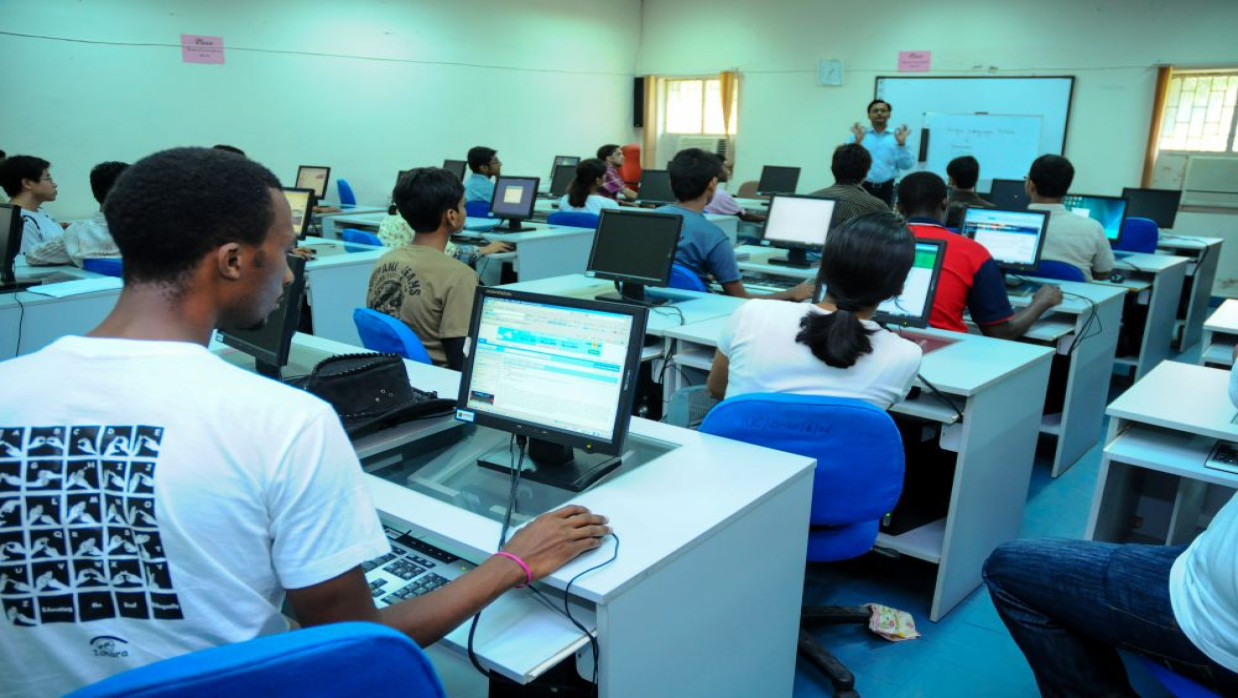
"Education is not the filling of a pail, but the lighting of a fire." — William Butler
Author's Perspective
This article combines elements of academic reflection and personal testimony about three decades of experience in higher education. Over this period, I was fortunate to teach classes, conduct research, advise students and junior researchers, and serve as an academic administrator in Asia, Europe, the Middle East, Australia, and North America. In my experience, shaped by interactions with colleagues and students from different cultures and academic traditions, I have consistently encountered evidence that confirms a belief that has been a cornerstone of my professional activities. Indeed, higher education has purposes that go far beyond the mere imparting of knowledge.
The first spark for writing this essay came to me during my tenure as a Visiting Professor at North South University (NSU) in Dhaka this summer. During a lecture event organized by the Institutional Quality Assurance Cell (IQAC) of NSU, I had the opportunity to listen to a speech by a distinguished scholar from Purdue University, USA, titled “Faculty Plan: Teach to Inspire, Research to Transform.” The lecture provided important lessons in understanding the changing dynamics between teaching, research, faculty development, and transformation of institutions in today’s higher education. However, the speech raised certain concerns that fell outside its purview but which were influenced by my experiences as a teacher, researcher, university administrator, and academician across five continents. This article is my attempt to carry the discussion forward.
That presentation went beyond being just an academic affair, serving as a spark for reflection on a topic I have struggled with throughout my career. What makes a great university different from an ordinary university? In my experience, the answer to that question can never be found by looking at the institution's physical appearance, ranking, accreditation, or number of publications. No, what makes a university great is its ability to inspire its students to think for themselves, motivate its faculty to conduct important research, and produce knowledge that transforms society.
This belief is reinforced by my observations of great universities around the world. These institutions are great not because they have large budgets and state-of-the-art facilities, but because they have built a culture of academics in which learning and research go hand in hand to achieve greatness. The most effective teachers that I know are not just experts in their disciplines but great teachers who turn their classes into places of inquiry, make students think and innovate, and build their self-confidence.
Consequently, this essay is not written as an abstract discourse on higher education. Rather, it aims to connect theory on both education and leadership with practice, drawing on the author’s experience working within the international higher education system and observing it up close. These perspectives have been developed through decades of teaching undergraduate and graduate students, designing curricula, managing academic programs, participating in university accreditation and quality assurance processes, conducting research across various disciplines, and interacting with institutions operating in different cultural, political, and institutional environments.
The article addresses the South Asian region, which benefits from an abundance of intellectual resources, a youthful population, and strong educational potential. However, the region also poses its own set of problems, including inequities in education, graduate employability, research potential, governance, technology adaptation, and equity in higher education. Meeting these challenges calls for much more than a piecemeal approach; rather, it requires a fresh perspective on the role universities should play in this context.
In an era when education is evolving amid artificial intelligence, digitization, globalization, and dynamic labor markets, universities should emphasize their role in preparing students for the future and embrace opportunities for innovation. They should keep developing their traditional role of fostering critical thinking, ethics, creativity, and civic responsibility, preparing their students for the connected world of the future. Just as importantly, universities should conduct research that will make an impact not only within academia but also on policies, institutions, businesses, and the quality of human life.
It is my hope that the ideas presented in this article will contribute to an ongoing dialogue among educators, researchers, university leaders, policymakers, and students across South Asia and beyond. More importantly, I hope they encourage a renewed commitment to building universities that do far more than award degrees. The universities of the future must inspire minds, transform lives, advance knowledge, and serve humanity. When inspirational teaching is united with transformative research, higher education fulfills its highest calling not only preparing students for successful careers, but empowering them to become thoughtful citizens, ethical leaders, compassionate innovators, and architects of a more just, prosperous, and sustainable world.
Asia's Moment of Educational Transformation
Home to roughly one-quarter of humanity and boasting one of the youngest populations on earth, South Asia sees millions of young graduates enter universities each year with dreams of entrepreneurship, science, journalism, engineering, medicine, business management, teaching, and governance. These dreams constitute a significant strategic resource of the region. But the million-dollar question is this: are our universities ready to prepare these youth for a fast-changing world? The answer is both positive and negative.
In all of Bangladesh, India, Pakistan, Sri Lanka, Nepal, Bhutan and the Maldives, there has been rapid expansion of higher education in recent years, including the establishment of new universities, an increase in the number of publications, the incorporation of information technology into classrooms, and a greater number of international partnerships. However, growth does not necessarily mean excellence, as many higher education institutions still suffer from traditional pedagogical methods, a poor research culture, inadequate links with industry, bureaucracy, underfunding, graduate unemployment, and a lack of alignment with the needs of the Fourth Industrial Revolution.
The knowledge-based economy of today recognizes nations not just for producing degree holders but for producing innovators. It requires critical thinking skills rather than mere memorization, imagination over obedience, and innovative problem-solving over administrative tasks. This places an immense obligation before the universities. They need to educate students not only to obtain a degree but to solve problems, create opportunities, and help make democracy better for millions of people.
The future of South Asia will depend largely upon whether its universities can embrace a new academic philosophy teaching to inspire and research to transform. Teaching awakens human potential. Research transforms societies. Together they define the true purpose of higher education.
The University Beyond the Classroom
Historically, universities have served as guardians of civilization. From the ancient centers of learning at Nalanda, Takshashila, and Vikramashila to today's globally connected research universities, institutions of higher education have preserved knowledge while generating new ideas that shaped civilizations. The role of the modern university, however, has become far more expansive. Universities are expected to educate ethical leaders, produce innovative research, support national development, strengthen democratic governance, advance technological innovation, encourage entrepreneurship, preserve cultural heritage, and address pressing social challenges. The university is no longer simply a place where knowledge is transmitted.
It is where knowledge is created.
It is where future leaders are shaped.
It is where society imagines tomorrow.
Teaching That Changes Lives
Every individual can remember at least one teacher who altered the direction of his or her life.
It was probably not because that professor possessed the most impressive PowerPoint presentation. Nor was it because the examinations were easy. Rather, it was because that teacher inspired confidence, challenged assumptions, encouraged curiosity, and believed in students before they believed in themselves. That is the essence of inspirational teaching. Excellent teachers do more than just teach the lessons.
They inspire possibilities.
They turn doubt into certainty.
They change fear into curiosity.
They teach students to think freely rather than memorize.
The greatest compliment any educator can receive is not that students remembered every lecture, but that they continued learning long after graduation.
Moving Beyond Memorization
One of the greatest challenges confronting South Asian education remains the excessive emphasis on examination-oriented learning. For generations, educational success has often been measured by memorization, standardized examinations, and grade point averages. While assessment remains essential, genuine education requires much more. Employers are now looking for employees who can solve difficult problems, communicate effectively, work in multicultural teams, analyze information, adapt to new technology, and make sound judgments in ethical situations. These skills cannot be learned through mere rote learning.
- These skills involve inquiry.
- Critical thinking.
This calls for redesigning learning spaces at universities so that students are not mere passive recipients but active participants.
Learning Through Discovery
Educational theorists have long argued that students learn best when they actively construct knowledge. Jean Piaget demonstrated that learning occurs through intellectual development.
Vygotsky believed in cooperation and guided instruction. Dewey maintained that education should be based on experience and democracy. Kolb subsequently illustrated how learning is meaningful through the experience-reflection-concept-application cycle. All these theories ultimately focus on one concept:
Students will retain what they learn much more than what they memorize. The business major learns about leadership in tackling organizational problems. Journalism students learn about ethics when dealing with ethical dilemmas. Engineering students learn innovation while creating solutions. Medical students learn compassion while dealing with patients. Communication students gain research skills through community studies. Learning becomes transformational when theory meets practice.
The Professor as Mentor, Coach, and Leader
In other words, a professor of the 21st century holds many positions at once.
- Community leader.
As stated by transformational leadership theory, an ideal leader inspires their followers through vision communication, innovation, integrity, and empowerment. In the same way, an ideal teacher is the one who displays such features. Students succeed when professors challenge them intellectually but care about them personally. They become more resilient when professors compliment effort rather than perfection. They become more creative when failure is treated as an opportunity to learn rather than a reason for discouragement. The classroom becomes not merely a place for instruction but a community of intellectual growth.
Creating Motivated Learners
Psychologists Edward Deci and Richard Ryan explain that lasting motivation arises from three essential human needs:
- Autonomy—students should have meaningful opportunities to make choices.
- Competence—students should believe they can master difficult material.
- Relatedness—students should feel respected and connected to their academic community.
When these needs are fulfilled, learning becomes internally motivated rather than externally imposed. Students begin asking questions voluntarily. They pursue research independently.
They become lifelong learners.
Building a Growth Mindset
One of the most influential educational ideas of recent decades is Carol Dweck's concept of the Growth Mindset. Students who understand that intelligence develops through sustained effort become more willing to embrace challenges. Instead of saying, "I cannot do research,"
they learn to say, "I have not yet learned how to conduct excellent research." A slight shift in attitude can have a huge impact on educational achievement.
- Great teachers instill resilience.
- They encourage perseverance.
- They embrace mistakes.
- They foster experimentation.
- Innovation is born out of fearlessness.
- Research as a Driving Force for National Development
- Teaching develops people.
- Research develops nations.
All major technological inventions, medical discoveries, policy innovations, communications revolutions, and business changes have resulted from research. Research is therefore not an academic luxury. It is a national necessity. Countries that invest heavily in research consistently lead the world in innovation, productivity, entrepreneurship, and economic competitiveness.
South Asia possesses extraordinary intellectual talent. What it requires is greater investment in research ecosystems that encourage interdisciplinary collaboration, international partnerships, laboratory development, data infrastructure, and faculty scholarship.
The research process should cover topics related to:
- Climate change resilience;
- Food security;
- Renewable energy;
- Digital governance;
- Artificial intelligence;
- Public health;
- Urban development;
- Agriculture innovations;
- Media literacy;
- Misinformation;
- Water security;
- Poverty reduction; and
- Sustainable entrepreneurship.
Integrating Research into Every Classroom
One of the defining characteristics of world-class universities is the integration of teaching and research. Students should not wait until graduate school to become researchers.
Undergraduate education should expose students to:
- research methodology;
- literature reviews;
- data collection;
- statistical analysis;
- field investigations;
- policy analysis;
- innovation projects;
- entrepreneurship competitions;
- community engagement; and
- scholarly presentations.
Students who conduct research develop confidence, analytical thinking, evidence-based reasoning, teamwork, and intellectual independence. Research transforms education from information consumption into knowledge creation.
Social Business as a Laboratory for Innovation, Ethical Leadership, and National Development
The transformation of higher education in South Asia also requires a closer relationship between academic learning and the urgent social and economic challenges confronting the region. One powerful framework for creating this connection is Social Business, a model that combines entrepreneurial discipline with a clearly defined social purpose. Unlike conventional businesses, which are primarily organized to maximize financial returns for owners or shareholders, Social Business seeks to solve human problems through financially sustainable and innovative enterprises. It applies the creativity, efficiency, and accountability of business to such challenges as poverty, unemployment, healthcare, education, food security, environmental degradation, financial exclusion, and unequal access to technology. In this sense, Social Business offers universities far more than an additional subject in entrepreneurship. It provides a practical educational philosophy through which students can learn to convert knowledge into social progress.
For students, Social Business can make the classroom a live lab of innovation where, instead of learning about issues such as poverty, unemployment, inequality in healthcare, climate vulnerability, or education exclusion from textbooks, they can study them firsthand, analyze the root causes of these problems, and come up with innovative solutions. A business student can devise a low-cost way to serve rural entrepreneurs. An engineering student can devise low-cost, renewable energy technologies for poor communities. A student of public health can devise a sustainable business of preventive health care. A communications or journalism student can develop a media-literacy campaign to combat misinformation. And a student of agriculture can devise a marketplace between poor farmers and consumers.
In doing so, they can realize that innovation does not just mean coming up with new gadgets or starting new companies. Innovation also means developing better solutions to social problems.
Social Business is especially important because it incorporates many of the theories of education mentioned above. Social Business follows experiential learning theory in that it involves moving from experience and observation to reflection, conception, and application. It involves constructivist learning theory because it allows students to develop knowledge by investigating, collaborating, and solving problems. It fosters self-determination by allowing students to be autonomous in choosing problems of importance, developing competence through practice, and forming connections with communities. It also encourages a growth mindset in that students come to see obstacles, failed prototypes, and bad solutions as a natural part of innovation.
But perhaps the most important thing about Social Business is that it encourages ethical leadership. Students are taught that leadership is not just about having the power to control others and make institutions profitable. True leaders must have moral imagination; they must understand the problems of others and work towards positive change.
Social Business allows students to ask questions which might otherwise remain unasked in conventional business studies:
Who benefits from this particular business model?
Whose needs have yet to be met?
Is it possible to make this particular solution lucrative without exploiting the vulnerable individuals?
What other standards of success apart from profitability could we adopt?
What kind of responsibilities come along with the entrepreneurship or the establishment of the business?
Through this series of questions, students learn to analyze decisions made by the business, not only in terms of economics but in humanistic, environmental, and ethical standards as well. Students learn that being profitable and socially responsible does not imply two opposite concepts; rather, being profitable becomes the tool for fulfilling the mission of the social business.
It is possible for Social Business to contribute to interdisciplinarity in learning as well. Social problems transcend any academic discipline. Issues related to poverty concern not only economics, but also education, health, politics, culture and technology; while those relating to vulnerability to climate change concern science, engineering, agriculture, governance, communications, and community development. The practice of forming a social business therefore allows the involvement of students from different faculties.
This is the real-life complexity which professionals and citizens have to deal with in their lives. This involves knowing how to relate to people from other disciplines, collaborating with different perspectives, working with diversity, and understanding different kinds of knowledge besides your own specialized knowledge. All these things will be required of future leaders in government, business, education, civil society and international development.
It is all the more applicable to South Asia due to its peculiarities. South Asia has made great economic and technological progress; however, it still faces many problems such as poverty, unemployment among young people, unequal access to education and healthcare, environmental issues, gender inequality, neglect of the countryside, and urbanization. They cannot be solved by governments alone, and charity programs are not a solution either due to their dependency on financial sources.
Social Business is an alternative solution that suggests the creation of organizations dealing with social problems and generating enough money to run their business successfully. Universities can become incubators for such organizations offering research, mentoring, laboratories, seed money, community connections, and opportunities for experimentation in the field.
Universities embracing Social Business could create innovative laboratories where students would diagnose community problems and come up with solutions. They could organize competitions for students to suggest enterprises related to such problems as clean drinking water, accessible education, renewable energy, waste management, maternity care, Internet access, and employment of socially vulnerable groups. Such mentoring could be provided by professors, while businesses, development organizations, banks, and governmental organizations would help to implement ideas.
These projects would provide students with the opportunity to go through the entire innovation process from issue identification and consultation to prototype creation, budgeting, ethics, implementation, and assessment. At the same time, the students would not only gain academic information but also develop resilience, empathy, teamwork, communication skills, and awareness of the country's particularities.
Finally, Social Business can change the way universities define the impact of research. Research is not the end of itself. The findings of the researches can be utilized by faculty and students to develop businesses, products, services, or policies which would contribute to the improvement of the communities. If a study is done about access to healthcare in the rural area, it would result in the development of a mobile clinic. Researches about agriculture logistics will create a digital platform for farmers. Waste management researches will develop recycling enterprise which will create employment opportunities and environmental benefits.
The process described above is cyclical:
Education discovers and explains the social issues.
Research finds out the truth.
Innovation transforms the knowledge into practical ideas.
Social Business sustains and scales these innovations.
These projects would provide students with the opportunity to go through the entire innovation process from issue identification and consultation to prototype creation, budgeting, ethics, implementation, and assessment. At the same time, the students would not only gain academic information but also develop resilience, empathy, teamwork, communication skills, and awareness of the country's particularities.
Finally, Social Business can change the way universities define the impact of research. Research is not the end of itself. The findings of the researches can be utilized by faculty and students to develop businesses, products, services, or policies which would contribute to the improvement of the communities. If a study is done about access to healthcare in the rural area, it would result in the development of a mobile clinic. Researches about agriculture logistics will create a digital platform for farmers. Waste management researches will develop recycling enterprise which will create employment opportunities and environmental benefits.
The process described above is cyclical:
Education discovers and explains the social issues.
Research finds out the truth.
Innovation transforms the knowledge into practical ideas.
Social Business sustains and scales these innovations.
Impact becomes knowledge, experience, and learning in universities.
In this sense, Social Business brings together the key ideas presented in this article. First, it makes teaching inspirational by giving students the sense of purpose. Second, it makes research transformational through conversion of scholarship to social impact. Third, it fosters ethical leadership by encouraging students to put human dignity and social responsibility at the center of decision-making. Finally, it facilitates national development by empowering young people to become problem solvers.
A university adopting the Social Business philosophy can, therefore, graduate a new kind of graduates men and women who are professionally competent but also know the responsibilities of being part of society. The new graduates would not judge their success by their salaries, status, or prestige alone. They would also ask themselves about the contribution that their knowledge, career, and institution can make to other people’s lives.
For South Asia, where youthfulness coexists with great social problems, such an approach holds great promise indeed. Social Business offers universities a way to reconcile theory and practice, entrepreneurship and social responsibility, individual success, and progress towards collective improvement. Universities may teach through their curriculum, research, and projects of their students how to become an active part of the economy and at the same time change it for the benefit of people.
This chapter may be also mentioned in the “Strategies for Creating Inspirational Universities” chapter by expanding the strategy for creating ecosystems for entrepreneurs with Social Business incubators and community-based innovation laboratories.
Artificial Intelligence and the Future of Learning
Artificial intelligence represents one of the greatest technological transformations in the history of higher education.
Rather than fearing AI, universities should teach students how to use it responsibly, ethically, and creatively.
AI can summarize literature.
- It can analyze data.
- It can assist coding.
- It can improve language learning.
- It can personalize instruction.
- However, AI cannot replace wisdom.
- It cannot replace ethical reasoning.
- It cannot replace empathy.
- It cannot replace intellectual curiosity.
- The universities that will lead the future are those that combine artificial intelligence with human intelligence.
Technology should strengthen education—not diminish humanity.
Universities Must Partner with Society
The university cannot afford to be isolated from the societies they serve.
Learning and research acquire significance only when they interact with society.
Academics must work with:
- Governments;
- Industries;
- Media houses;
- Hospitals;
- Schools;
- Entrepreneurs;
- NGOs; and
- International development agencies.
Through these collaborations, universities can turn their academic learning into reality that benefits people. Knowledge realizes its full potential through service to mankind.
Lessons from South Asia
There are many lessons for the future in the example set by South Asia, where remarkable institutions demonstrate the power of visionary higher education.
Indian Institutes of Technology (IITs) have become synonymous with technical excellence and innovation around the world, churning out graduates who head multinational corporations and innovative firms and make important contributions to advanced science. Indian Institutes of Management (IIMs) have produced many generations of business leaders with global influence.
The country of Bangladesh provides a few examples that showcase the potential of higher education institutions to facilitate development and international engagement within their nations. North South University (NSU), the nation's first private university, has set an example in academic and research innovation, internationalization, and industry partnerships. With its focus on an interdisciplinary approach, research excellence, digitalization, professional development, entrepreneurship, and international partnerships, NSU has established itself as one of the top higher education institutions of Bangladesh. Its growing research environment, internationally educated faculty members, state-of-the-art labs, innovations, and collaborations with industry and foreign universities have been instrumental in producing students ready for the global arena of the knowledge-based economy.
Similarly, BRAC University has made a mark through its focus on research, social innovation, entrepreneurship, and multidisciplinary learning.
Meanwhile, the University of Dhaka, being the oldest and most renowned public university in the country, has been performing its irreplaceable role in shaping the country's intellectual, cultural, and democratic environment. The University of Dhaka has been graduating several batches of scholars, scientists, policymakers, civil servants, journalists, entrepreneurs, and even the leaders of the country for over a hundred years, contributing to scholarship, criticism, discourse, and civic engagement as well as making historic contributions to the Language Movement and Liberation War of Bangladesh.
Apart from these leading institutions, the impressive growth in the number of private universities in Bangladesh has helped expand the reach of education and contributed immensely to its modernization. Several private universities are offering internationally benchmarked curricula, along with outcome-based education, industry-oriented programs, e-learning systems, research projects, and collaborations with local and international bodies. All these universities together are contributing to the development of an innovative, global higher education system while enhancing collaboration between universities and industry to advance the country’s vision of becoming a knowledge-based economy.
In other parts of South Asia, there are still institutions that show the impact of higher education. The Lahore University of Management Sciences (LUMS) in Pakistan has gained an international reputation for integrating excellent education and research with innovation and entrepreneurship. The interdisciplinary nature of the institution has not only helped LUMS excel academically but also nationally in terms of development.
Sri Lankan universities have also established themselves as producers of globally recognized experts in fields such as medicine, engineering, agriculture, and the sciences despite having limited financial resources. It proves that academic excellence is achievable through hard work of academics, high standards, and dedication to public service.
The experiences of universities in Nepal and Bhutan prove that sustainability, environmental awareness, involvement in local community activities, and the promotion of inclusive development can be important parts of the academic vision of universities in South Asia. Higher education institutions in this part of the world demonstrate that education can combine the preservation of cultural values, the solution of societal problems, and the preparation of responsible global citizens.
All these experiences from the South Asian region prove that the academic excellence of the university is not determined by financial capabilities and infrastructure of the institution itself, but rather by the vision of the institution, its dedication to teaching and research, quality of management, and ability to produce new knowledge for the sake of advancement of the society.
These examples prove that excellence is not determined by money or size alone, but by visionary leadership, academic freedom, investment in professors, a research culture, and a commitment to society.
However, the more difficult question remains unanswered. Universities throughout the region still face problems with overcrowded classes, inadequate research funding, inadequate laboratory facilities, outdated curricula, cumbersome administration, faculty shortages, and graduates who cannot find jobs. Solving these issues entails continued government support, reforms, improved collaboration between universities and industry, and dedication to academic excellence.
Strategies for Building Inspirational Universities
If the vision of Teaching to Inspire and Research to Transform is to be achieved, there are certain priorities that must be pursued at universities in South Asia, namely:
First, the curriculum needs to be revamped to foster critical thinking, problem-solving, innovation, communication, ethics, and interdisciplinary studies.
Second, continual training of the faculty must occur in areas such as pedagogical practice, technology, and research methods.
Third, research needs to be integrated into the undergraduate and graduate experiences by involving students in faculty research programs.
Fourth, foster strong partnerships with industry, government, civil society, and international institutions to ensure that teaching and research remain relevant to societal needs.
Fifth, create entrepreneurial ecosystems through incubators, startup accelerators, technology transfer centers, and social innovation labs that enable students to bring their ideas to life.
Sixth, apply the appropriate and effective AI and digital tools, and use them to enhance personalization, research performance, and international collaboration without jeopardizing academic standards and ethics.
Seventh, build an inclusive community in which diversity, equity, academic freedom, and constructive dialogue benefit the academic world and prepare graduates to be future leaders in diverse societies.
Last but not least, foster institutional cultures where teaching is valued as highly as research contributions, since transformative universities are those with great teachers as well as great researchers.
Conclusion: Educating the Generation That Will Shape the Future
The future of South Asia will not be determined solely by its economic growth rates, infrastructure projects, or technological investments. It will be determined by the quality of its education and the vision of its universities. Each classroom is a place from which a scientist who can develop a cure, an entrepreneur who can create jobs, a journalist who believes in telling the truth, a teacher who changes people’s lives, and a politician who can help build a democracy can emerge.
Every research project has the potential to improve public policy, protect the environment, advance healthcare, strengthen business competitiveness, reduce poverty, or address one of the many challenges confronting our region.
Universities therefore occupy a position of extraordinary responsibility. They are not simply institutions of higher learning; they are institutions of national transformation.
Teaching that inspires nurtures imagination, confidence, integrity, and leadership.
Research that transforms generates innovation, evidence, and solutions for society.
Together, they create universities that do far more than confer degrees—they cultivate enlightened citizens, ethical leaders, visionary entrepreneurs, and courageous scholars capable of shaping a more prosperous, democratic, inclusive, and sustainable South Asia.
Given the world we live in today, where there has been great technological advancement and uncertainty in the world, the best investment that a country can ever make is to invest in teachers who inspire and researchers who increase our understanding. The impact is not only limited to how many classrooms have been taught and how many articles have been written.
"Education is the most powerful weapon which you can use to change the world." — Nelson Mandela


0 Comments
LEAVE A COMMENT
Your email address will not be published