
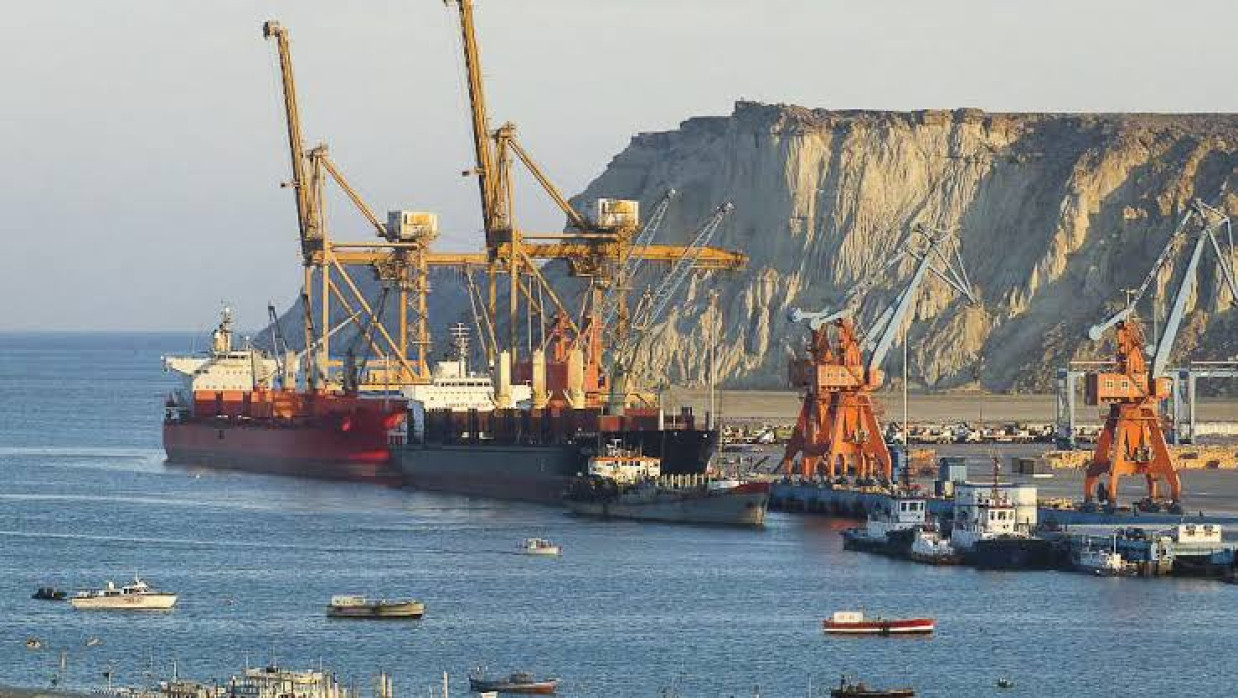
Gwadar has long occupied a central position in Pakistan’s economic and strategic vision. Its deep-sea port, geographical location, and potential role in regional connectivity have made it a cornerstone of the China-Pakistan Economic Corridor (CPEC). Yet the true measure of Gwadar’s development will not be determined by its strategic importance alone. It will depend on whether its residents gain reliable water supplies, better roads, quality education, accessible healthcare, and the public facilities necessary for a dignified life. The Balochistan government’s renewed focus on urban rehabilitation and essential services is therefore a welcome step towards placing local communities at the heart of the city’s development.
At a high-level Gwadar Development Authority (GDA) review meeting, chaired by Provincial Planning and Development Minister Mir Zahoor Buledi, the provincial government prioritised infrastructure, water supply, sports, and education. The meeting reviewed ongoing and completed schemes, future funding requirements, municipal services, and the performance of the GDA School. The participation of elected representatives and senior officials also provided an opportunity to assess development progress and identify areas requiring further attention. According to Dawn’s October 5 report, the government has committed to prioritising resources for Gwadar’s infrastructure needs.
One of the central initiatives discussed was the Old Town Rehabilitation Project, designed to improve urban infrastructure while preserving Gwadar’s historical and cultural heritage. The reported works include the construction, expansion, rehabilitation, and beautification of roads, streets, bazaars, educational institutions, graveyards, Eidgahs, and traffic intersections. These interventions may appear modest when compared with the scale of port development and regional connectivity projects, but their impact on everyday life can be substantial. Better roads facilitate commerce, improved public spaces encourage community activity, and functional civic infrastructure contributes to a more organised urban environment.
Development, however, must go beyond physical improvements. Gwadar’s water supply remains a particularly important test of the government’s commitment to its residents. Water is not simply another infrastructure component; it is a basic necessity that affects public health, household expenditure, education, and economic productivity. The GDA has reportedly undertaken measures over the past year to improve water distribution. The next priority should be to ensure that these improvements translate into a reliable, affordable, and equitable supply for households across the city. Transparent reporting on water availability, distribution losses, service interruptions, and future requirements would help establish whether the interventions are producing sustainable results.
The GDA’s responsibilities illustrate the breadth of urban management required to support a growing city. According to the reported briefing, the authority maintains more than 250 kilometres of roads, approximately 31 kilometres of sewage drains, and 23 kilometres of rainwater drainage channels. It also oversees three sports stadiums, three public parks, the GDA School, the GDA Hospital, and the Fish Landing Jetty. More than 5,000 trees have reportedly been planted across Gwadar. Together, these facilities represent an important foundation for improving the urban environment, supporting public health, and sustaining local livelihoods.
Yet the existence of infrastructure does not automatically guarantee effective service delivery. Roads require regular maintenance, drainage systems must function during heavy rainfall, public parks need adequate upkeep, and healthcare and educational facilities require trained personnel and sufficient resources. Tree plantation programmes must also be supported by appropriate maintenance and water management if they are to deliver lasting environmental benefits. The real challenge is to move from counting completed projects to measuring the quality, accessibility, and durability of the services they provide.
Education and healthcare deserve particular attention. The GDA School can contribute to expanding educational opportunities, while the GDA Hospital can strengthen access to essential medical services. Their effectiveness, however, depends on staffing, facilities, equipment, affordability, and the quality of care and instruction. Similarly, the Fish Landing Jetty connects urban development with the livelihoods of fishing communities. Improving its facilities and operational efficiency could support local economic activity, but development planning must ensure that the needs of fishermen and other traditional sectors remain central to Gwadar’s future.
The provincial government’s decision to prioritise urban rehabilitation, water supply, sports, and education provides an opportunity to advance a more inclusive model of development. The next step is consistent implementation, accompanied by measurable targets and public accountability. Gwadar’s future should not be judged solely by the strategic value of its port or its place in regional trade. It should also be judged by the quality of its schools, the reliability of its water supply, the accessibility of healthcare, and the opportunities available to its people.
Ultimately, Gwadar’s greatest asset is not its geography alone, but the people who live and work there. If investment in infrastructure is matched by sustained improvements in essential services and local livelihoods, the city can become a stronger example of people-centred development in Balochistan. The road to a prosperous Gwadar begins not only at the port, but in the streets, homes, schools, hospitals, and communities that give the city its life.


0 Comments
LEAVE A COMMENT
Your email address will not be published