

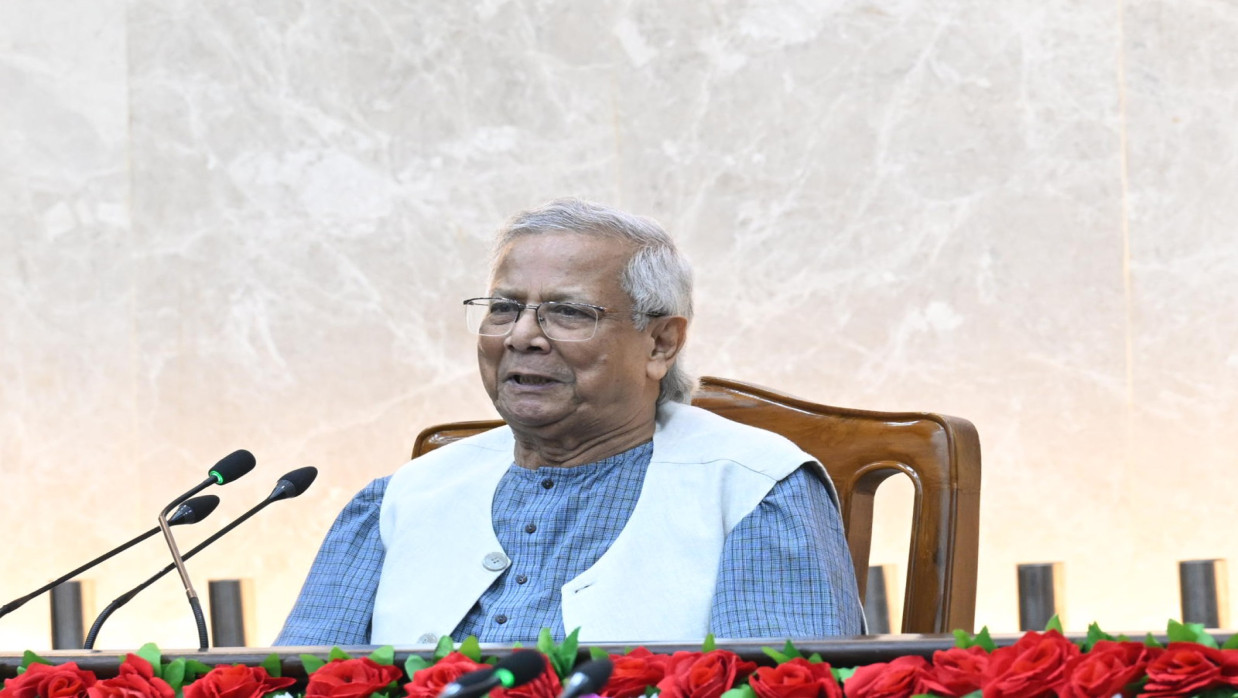
“The future of a nation is shaped not only in its cities but also in the villages where hope, innovation, and opportunity must flourish together.”
— Inspired by the philosophy of Professor Muhammad Yunus
Despite being the core of most developing economies, rural areas continue to suffer from problems such as poverty, unemployment, inadequate health care, unequal access to education, lack of technology, environmental pollution, and limited access to finance. Typical approaches to rural development have usually been based on fragmented interventions that address only symptoms, not the root causes of rural underdevelopment. Meanwhile, universities have a tremendous capacity to be a long-term partner in rural development due to their ability to generate knowledge, foster innovation, and develop leadership.
Based on the approach to social business developed by Nobel Laureate Professor Muhammad Yunus, Grameen University is working to design a model of higher education that is deeply rooted in rural aspirations. Rather than remaining confined to university borders, the University aspires to become an engine of inclusive rural development through education, research, entrepreneurship, innovation, and community engagement.
The chapter discusses the role of Grameen University in transforming rural areas through the combination of quality education, community involvement, multidisciplinary research, social business ideas, and sustainable development. It states that universities have the potential to be transformative when they serve as engines of development for their local communities, fostering economic stability, social justice, environmental sustainability, and human dignity.
Reimagining the University’s Role in Rural Development
Universities through the ages have been hubs of knowledge, science, and culture. But at the same time, many universities have traditionally restricted their operations to cities, thereby making academic knowledge and technology inaccessible to rural areas.
The challenges facing rural societies today demand a new understanding of higher education.
Universities should not merely educate students for urban employment; they should actively contribute to improving the quality of life in rural communities where millions continue to live and work. Professor Muhammad Yunus has consistently demonstrated that rural people possess remarkable creativity, resilience, and entrepreneurial capacity when provided with opportunities rather than charity. Grameen University embraces this philosophy by positioning rural development at the heart of its educational mission. Rather than seeing the village as needing help from outside forces, the University sees them as vibrant societies, full of knowledge, culture, and economic potential.
Rural Development Using the Perspective of Social Business
Historically, rural development programs have been based on government programs, aid, or charitable work. Although such initiatives may help to provide some relief, they do not provide long-term solutions, as they lack economic feasibility and depend on continued support from outside sources.
Social Business is the solution.
Yunus’s concept demonstrates that businesses can solve social problems while remaining financially viable and independent of constant external support.
Grameen University incorporates this philosophy into its approach to rural development.
Encouragement is given to both students and teachers to develop Social Business ventures that aim to solve problems related to:
- farm production;
• rural health;
• accessible education;
• renewable energy sources;
• water and sanitation;
• digital inclusion;
• female entrepreneurship;
• job creation for youths;
• financial inclusion;
• sustainability.
Thus, villages are turned into innovators rather than beneficiaries of development aid.
Rural Villages as Real-life Experiments for Learning
What distinguishes Grameen University from other institutions is its ability to turn villages into real-world laboratories where scientific knowledge and experience come together.
Learning happens through:
- living in a village;
• conducting experiments;
• implementing community projects;
• farming;
• entrepreneurship in a rural community;
• health care projects;
• environmental projects;
• educational projects.
Experiential learning enables students to gain a sense of the reality of life in rural areas beyond just figures.
It is through experiencing first-hand the intricacies of poverty, survival, cultural plurality, governance, and local innovation that they learn.
Of course, no less critical is the fact that the communities themselves become partners in the knowledge production process.
Innovation in Agriculture for Sustainable Livelihoods
Agriculture continues to be key to rural economies in Bangladesh.
Yet farmers face mounting challenges arising from climate change, declining soil fertility, water scarcity, fluctuating markets, and technological limitations.
Grameen University can become an important partner in agricultural modernization through research focusing on:
- climate resilient agriculture;
• precision farming;
• sustainable irrigation;
• organic farming;
• diversified crops;
• postharvest handling;
• agricultural entrepreneurship; and
• digital advice services.
Through collaboration between faculty members and farmers, practical solutions are developed, and students gain valuable exposure to real world agricultural problems.
This collaboration not only increases production but also promotes food security and sustainability.
Entrepreneurship as a Pathway to Rural Prosperity
Economic growth is achieved by providing opportunities and not simply by allocating resources.
The teaching philosophy at Grameen University focuses on helping students set up businesses that can sustain themselves financially as well as make a difference socially.
Some of the possibilities in rural business development are:
- food processing;
• dairies;
• renewable energy;
• handicrafts;
• ecotourism;
• information technology;
• rural transport;
• low-cost health care;
• education technology;
• waste recycling.
By nurturing entrepreneurial ecosystems, the University contributes to job creation, income diversification, and local economic resilience.
Graduates become job creators rather than job seekers.
Empowering Women as Agents of Rural Transformation
Any plan for rural development will fail to succeed if it does not involve women completely.
The innovative work of Professor Yunus through the Grameen Bank has shown that empowering women yields significant social and economic gains.
Grameen University goes on to provide opportunities for women’s:
- higher education;
• entrepreneurship;
• leadership;
• financial literacy;
• technological capabilities;
• community participation;
• research;
• innovations.
Here, women become leaders in rural sustainable development rather than mere followers.
This is a win-win solution for promoting gender equality and economic empowerment.
Digital Transformation in Rural Communities
The digital revolution offers unique prospects for the development of rural areas.
Grameen University can help in making digital technology inclusive through the following means:
- Internet access;
• Digital literacy;
• E-learning;
• E-healthcare;
• Digital agriculture;
• Mobile banking;
• E-commerce;
• AI application; and
• Remote learning.
Digitization technology eliminates geographical barriers but opens up educational and economic prospects. Students specializing in information technology collaborate with communities to develop locally appropriate digital solutions.
Community-Based Research for Practical Solutions
Research at Grameen University begins not inside laboratories but within communities themselves.
Faculty members and students work with the villagers to find out about their problems prior to formulating research projects.
The following fields have been considered as priorities:
- rural health care;
• education;
• nutrition;
• alternative energy;
• disaster preparedness;
• conservation of environment;
• financial services;
• employment of young people;
• women entrepreneurship;
• governance.
Communities are involved in the research from beginning to end, ensuring that the results are practical. Research is a tool for empowerment, not just observation.
Developing Human Capital through Education
Education is the most effective means of ensuring the long-term development of rural areas.
Grameen University helps by increasing access to:
- lifelong learning;
- vocational education;
- entrepreneurship skills;
- financial education;
- digital literacy;
- leadership skills;
- environmental knowledge;
- health knowledge.
The faculty members and students hold workshops in the community which build capacities of the locals while promoting lifelong learning.
Knowledge turns into a community resource.
Partnership for Rural Development
For sustainable development of rural areas, collaboration is necessary.
The Grameen University may develop partnerships with:
- local government entities;
- Grameen institutions;
- cooperatives of farmers;
- NGOs;
- businesses;
- development organizations;
- international organizations;
- research institutes.
Through such partnerships, complementarity of skills is possible without duplication of efforts.
Evaluation of Success through Community Impact
Universities traditionally measure their success based on factors such as graduation rates, publications, and rankings.
At Grameen University, success metrics are expanded to cover such areas as:
- poverty alleviation;
- creation of jobs;
- growth in household incomes;
- agricultural productivity;
- education;
- women leadership;
- improved health;
- sustainability of the environment;
- business ventures;
- community resilience.
These criteria link academic success with human development.
Contributions to National Development in Bangladesh
Bangladesh has made considerable progress in poverty alleviation, agricultural development, disaster resilience, women's empowerment, and community innovation.
By developing into a national center for rural transformation, Grameen University can support these accomplishments.
Its graduates, research projects, Social Businesses, and community work will help promote national goals and advance the United Nations Sustainable Development Goals.
Through this, Grameen University would help establish international recognition of Bangladesh as a leader in innovative and inclusive development.
A Global Model for Community-Engaged Universities
Although rooted in Bangladesh, the Grameen University model possesses international relevance.
Similar challenges faced by rural communities exist in many developing nations.
Through research publication, international conferences, and partnership with global partners, the University can disseminate its experience across other organizations around the world.
In this way, Grameen University is not only a facilitator of rural development in Bangladesh but also an international example showing how higher education can help foster inclusive economic development and human sustainability.
Challenges and the Way Forward
The implementation of such a vision will require the institution's commitment. Funding, faculty training, research facilities, technological investment, and community partnerships are vital.
The University should also work on developing interdisciplinary approaches, conducting impact assessments, engaging in international collaboration, and pursuing community engagement that is respectful and participatory.
The challenges are daunting, yet they offer an opportunity to transform higher education for national development.
Conclusion
The Grameen University is an innovative idea of how a higher educational institution can help in rural development in the modern era. The institution is guided by the philosophy of Social Business developed by Professor Muhammad Yunus. It understands that villages are not indicators of underdevelopment but rather pools of human potential, ingenuity, cultural diversity, and community strength. Through the integration of education, research, innovation, and community collaboration, Grameen University turns higher learning into a powerful tool for raising living standards, alleviating poverty, supporting the local economy, and promoting sustainable development.
A community-based strategy enables students to learn about village issues and apply their academic knowledge to solve them. Researchers collaborate with rural communities to develop solutions to existing problems; social businesses drive economic development; and multidisciplinary research helps develop policies that increase agricultural efficiency and environmental sustainability, empower women, and improve digital literacy and employment opportunities for young people. Thus, Grameen University is not only a place where knowledge is imparted but also a partner in community transformation.
As Bangladesh embarks on an extraordinary path towards development that is both inclusive and sustainable, Grameen University stands out as an exemplary university whose community-oriented approach can be emulated not only nationally but internationally. It clearly shows that a university truly fulfills its highest calling when it steps outside the bounds of the campus to stand beside the people it serves. By focusing on rural development, Grameen University makes it clear that education truly has the greatest impact when it offers hope and positive change.


0 Comments
LEAVE A COMMENT
Your email address will not be published