

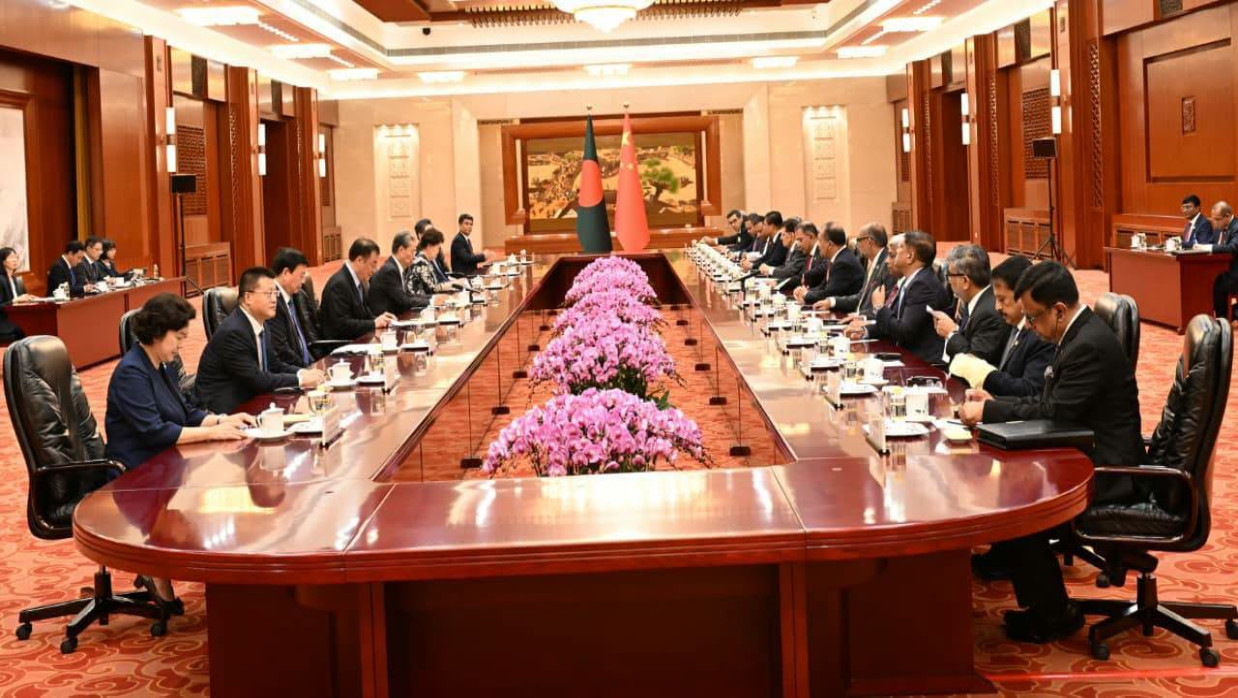
Bangladesh today occupies one of the most strategically significant locations in the Indo-Pacific. Positioned at the intersection of South Asia and Southeast Asia, it has become an increasingly important player in a region shaped by intensifying competition among China, India, and the United States. Rather than viewing this competition solely as a source of risk, Bangladesh has an opportunity to transform its geography into a strategic advantage by pursuing a balanced foreign policy rooted in national interests, economic development, and regional stability.
China is Bangladesh's largest trading partner and one of its top investors in infrastructure, including ports, transportation, energy, and industry. Beijing has tried to woo Bangladesh into stronger economic relations. Dhaka has stayed historically, economically, and from a security standpoint very close to India for a long time. Bangladesh has also sought to strengthen ties with the United States, Japan, the European Union, and others. Bangladesh can be seen as remaining strategically neutral.
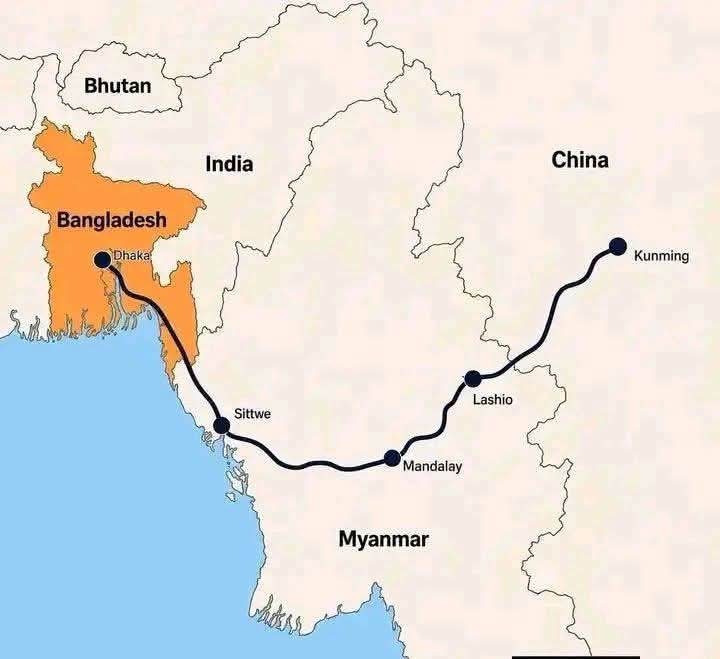
An untapped opportunity with great potential is in Connectivity. Bangladesh-China relations may enjoy bright prospects with the proposed China-Bangladesh Economic Corridor (CBEC), which could become a reality as part of larger regional connectivity networks. With successful implementation someday, this proposed corridor may stretch from southwestern China through Myanmar and Bangladesh towards the two seaports. It will help Bangladesh open up new transit routes between East Asia, South Asia, and Southeast Asia. Enhanced connectivity through this corridor could strengthen Bangladesh's trade ties with the regions through cheaper transportation. It will help in investment opportunities in the industrial sector, increase export promotion of non-traditional products, and solidify its role as a logistics and regional production hub.
Improved connectivity could also enable Bangladesh to integrate more effectively with ASEAN economies by opening new routes. At the global level, China has been steadily moving up the manufacturing value chain, focusing more on industries such as artificial intelligence, semiconductors, biotechnology, and high-end engineering. This would allow countries with relatively low development indices, such as Bangladesh, to expand labor-intensive manufacturing and concurrently benefit from technology transfer, industrial upgrading, and preferential access to Southeast Asian markets.
Bangladesh can be a production and distribution center for South Asian and Southeast Asian countries if its domestic economic policies are favorable and it has the necessary human resources. These developments also come with strategic and security risks. These envisioned overland connectivity projects will have to pass through Myanmar, where decades of civil war have persisted, most notably in Rakhine State. Continuing instability, humanitarian emergencies, as well as the lack of a solution to the Rohingya refugee crisis, leave questions on how secure these flagship connectivity initiatives would be in the long run.
China is in a unique position where it maintains influence not only with Myanmar’s military leadership but with some ethnic armed groups along the Bangladesh border as well. Beijing may use its influence to press for dialogue. Bangladesh should not expect any external powers to solve its security dilemmas for it. But if China plays a constructive role, it may help create a conducive environment for connectivity and the long-awaited repatriation of Rohingyas in a voluntary, safe, and dignified manner.
Bangladesh will also need to manage its relations with its largest immediate neighbor, India. Delhi will continue to be a key partner for Dhaka in trade, energy cooperation, water management, and regional connectivity initiatives. Sporadic tensions over border management, sharing of river waters, and larger regional strategic issues can be managed through sustained dialogue based on mutual respect and understanding of each other's sovereign equality. Zero-sum thinking will only undermine long-term prosperity for countries in the region. Bangladesh must continue to pursue win-win economic opportunities with all of its neighbors in the Bay of Bengal.
As noted above, the United States also remains a valuable economic, security, and diplomatic partner. Washington can and has played constructive roles in regional maritime security as well as investment, education, and governance-related initiatives. Moving forward, as competition between Washington and Beijing intensifies, it will be important for Bangladesh to avoid being trapped in great-power politics and to maintain healthy working relationships with both. Issue-based cooperation should take precedence over picking sides in bloc politics.
Bangladesh must also continue to balance these factors by strengthening national institutions, growing its economic might, and ensuring that policymaking is informed by the best available knowledge. Continuing to grow economically allows Bangladesh to best leverage its role on the world stage, as economic strength underpins national power. Greater industrial diversification, investment in human capital through education, technological innovation, port upgrades, and maritime facilities would enable Bangladesh to negotiate with great-power actors from a position of strength rather than weakness. Bangladesh must also continue to build a knowledgeable youth citizenry to keep pace with the shifting strategic environment. Bangladesh can shore up resilience through civic education programs, youth leadership development, professional military education, disaster preparedness training, and studies on maritime security and international relations, in line with the country's democratic ideals. Experts in relevant fields such as diplomacy, economics, technology, and defense will enable future generations to best protect Bangladesh's sovereignty.
In fact, Bangladesh's most important strategic advantage is neither its geography nor its great-power interests, but its commitment to continue following a policy of national interest and to not take sides. Bangladesh should deepen its constructive engagement with China, maintain good relations with India and the US, reach out to ASEAN countries more, and contribute to regional stability. In doing so, Bangladesh can turn great-power rivalry to its advantage.
As always, reality will depend on wise Bangladesh: pragmatic diplomacy, not superpower rivalry; diversifying partners, not dependence; transparency, not murky deals; and commitment to the national interest, not a lack of conviction. If Bangladesh keeps this in mind, it can go a long way toward becoming not just a corridor state, but an economic hub linking South Asia with the Indo-Pacific.


0 Comments
LEAVE A COMMENT
Your email address will not be published