

Introduction
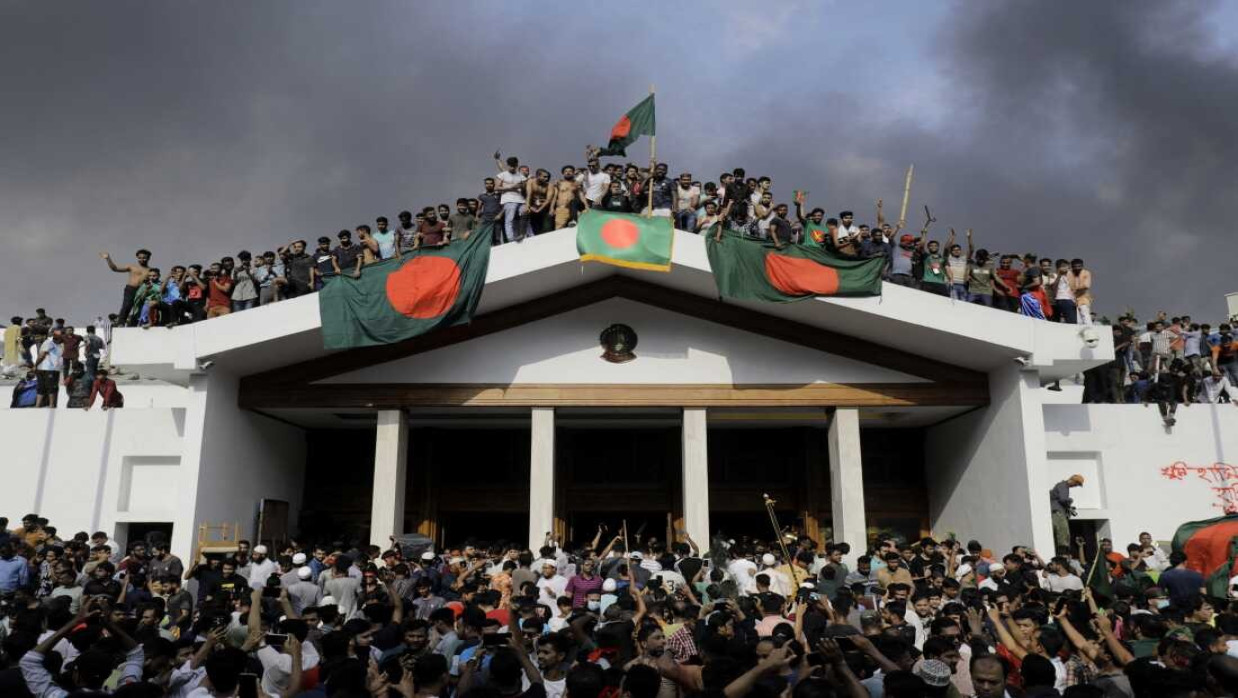
The July Revolution of 2024 was considered to be a watershed moment in Bangladeshi politics. It was referred to as a revolution by many. It was also referred to as an অভ্যুত্থান (revolution) by others. But nobody called it a coup. Those who understand politics know that it was neither a revolution nor an অভ্যুত্থান (revolution) because a revolution transforms politics, whereas an অভ্যুত্থান (revolution) protests. However, the July movement was an uprising against the denial of a fair election, the imbalance in the constitution, and the country's transformation into a politically crippled state where democracy is losing ground. In a broader context, the uprising was also to restore democracy in the country. The movement was reminiscent of earlier movements such as the Language Movement of 1952, the Mass Uprising of 1969, and the Liberation War of 1971.
Historical Roots of Political Discontent
Bangladesh has experienced various phases of authoritarian rule, the interruption of democratic practices, and contentious constitutionalism. Bangladesh fought for its independence in 1971 on the ideals of equality, justice, and human dignity, but those ideals have not been fully realized to date. Hence, the uprising of July 2024 is also contextualized against the backdrop of the prolonged agitation against authoritarian governments that failed to institutionalize democratic norms and enable participation by all factions of society. Remember the Language Movement that fought for our right to dignity? The fight against Ayub Khan's martial law in 1969? Or the War of Independence itself? The people have spoken yet again in July.
Electoral Legitimacy and the Crisis of Representation
Electoral legitimacy was one of the direct causes of the July uprising. Confidence in elections had been declining since no candidates had run in many electoral districts in the disputed 2014 election. The pattern continued with subsequent elections in 2018 and 2024. Public confidence declined as the electoral process grew less transparent over time.
The moment the institution designed to meet the political demands of the people ceases to function, the people will seek to make their voices heard through other means. The July uprising can be seen as a result of the people's anger over the closure of political space. Channels of political competition and accountability were dwindling.
Therefore, we can say that the people took to the streets to restore their power as the font of Political legitimacy as stated in the constitution.
Uprising or Revolution: Understanding the Distinction
One talking point concerning July 2024 is whether it was actually a revolution. Some political scientists consider revolution to be a social movement aimed at overthrowing a state's entire system of governance. Institutions, economy, and class relations would change. Uprisings are protests aimed at voicing opposition to those in power.
July was not a movement that immediately changed the government or the state's institutions. July expressed the people's anger and called for justice. July was an uprising. A revolution requires follow-through on institutional change, and July was the start of that.
History has shown that revolutions can spring from uprisings when there is significant and sustained change in institutions.
The July National Accord and Constitutional Debate
The thrust of the post-revolt draft of the July National Charter appears to be in seeking reconciliation between contending political factions. Even so, some clauses within it seem self-defeating and capable of further empowering bureaucracy against elected representatives: Bicameral parliament with the component of proportional representation - though seemingly diverse, could well serve to weaken direct accountability and make governance more cumbersome in a polity where political culture is already adversely affected by administrative excess; and allocation of seats for regional representatives in a second house - a seemingly good idea though questionable in the context of Bangladesh's unitary political system. The overriding question, perhaps, is whether the changes lead to the consolidation of rule by the people or merely to administrative expediency.
Constitutional Structure and Executive Dominance
Another long-standing concern people had was Bangladesh's executive-driven government. Ever since Bangladesh ratified the 1972 constitution, people have criticized its executive-legislative relations.
When too much power is vested in the executive branch, parliament becomes ineffective, and weak institution-building occurs. Therefore, reforms to the constitution to better balance these powers were another demand made popular by the July movement. People wanted to ensure there would be sufficient checks and balances to allow parliament to operate independently while safeguarding freedom of speech and an independent judiciary.
Only then can Bangladesh break away from these consistent cycles of unrest.
Popular Sovereignty and the Right to Protest
Fundamentally, the July uprising asserted popular sovereignty or the authority of the people. Popular sovereignty has been a part of our political tradition since Bangladesh's liberation war of independence in 1971. Protests, hartals, and civic action shaped crucial moments in our political history. The July movement aligned with our rich history of asserting people's rightful role in governance. Nonetheless, popular power must also be institutionalized; otherwise, revolutions will lose steam without reforms.
Leadership, Vision, and the Challenge of Transformation
Commentators have also pointed out that one factor common to much of the discussion of the July uprising has been the lack of leadership capable of channeling the masses' demands into reform. This appears to be true of most revolutions, where a structured leadership is needed to respond adequately to the people's movement. When commentators compare the uprisings in different countries, they note that Bangladesh needs leadership to advance its reform agenda. Without leadership, the revolution may not be enough to forward reforms. It remains to be seen if Bangladesh develops leaders who can channel the people's demands.
Cultural Identity and the Language Question
The movement also brought language and questions of cultural identity to the fore once again. Bangla has always been a touchstone of Bangladeshi nationalism, providing a symbol of resistance to oppression and attempts to sideline Bengali culture.
Some people felt that these proposals slighted that legacy. Others worried that the growing dominance of English media and instruction might threaten cultural continuity.
Finding ways to include more languages while maintaining culture is an ongoing policy concern.
Accountability, Justice, and Institutional Responsibility
Accountability was another important theme of the July uprising. Protestors demanded that violence by citizens and by the state should be independently investigated. Good governance and democracy must be based on the rule of law at all times, even during a revolution.
Security services, government agencies, and politicians had to be more transparent and accountable. Giving victims of abuse fair trials would achieve justice as well as help restore public confidence in state institutions.
Conclusion: A Turning Point or a Missed Opportunity?
The July 2024 uprising was a watershed moment for democracy in Bangladesh. It highlighted serious gaps in electoral legitimacy, constitutional integrity, and institutional responsibility. It also reaffirmed the strength of the people's power as a constitutional value.
Can July become a defining moment for democracy? Much will depend on how stakeholders respond to the call for reform. Unless structural reforms address core issues, disillusionment may only lead to more eruptions of frustration. On the other hand, July may yet live up to its promise if institutional renewal translates into strengthening constitutional democracy and addressing the unrealized hopes of '71.
"As someone who has closely watched the political developments in Bangladesh since its independence, what stood out for me about July was how citizens once again rose against the denial of equity, justice, and dignity."


0 Comments
LEAVE A COMMENT
Your email address will not be published