

An Inspiring Beginning: Where Memory Becomes a Moral Compass
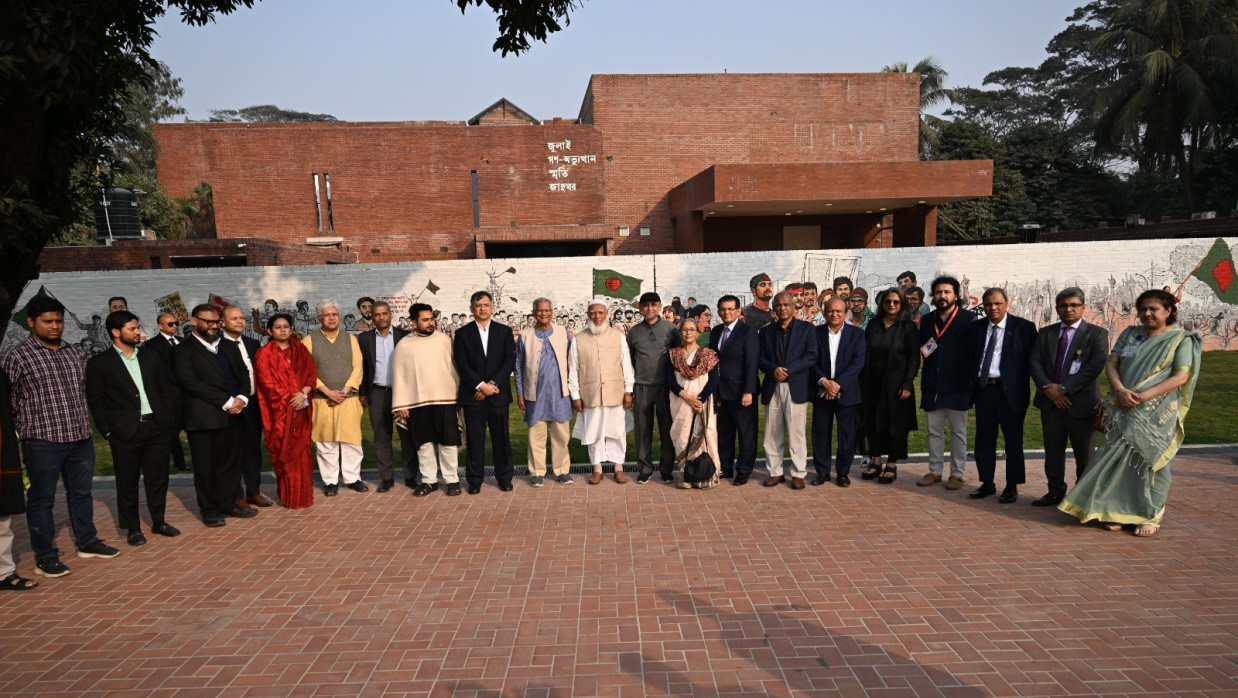
Nations rarely lose their freedom overnight. Democracy erodes quietly through normalized fear, enforced silence, and the gradual fading of collective memory. Against this slow unraveling, the presence of Nobel Laureate Professor Muhammad Yunus at the July Mass Uprising Memorial Museum marked far more than a ceremonial visit. It was a conscious, principled intervention an act of democratic reclamation led from the very top of the state. By personally championing the creation, completion, and public validation of this museum, Dr. Yunus has sent a clear message: Bangladesh will confront its recent past honestly, before it can be distorted, diluted, or buried beneath convenient narratives of power.
This initiative did not emerge accidentally. Under Dr. Yunus’s moral leadership, the state chose remembrance over erasure, documentation over denial. At a moment when post-authoritarian societies often rush toward “normalcy” without reckoning, Bangladesh instead paused to institutionalize truth. The July Mass Uprising Memorial Museum stands as evidence of that choice a deliberate effort to anchor the nation’s democratic renewal in historical accountability rather than political expediency.
In South Asia, territory and history are often in tension. Authoritarian excesses are routinely softened into tales of “strong leadership,” enforced disappearances relegated to footnotes, and state violence justified in the language of order, security, or development. Against this regional pattern of selective memory, the July Museum rises as a rare voice of conscience. It asserts that democracy is not merely the act of voting; it is the preservation of truth, the pursuit of accountability, and the refusal to forget.
By ensuring that this museum exists not decades later, but now, while memories are still raw and evidence intact Dr. Yunus has helped transform memory into a moral compass for the nation. It points Bangladesh away from the shadows of its recent past and toward a democratic future grounded not in amnesia, but in courage, clarity, and collective resolve.
July 2024: The Inevitable Breaking Point
The mass uprising in July 2024 is no sudden outburst of unruly turmoil; it is rather the logical result of a carefully considered process of democratic deterioration. For a considerable number of years now, Bangladesh has been experiencing a steady constriction of political space where diversity replaced diversity, dissent began to be criminalized, and fear began to assume a major role as a governance tool. The distinction between the state and the ruling party began to blur beyond recognition during the regime of Prime Minister Sheikh Hasina. The institutions responsible for protecting democracy were steadily undermined or rendered ineffective.
What made July inevitable was not a single policy failure, but a gradual buildup of structural imbalances. Elections ceased to be a viable path to change; opposition parties were systematically marginalized and intimidated; the press was intimidated, censored, and self-censored; and civil society organizations were constantly threatened. "Enforced disappearances, a practice that was once unimaginable in a constitutional republic, became a new reality, a tool of deterrence that sent a chilling message that dissent was not only politically costly but also existentially risky," said a report on the subject.
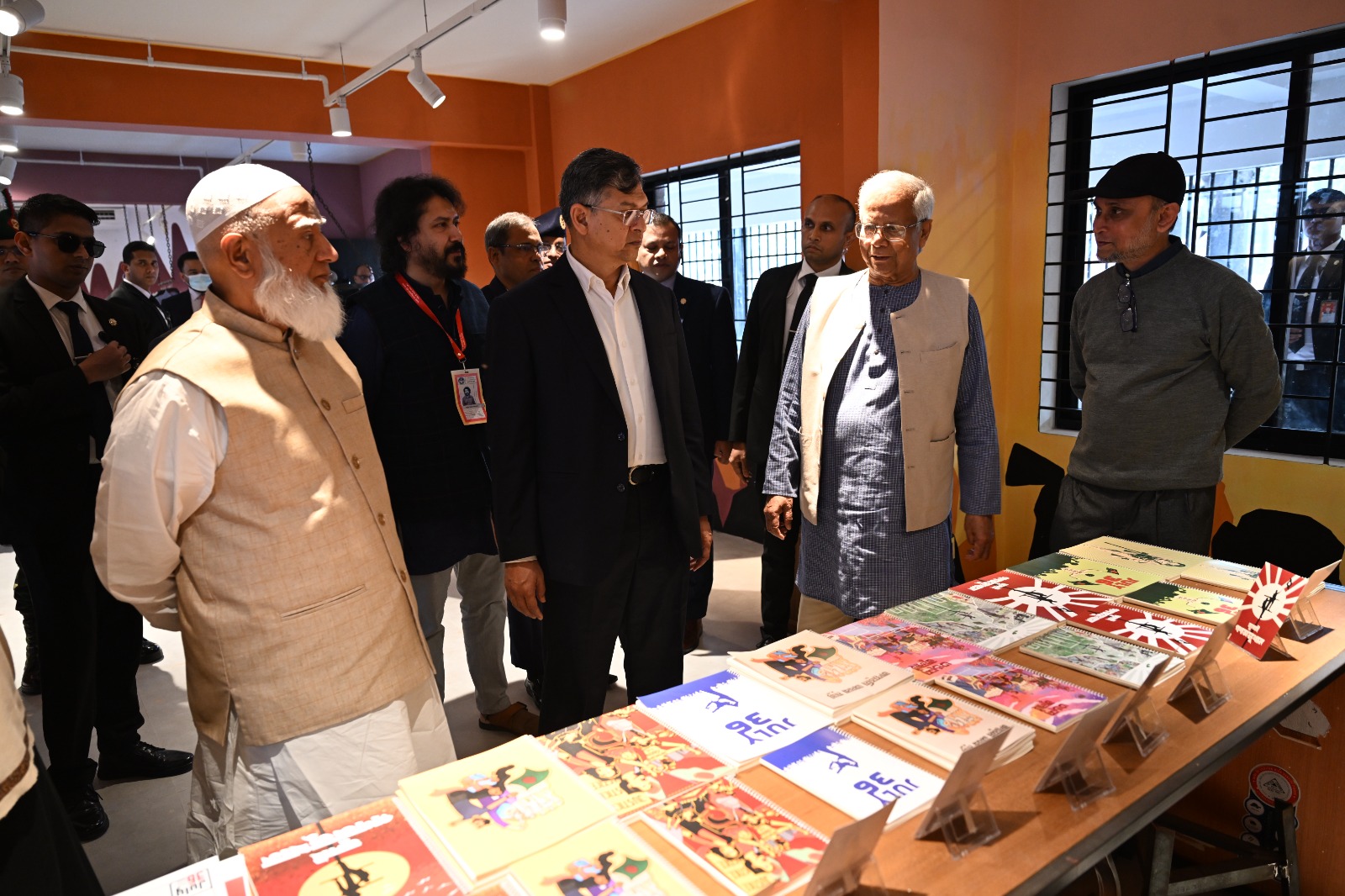
This process of degradation is chronicled with forensic specificity and ethical integrity by the July Mass Uprising Memorial Museum. The museum’s exhibits show how student protests have been repressed again and again, how news organizations have been intimidated or brought under state control, and how the discourse of “development” and “stability” has been used to legitimize these repressive acts. Images of killed protesters, letters composed in anticipation of detention or death, and audiovisual evidence of unarmed demonstrators standing against live rounds all serve to refute any claim of chaos or anarchic disorder in July. Rather, a picture of a society brought to the brink of tolerance emerges.
Through this lens, the events of July 2024 were not a collapse of order but a democratic reckoning. It was a point at which the pathways for redress were so thoroughly closed off that the street became the only remaining space for citizenship to be expressed. This is a depressingly familiar sequence throughout South Asia: the systematic repression of grievances, whether through rigged elections, muted media, or a politicized security sector, regularly leads to a sudden eruption of mass protest. The museum places Bangladesh’s July in this narrative, a reminder that when democracy is progressively dismantled, its reassertion is not always a calm or orderly affair.
By registering this truth, this museum returns moral focus to July 2024. It asserts that this uprising was not an anomaly but an aftermath and that it was not an uprising but an era of democratic degradation that was truly out of place.
Remembering in Real Time: A Radical Democratic Choice
What distinguishes the July Mass Uprising Memorial Museum from the majority of museums established after authoritarian regimes worldwide is that it was established when the wounds were still fresh, when the pain was raw, when testimonies were still being given. Societies have a tendency to take a long time to remember state violence after the fact, when the violators have either passed away or faded away from public memory, when documents have been lost or destroyed, and when the rage has been tempered with time. Bangladesh has refused to follow suit.
This is no accident but is deeply political in the very best sense of the word as it pertains to democracy. In deciding to remember in the moment, the Bangladeshi government is saying it will not let atrocity settle into abstraction. Survivors are still living to tell the story, families are still looking for the missing, and the citizenry still remembers the fear that once dictated their lives. In this moment of remembrance, the museum takes the one thing that impunity always needs to succeed: forgetfulness.
The implications of this act of democracy cannot be overstated. By commemorating violence while the issue of accountability is still an open and living moral imperative, one clear signal is sent to both the current and the future holders of power: crimes committed under the colors of “development,” “stability,” and “national security” will not be deferred to the realm of moral ambiguity. They will not be left to the mercy of history to temper their edges.
In a South Asian context in which justice has too frequently been deferred, allowing for denial and even glorification of authoritarian excesses in which the state has been complicit, such immediacy is a potent and troubling model to follow. Whether in cases of forced disappearances that remain pending for several decades or in which reports of commissions of inquiry are suppressed rather than studied in schools, South Asia has been a region of deferred truth. The July Mass Uprising Memorial Museum in Thailand ends this cycle of deferment.
Thus, by remembering in the moment, Bangladesh has made the bold democratic choice to link memory and accountability, grief and education, and history and vigilant citizenship, before the silence can fall.
Evidence Over Narrative: Reveal the Architecture of Repression
The power of this museum comes from its refusal to speak in rhetoric. This museum speaks in evidence. Censored newspaper articles indicate the constraints placed on the press. Government documents indicate arbitrary arrest patterns. Video recordings capture the instant when peaceful demonstrations were met with deadly force. Personal accounts describe the knock on the door that led to no return.
With the presence of victim families and organizations such as Mayer Dak, it becomes a living archive. The survivors of enforced disappearance, including Barrister Mir Ahmad Bin Qasem Arman, collapsed the distance between observer and observed. These are not distant violations; they are personal tragedies that expose how the state’s repressive apparatus turned on itself.
The documentary produced by the Ministry of Cultural Affairs and watched by Professor Yunus breaks down authoritarianism not as ideology but as a strategy: disappearance as deterrence, fear as governance, violence as communication. The takeaway from this South Asian experience is that authoritarianism need not manifest through coups. It can also move forward under the garb of legality while depleting institutions from inside.
The Aynaghar: Living Through That Which Power Wants to Conceal
The detention cells at Aynaghar are the most disturbing and problematic area of the July Mass Uprising Memorial Museum in terms of content and meaning. The cells are not only imitations of detention but are architectural monuments to a system of erasure without trace. Out of sight of courts, media, and families, at Aynaghar there existed a world without the rule of law and where the human being had become an object of state management.
In calling for visitors, particularly students, to be able to enter these cells, Muhammad Yunus challenged the established notion of how memorial sites should be run. This is not only radical in its approach to punishment but also in its acknowledgement of the necessary role of democracy in the internalization of the value of freedom, recognizing that societies do not comprehend its value through the reading of plaques.
In Aynaghar, punishment was designed to lack all semblance of humanity. Prisons consisted of soundproof, windowless cells where the distinction between night and day simply ceased to exist, leaving only a boundless now. Solitary confinement was commonplace. Lighting was either continuous or simply shut off for extended periods. Sleep deprivation, sensory deprivation, and total lack of any connection to the outside world were not side effects of detention but techniques. Access to lawyers, families, or healthcare was denied for extended periodsoften several months or yearswithout charge or acknowledgment of their existence.
The cruelty of Aynaghar also existed in its uncertainty. The prisoners did not know why they were there, when they would be released, or sometimes not even where they were going when they were moved from one prison to another. The psychological intimidation and threats to family members were also used as tools to demoralize them and to demoralize them through constant questioning. The degradation of their dignity is where the real punishment lies.
"Statistics regarding enforced disappearances remain subject to argument and denial, but experience is not," says a report on Aynaghar Prison, a notorious jail in Iran that was used to detain and interrogate political prisoners in the 1980s. "Being in the cramped silence of an Aynaghar cell is to confront the terror of erasure, the violence of silence, and the intention of state cruelty that statistics cannot convey," says the report.
Throughout South Asia, the practice of secret detention and enforced disappearance has regularly been employed as a mode of governancefrom conflict to capitalexactly because it escapes detection. Aynaghar reconstruction makes a hidden practice visible. It is a regional warning that when unchecked, power reigns, cruelty becomes policy, and darkness becomes routine administration.
In other words, by thrusting society back into the very experiences the state once sought to suppress, the Aynaghar is more than a memorialization of suffering. The Aynaghar immunizes democracy against denial. It instructs succeeding generations that no claim of “national security,” “stability,” or “development” can ever legitimize the deliberate erosion of humanity and that the first obligation of a free society is to prevent such rooms ever being constructed.
Youth, Bravery, and the Demise of Fear
But at the very core of the Mass Uprising of July Memorial Museum is perhaps the most inspiring and transformative story of them all, and it is the story of the moral courage of the students and the youth of the republic, who chose not to inherit the republic founded upon fear, but went unarmed, unprotected, and at times conscious of the danger they were courting, right into the face of the force of the state and claimed the simple but revolutionary truth that sovereignty is of the people, and not of power.
The truth is that for several years, the Bangladesh government, like the rest of South Asia, functioned on the basis of a carefully nurtured fear psychology. Students were warned to remain apolitical, journalists were coerced into remaining silent, and dissent was considered dangerous or invalid. However, July 2024 broke this illusion. When young people marched out onto the streets with nothing but conviction on their side, they revealed the most fundamental flaw of authoritarianism: fear is not an eternal emotion, and compliance is not an inevitability.
History has borne this truth out again and again. The end of regimes has not come about when they ran out of guns; it has come about when they lost the monopoly of fear. July was a turning point in history when fear switched camps that is, when the state recognized it could no longer intimidate a generation that had come to realize dignity was a risk worth taking. The museum preserves this moment in history through photographs of student processions, scribbled placards, eyewitness accounts, and belongings left behind by people who did not get back home.
Through this, the museum in effect reshapes the role of youth in this history. Rather than being passive recipients of liberty bestowed upon them by their superiors, youths are now seen as protagonists in this democratization process. This has profound lessons for citizenship.
Citizenship does not begin when one takes up office, but as soon as one says no to injustices.
Because of this, the museum itself must serve as a living classroom. Students must learn about democracy here, not as a concept described in a book, but as a lived reality created through sacrifice. Scholars might analyze the patterns of resistance and oppression. Artists might transform memory into cultural expressions. Journalists might reclaim the ethics of their profession. Policymakers might face unchecked power.
Most importantly, it is a source of inspiration to future generations. It shows young Bangladeshis and, by extension, young people across South Asia, that history is not made by those in power, but by those who are willing to challenge power when to do nothing is to be complicit in oppression. July 2024 is a testament that if young people choose to be inspired by bravery rather than by fear, even the toughest systems of oppression are bound to fall apart.
A Covenant for Bangladesh and a Message for South Asia
The July Mass Uprising Memorial Museum is not a tool of revenge, not a place of partisan victory. It is a place of vigilance to defend the moral underpinnings of the republic well after the pain of tragedy has receded. Fundamentally, it is a commitment to future generations that the disappearance of citizens will never be normalized in Bangladesh, that oppression will never be justified as governance, that authoritarian rule masquerading as stability and development will never be glorified.
Indeed, as Muhammad Yunus has pointed out, this museum is “fated” to play a role in shaping politics, public discourse, education, and research in the decades to come. The museum grounds memory not only in history textbooks but also in classrooms, policy statements, films, literature, and public consciousness. The museum ensures that what July teaches is not privatized in grief or lost in time.
However, the real value of the museum will not lie in the number of visitors, in the architectural accolades, or in the international recognition it receives. Its success will be measured by something much more challenging: whether Bangladesh takes its most important lesson to remember that democracy does not fall only to tanks and decrees, but also to silence, denial, and forgetting to heart. This lesson has specific resonance in South Asia, a region marked by unresolved histories, justice deferred, and selectively chosen memories, and which has consequently allowed authoritarianism in new guises.
In this respect, the museum speaks across borders. It offers a regional lesson for societies facing shrinking civic space, politicized institutions, and a lack of accountability. It makes a statement that memory is not a nostalgia-driven exercise but a future-oriented democratic imperative. Memory is fragile without reform; truth is empty without memory.
If this country ever loses its bearings," as Professor Yunus has said, this is where it will find them. And should future leaders, anywhere in this region of South Asia, ever be tempted to barter away freedom for power, efficiency for brutality, and order for fear, this museum will be there to oppose them silently. It will remind them that history is not a static thing, that memory has no shelf life, and that people, once aroused, never forget.
By standing firm, factual, and human, the July Mass Uprisings Memorial Museum of Facts ensures that Bangladesh’s future shall not be founded upon forgetfulness but upon clarity of values. This museum asserts: The darkest moments of our past shall not be repeated, not because we forget but because we remember.

0 Comments
LEAVE A COMMENT
Your email address will not be published