

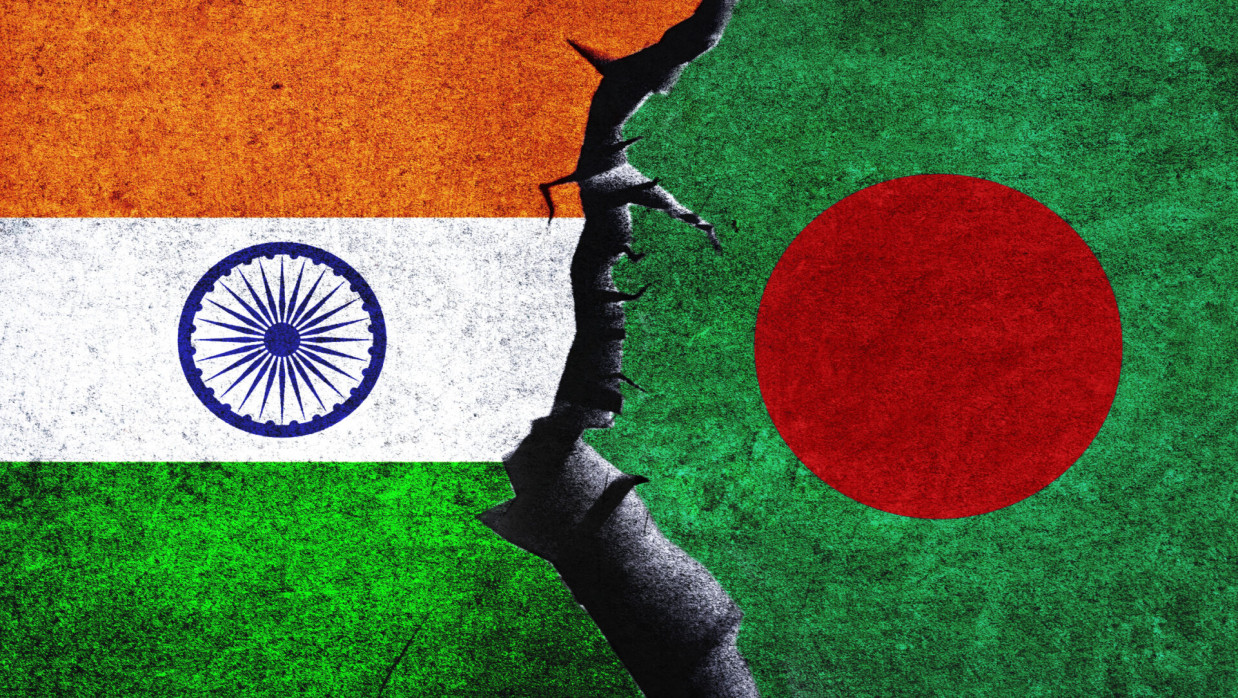
“The ballot is sacred only when it is free.” – Nelson Mandela
The Rhetoric of Neutrality and the Reality of Control
When India’s Foreign Secretary Vikram Misri assured a visiting delegation of Bangladeshi journalists that “India stands ready to work with any government chosen by the people of Bangladesh,” his assurances were infused with diplomatic reassurance. But in the South Asian world of geopolitics, where history and hegemony meet, words like these typically hide more than they say.
Misri’s emphasis on “free, fair, and inclusive elections at the earliest possible time” in Bangladesh might appear as a benign expression of regional goodwill. But read in context—after the collapse of Sheikh Hasina’s regime in August 2024, the emergence of Dr. Muhammad Yunus’s interim government, and India’s sudden anxiety over its waning influence—the declaration takes on a deeper meaning.
It signals India’s desire to reinsert itself into Bangladesh’s political trajectory, shaping it once again in a manner that safeguards Delhi’s strategic and economic privileges.
For decades, India has claimed moral leadership in South Asia. Yet, its repeated pattern of political interference cloaked in the language of partnership has increasingly alienated its neighbors. From Kathmandu to Colombo, and now in Dhaka, the narrative of India as a “benign hegemon” has been replaced by a more cynical recognition—Delhi’s diplomacy is often less about democracy and more about dominance.
The 2014 Playbook: When Diplomacy Became Political Engineering
To understand the here and now, it is necessary to look back into the not-so-distant past.
When the mainstream opposition parties of Bangladesh boycotted the January 2014 national elections, India’s then–Foreign Secretary Sujatha Singh took an urgent flight to Dhaka. She was not on a reconciliations brokerage mission but to convince the Jatiya Party to participate in elections, thus providing an illusion of legitimacy for Sheikh Hasina’s solo government.
The outcome was inevitable: Hasina was elected to a fourth term unopposed, the opposition parties were left out, and India secured its tightest grip in Dhaka since 1971. Bangladesh, in return, implemented a series of unequal treaties—on transit, electricity, and defense cooperation—that overbalance India. That experience was a textbook example of soft power weaponization: democracy was not defended but domesticated.
Ten years later, Vikram Misri’s rhetoric sounds alarmingly familiar. His insistence on “speedy elections” in Bangladesh appears less as a call for democracy and more as an instrument of re-entry into Dhaka’s decision-making corridors after a period of diplomatic isolation.
The Fall of Sheikh Hasina and the Crisis of Indian Leverage
The overthrow of Sheikh Hasina’s regime in August 2024 ushered in a historic watershed in South Asian politics. Her ouster, fueled by months of student protests and popular uprisings, ended more than a decade of one-party dominance. It was a geopolitical earthquake for India.
Throughout Hasina’s rule, India enjoyed privileged access to Bangladesh’s security apparatus, trade routes, and energy markets. Dhaka’s foreign policy remained closely aligned with Delhi’s strategic goals, even at the cost of domestic discontent. India, in turn, shielded Hasina diplomatically—both from Western scrutiny over human rights and from regional criticism about her authoritarian tendencies.
The arrival of Dr. Muhammad Yunus’s caretaker administration, however, shook this balance. His government placed highest priority on transparency, accountability, and regional non-alignment, echoing the shift from dependence to diversification. The caretaker government resumed trade talks with China and the Gulf states, strengthened humanitarian engagement over Myanmar’s border issues, and tried to renegotiate long-outstanding river agreements on equitable terms.
To the foreign policy class in Delhi, this adjustment was not a challenge to democracy but a challenge to monopoly. Thus, India’s present demands for “speedy elections” seem intended not to reinforce Bangladesh’s institutions but to restore a client relationship that previously guaranteed predictable conformity with India’s agenda.
Military Diplomacy and the Politics of Stability
To the unease, are superimposed the latest utterances of the Indian and Bangladeshi Chiefs of Army Staff, both expressing “continuity, cooperation, and stability.” Such concord between military rhetoric across borders rarely happens by accident.
Defense relations between India and Bangladesh have hitherto been an instrument of influence. Exercises undertaken together, training courses, and intelligence sharing have built institutionalized relationships beyond ordinary cooperation. During the past few months, however, the contacts have become expressly political in nature.
The language of “stability” now all too often reads as code for controlled democracy, where military and political leadership converge under the banner of regional order.
The Dhaka observers note that Indian military communications often follow its diplomatic rhetoric—establishing a two-channel influence process: the soft wooing of South Block, and warning from the barracks. The hegemony of India manifests, therefore, not through coercion but through systemic co-option of the political, military, and administrative institutions of its small neighbors.
The Double Standard: Democracy Abroad, Discrimination at Home
The largest Indian foreign policy contradiction is perhaps its double standard on democracy and human rights. It rebukes neighbors for electoral exclusiveness and discarding secular values, but India’s own religious repression history and majoritarian politics provide a very different story.
The world has watched with alarm at India’s internal disintegration:
- State-sponsored “bulldozer justice” demolishes Muslim homes and mosques in Madhya Pradesh and Uttar Pradesh without due processes.
- Delhi has witnessed its heritage sites like the Akbari Mosque being razed to the ground and anti-Muslim riots in 2020 with impunity.
- CAA and NRC have institutionalized discrimination by redefining citizenship on religious grounds.
- In Kashmir, the abrogation of Article 370 turned an autonomous region into the most militarized zone on the planet, silencing journalists, political activists, and citizens.
- State-sponsored vigilante groups across India indulge in impunity while assaulting Muslims in the name of “national security” and “cow protection.”
India continues to pose as the world’s largest democracy and model of pluralism amidst all this. This ethical hypocrisy undermines its global credibility.
When New Delhi advocates “inclusive elections” for Bangladesh while repressing minorities at home, the gesture is futile. It betrays the practice of external idealism hiding internal intolerance.
As a result, India’s moral leadership—the fulcrum of its post-1971 South Asian diplomacy—is lost. Its rhetoric-reality gap of discrimination increases with every mosque destroyed and each journalist assassinated.
Corridors of Influence: The Economics Behind Politics
Aside from rhetoric, India’s role in meddling in Bangladesh politics comes from hard economics.
The transit corridor for India’s northeastern states—“the Seven Sisters”—through Bangladeshi territory has been central to Delhi’s strategic vision since independence.
Under Sheikh Hasina, this ambition materialized. India gained access to Bangladeshi ports, transit routes, and energy grids that integrated its northeastern markets with the Bay of Bengal.
These bargains, however, were largely one-sided. India had trade and logistical advantages, while Bangladesh’s exporting industries were under the Indian government’s non-tariff barriers, delays, and quotas. The much-discussed Teesta watersharing agreement, originally drafted in 2011, goes on unchecked—terminated by internal Indian politics—while millions of Bangladeshi farmers suffer dry-season shortages.
The 1996 Ganga Water Treaty, hailed as a symbol of cooperation, has also grown one-sided in its implementation. Environmental degradation, one-country dam projects, and water diversion in upper basin regions have Shortcut ravaged downstream livelihoods.
Indian businesses—energy, telecom, and infrastructure pacesetters among them—also established dominant roles in the economy of Bangladesh under under-the-table deal-making facilitated by political patronage. Economic dependence was effectively political insurance for the Awami League government.
Now, the transitional government’s actions towards the rebalancing of trade relations—with the Middle East, Southeast Asia, and Europe—is a threat to this deep-seated asymmetry. For India, “free and fair elections” thus become an available course of action for regaining economic predominance under the veil of democratic patronage.
The Mirage of Non-Interference
India’s diplomatic lexicon is filled with the usage of words like “non-interference,” “shared prosperity,” and “mutual respect.” In practice, however, these concepts too frequently join hands with coercive diplomacy.
In Nepal, India’s blockade of 2015—imposed after Kathmandu adopted a new constitution—crippled the landlocked nation’s economy and exposed Delhi’s willingness to use geography as leverage.
In Sri Lanka, India’s “constructive engagement” during the civil war evolved into long-term strategic control over ports and energy sectors.
In the Maldives, Delhi’s overt support for certain political factions has periodically backfired, feeding anti-India sentiment.
Bangladesh now finds itself on a similar fault line. While India proclaims respect for Dhaka’s sovereignty, it continues to influence narratives through media, intelligence, and development diplomacy.
New Delhi’s recent restrictions on Bangladeshi exports and transit routes—imposed after Hasina’s fall—further contradict its stated commitment to “regional stability.”
The contradiction is clear: India claims to defend democracy while destabilizing its neighbors in pursuit of strategic gain.
Beyond Borders: The Moral Cost of Regional Hegemony
India’s hegemonic aspiration has its roots not just in size but in self-perception. Since independence, Indian policymakers—from Nehru to Modi—have regarded the subcontinent as India’s natural sphere of influence. But this aspiration has a moral cost.
In the twenty-first century, power without principle no longer earns respect.
Bangladesh’s turn-around in the last twelve months has demonstrated that sovereignty is a privilege to be restored, not a favor to be bestowed.
Dr. Yunus’s caretaker government has ushered in a new culture of governance: open, participatory, and focused on human development, not patronage.
This new regime values regionalism without subordination, a South Asia of partnership, not of patronage.
India’s challenge is to adapt to this reality. It can be either a genuine friend of progress or a reluctant hegemon clinging to outdated hierarchies.
Toward a People-Centric Regionalism
If South Asia is to emerge from the shadows of mistrust, it must move beyond the logic of dominance. The South Asian Association for Regional Cooperation (SAARC) has long languished under India-Pakistan rivalries and Delhi’s reluctance to treat smaller neighbors as equals.
A new framework people-centric regionalism is urgently needed.
It would be a vision for the world that would place most emphasis on shared economic benefit, tolerance for cultures, sustainable cohabitation, and equal political participation. Bangladesh, with the guidance of Dr. Yunus, now rising in soft power and moral authority, can be a world leader in advancing this agenda. No longer India’s periphery, Bangladesh has become a moral and development hub—a portal to South and Southeast Asia, between hope and justice.
The Tide of Resentment: Bangladesh’s Youth and the Backlash Against Indian Hegemony
The most underestimated variable in South Asian politics today is likely to be the sentiment of Bangladesh’s younger generation—a population group that constitutes nearly two-thirds of the nation’s numbers and has decisive power over the political future of the country.
The overwhelming majority of Bangladesh’s youth are today extremely cynical toward India and disillusioned with the Awami League, which they see as a proxy of Indian interests. They are alienated by two simultaneous experiences: India’s asymmetric bargaining with Bangladesh and its discriminatory behavior against Muslims in India itself.
During Sheikh Hasina’s rule, Bangladesh’s youth witnessed:
- India’s skewed transit and energy deals at the cost of Bangladeshi taxpayers.
- The Teesta water confrontation and discriminatory border management, Indian Border Security Force killing hundreds of Bangladeshi civilians.
- The invasion of Indian goods wiping out indigenous industries, Bangladeshi exports strangulated by prohibitive Indian tariffs.
- And perhaps most painful, India’s silence on issues directly affecting Bangladesh’s Muslim identity and pride.
At the same time, across the border, news of mosques being razed, hijab bans in schools in Karnataka, mob lynching, and anti-Muslim rants by ruling-party leaders have set fire to public opinion in Bangladesh. For a nation whose freedom was conceived on the twin themes of justice and equality, India’s treatment of its own Muslims rings as hypocrisy and humiliation.
Bangladeshi students’ social-media activism is increasingly echoing these sentiments. Platforms such as X (formerly Twitter) and Facebook record thousands of daily comments criticizing India’s policies under hashtags like #BoycottIndianProducts, #RespectSovereignty, and #NoMoreHegemony.
University forums, street art, and campus debates tend to represent India as an imperial nation masquerading as a democracy. There is a widespread belief that India tries to control the political leadership in Bangladesh, tap its natural resources, and suppress its Islamic and cultural identity.
This new generation, unlike their predecessors, are networked globally, politically aware, and adamant about sovereignty. They see the foreign policy diversification of the interim government as anything but antagonism towards India but as a much-required correction to decades of one-sidedness.
It would be unwise for India’s policymakers to dismiss this mindset as populism. It reflects a shift of political mentality at the generation level—something that demands fairness, dignity, and equality of respect instead of transactional friendship.
Unless India changes course, it risks not only losing its strategic role in Bangladesh but also the esteem of an entire generation that now views Delhi less as a friend than as a patron who wore out its welcome.
Epilogue: From Dependency to Dignity
The shifting mood of Bangladesh is a profound shift in the geopolitics of South Asia. Bangladesh has never shaped its relationship with India on its own terms before; it has done so now. Dr. Muhammad Yunus’s caretaker government did not turn anti-India—it turned pro-Bangladesh. That makes all the difference.
India can learn to accept this changed reality in mutual respect and fair cooperation, or it can go on following the old patterns of interference which will continue to keep it away from the moral fulcrum of the region.
The youth of Bangladesh, who toppled a very well-entrenched regime in 2024, won’t suffer another decade of pretentious dependency called diplomacy. “A generation which has learned to rise will not kneel again.”
“Freedom is never a gift of the mighty—it is the triumph of the normal.”
Conclusion: Democracy as Sovereignty
India’s Foreign Secretary may have intended words as solace, but history advises Bangladesh to hear them with caution. Behind the diplomacy stands an ancient habit—a desire to command outcomes, shape narratives, and sustain privileges.
The moral of the previous decade is evident: when democracy is employed as a tool of foreign policy, sovereignty is the price paid.
The path to Bangladesh’s 2026 elections must therefore be kept free of external manipulation, however underhand or insidious.
For India, therefore, the moral test is also simple. If it is truly serious about hegemonizing the region, it must first learn to value diversity at home and democracy abroad. Its influence as a regional hegemon depends not on muscle but on integrity—between what it says and what it does.
For Bangladesh, the coming months will determine more than a government; they will determine if a generation is entitled to self-determination. The July Revolution of 2024 proved that the common people can reclaim history. The coming election now must prove that they can also protect it from the darkness of hegemony.
If India is serious about winning back confidence, it needs to first maintain pluralism at home and sovereignty abroad. Its power will endure only if established on principle and not privilege.
“When democracy becomes an instrument of influence, sovereignty becomes its casualty.”


0 Comments
LEAVE A COMMENT
Your email address will not be published