

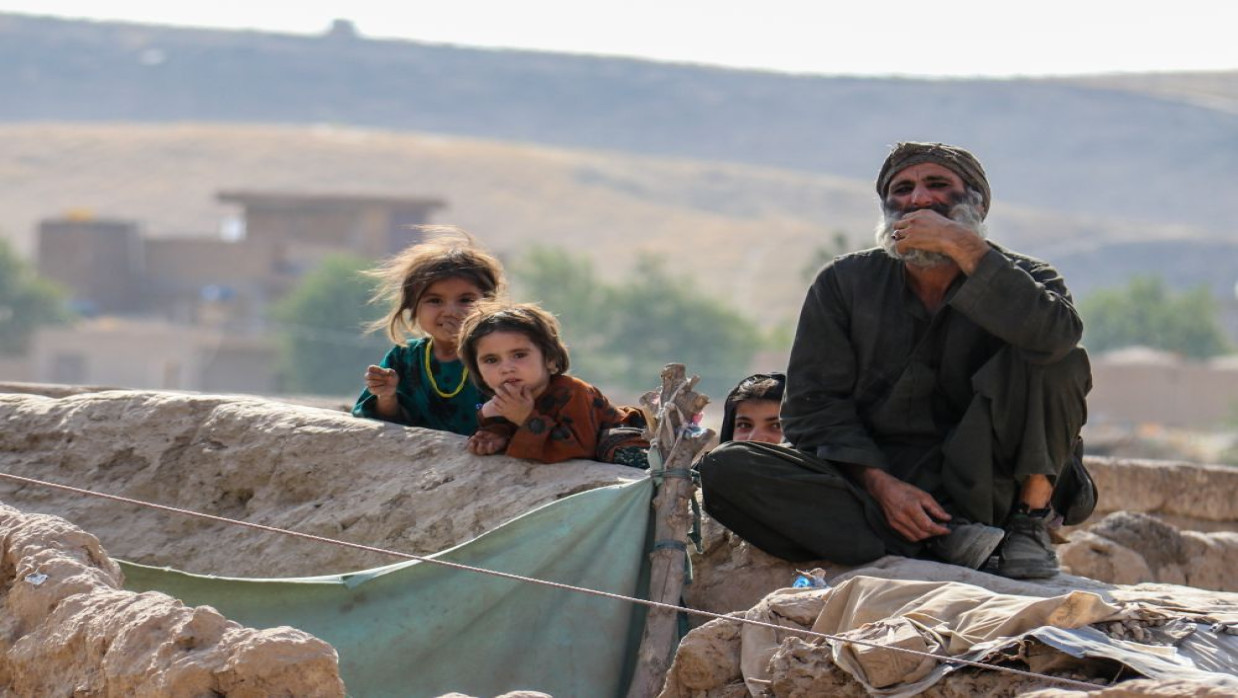
A country facing mass hunger, worsening malnutrition, collapsing humanitarian support and economic uncertainty cannot afford to let political confrontation overshadow the crisis unfolding within its own borders. Millions face hunger, children are increasingly vulnerable to malnutrition, healthcare services are deteriorating, and economic opportunities remain severely constrained. Yet the Taliban government's political discourse increasingly revolves around external confrontation. The question is whether the emphasis on an external adversary is overshadowing the urgent responsibilities of governing a country whose population is struggling to survive.
The humanitarian figures paint a disturbing picture. According to the Integrated Food Security Phase Classification (IPC), October 2026 assessment, approximately 15.9 million Afghans, or 32 percent of the population, were experiencing acute food insecurity in September and October. The number is projected to reach 19.2 million during the November 2026-April 2027 winter season, including five million people facing emergency levels of hunger. The World Food Programme and Food and Agriculture Organization identify high food and transport costs, unemployment, weak purchasing power and declining humanitarian assistance among the principal pressures on households.
The crisis extends beyond empty food markets. A UNICEF and Action Against Hunger assessment warns that 4.04 million children aged six to 59 months will require treatment for acute malnutrition in 2027, including approximately 1.09 million facing severe acute malnutrition. These projections represent more than statistics; they expose the vulnerability of an entire generation whose development is threatened by inadequate nutrition, preventable illnesses and diminishing access to essential services.
Afghanistan's healthcare infrastructure faces equally serious pressures. The World Health Organization's 2026 Health Emergency Appeal estimates that 14.4 million people will require health assistance this year. Funding reductions contributed to the closure of more than 422 health facilities during 2025, affecting access for approximately three million people. A population already confronting economic hardship is consequently facing additional barriers to medical care.
Another deeply troubling dimension is the country's drug-use crisis. A February 2026 assessment by the United Nations Development Programme and UN Office on Drugs and Crime identifies growing concerns surrounding synthetic substances and the misuse of pharmaceutical drugs. Its findings connect substance use with poverty, unemployment, psychological distress and household financial pressures. The challenge requires stronger public-health services, prevention and accessible treatment.
The consequences of domestic policies are also visible in education and economic participation. UNICEF reported in August 2026 that more than 2.6 million girls have been denied secondary education since 2021. Its analysis estimates that restrictions on women's education and employment cost Afghanistan approximately US$84 million annually in lost economic output. These policies undermine human capital precisely when the country needs every available resource for recovery.
Against this backdrop, the prominence of external confrontation in Taliban political messaging deserves scrutiny. Border disputes are real political and security matters, but they cannot explain Afghanistan's food insecurity, institutional weaknesses, healthcare shortages or restrictions on education. Nor should an external adversary become the dominant explanation for problems rooted in years of conflict, economic fragility and domestic policy decisions. Whether deliberate or not, repeatedly redirecting public attention towards external tensions risks weakening scrutiny of governance at home.
Afghanistan needs more than political rhetoric. It needs functioning institutions, economic opportunity, accessible healthcare, education and accountable leadership.
A government cannot indefinitely look beyond its borders while millions of its own people are waiting for food, healthcare, education and a future.


0 Comments
LEAVE A COMMENT
Your email address will not be published