

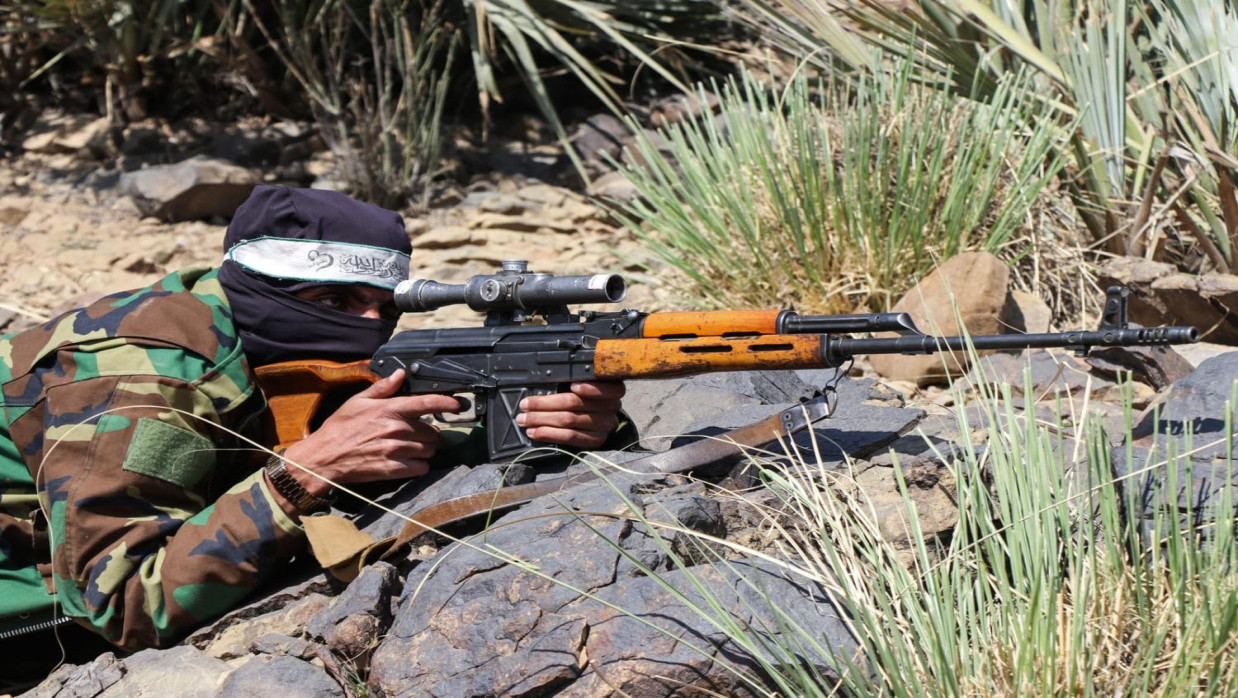
The growing conflict between Pakistan and Afghan Taliban officials is no longer restricted to border issues or isolated security-related incidents. It has grown into a larger narrative contest in which both sides strive to portray themselves as victims of terrorism while blaming the other of permitting terrorist networks to operate on their territory.
Pakistan's fundamental argument is that the primary security threat stems from the Tehrik-i-Taliban Pakistan (TTP), which has utilized Afghan land to organize, train, and commit terrorist attacks against Pakistan. The Taliban, meantime, refute these claims and emphasize the threat presented by Islamic State Khorasan Province (ISKP), claiming that Pakistan also has extremist networks operating from its own borders. The outcome is a loop in which each party claims to be fighting terrorism while condemning the other's counterterrorism efforts. However, comprehending the current situation necessitates going beyond competing narratives and evaluating the chain of events that led to this point.
According to Islamabad, the issue originated with the TTP, not the ISKP. Following the Taliban's restoration to power in Afghanistan in 2021, Pakistan frequently requested Kabul to prevent Afghan territory from being used to launch strikes on Pakistan. Islamabad was concerned that a group known for opposing the Pakistani state had secured operational space over the border.
This issue has not been restricted to Pakistan's allegations. Multiple foreign assessments have revealed TTP's existence and activities in Afghanistan. According to United Nations Security Council monitoring reports, TTP is one of the largest insurgent threats operating from Afghan territory, and the group's operations have contributed to regional insecurity.
The primary point of contention, therefore, is not whether TTP members exist in Afghanistan; rather, it is about the extent of the Taliban authorities' culpability, their capacity to govern these organizations, and whether adequate action has been taken to combat them. This distinction is significant because it distinguishes the factual matter of militant presence from the political question of accountability.
At the same time, the Taliban's fears about ISKP cannot be ignored. ISKP poses a significant threat to Afghanistan, Pakistan, and the wider region. The organization has previously attacked the Taliban, Pakistani security personnel, civilians, and international interests. Countering ISKP is a shared security goal for Kabul and Islamabad.
However, the issue resides in the evidence supporting rival statements. When verified facts are used to promote a story, it gains influence. Pakistan's case against TTP has received increased international attention since it is reinforced by repeated foreign evaluations that indicate the group's presence and actions in Afghanistan. In contrast, charges of Pakistani backing for the ISKP require more publicly accessible proof before they can gain international credibility. The recent Taliban statements about operations against ISKP within Pakistan show how counterterrorism measures have been linked to strategic messaging. In today's security context, military measures are used not just to eliminate threats, but also to transmit political statements. Attack against an alleged militant target has symbolic importance since it aims to demonstrate capacity, legitimacy, and deterrent.
For the Taliban, portraying themselves as a force capable of combating the ISKP outside Afghanistan's borders enhances their case that they are an independent security provider rather than a cause of instability. For Pakistan, the focus remains on the unsolved issue of cross-border militancy by organizations hostile to the Pakistani state.
The underlying issue is that both countries are caught in a security quandary. Pakistan is concerned that armed organizations operating from Afghanistan may threaten its internal security, whereas the Taliban see Pakistani operations, especially cross-border strikes, as abuses of sovereignty. Each side sees the other's security measures as hostile, rather than protective.
A battle of allegations will not get us far. Afghanistan and Pakistan have similar terrain, history, and security issues that cannot be separated by borders. Terrorist organizations, like as the TTP, ISKP, and others, thrive from interstate conflict and distrust.
A long-term approach necessitates intelligence collaboration, strengthened border systems, and direct security conversation. The Taliban leadership must recognize that giving any extremist organization the freedom to act against neighbouring countries will harm Afghanistan's regional status. Similarly, Pakistan must keep its counterterrorism actions targeted, evidence-based, and coordinated via diplomatic channels.
The future of Pakistan-Afghanistan ties will ultimately be determined not by which party makes the strongest charge, but by which side exhibits a stronger commitment to preventing conflict from spreading across borders. In the fight of narratives, credibility is established via facts, transparency, and consistent behaviour, not through political propaganda alone. Pakistan's primary security concern is that forces hostile to the Pakistani state do not establish operational bases in Afghanistan, while Afghanistan's stability is also dependent on preventing militant networks from exploiting regional tensions. The true test for both Islamabad and Kabul will be whether they can overcome mutual hostility and recognize that terrorism is not a tool that can be selectively allowed. In a region already plagued by strategic uncertainty, a lengthy blame game would only allow extremist forces to proliferate; collaboration, no matter how tough, remains the only viable road to long-term security.


0 Comments
LEAVE A COMMENT
Your email address will not be published