

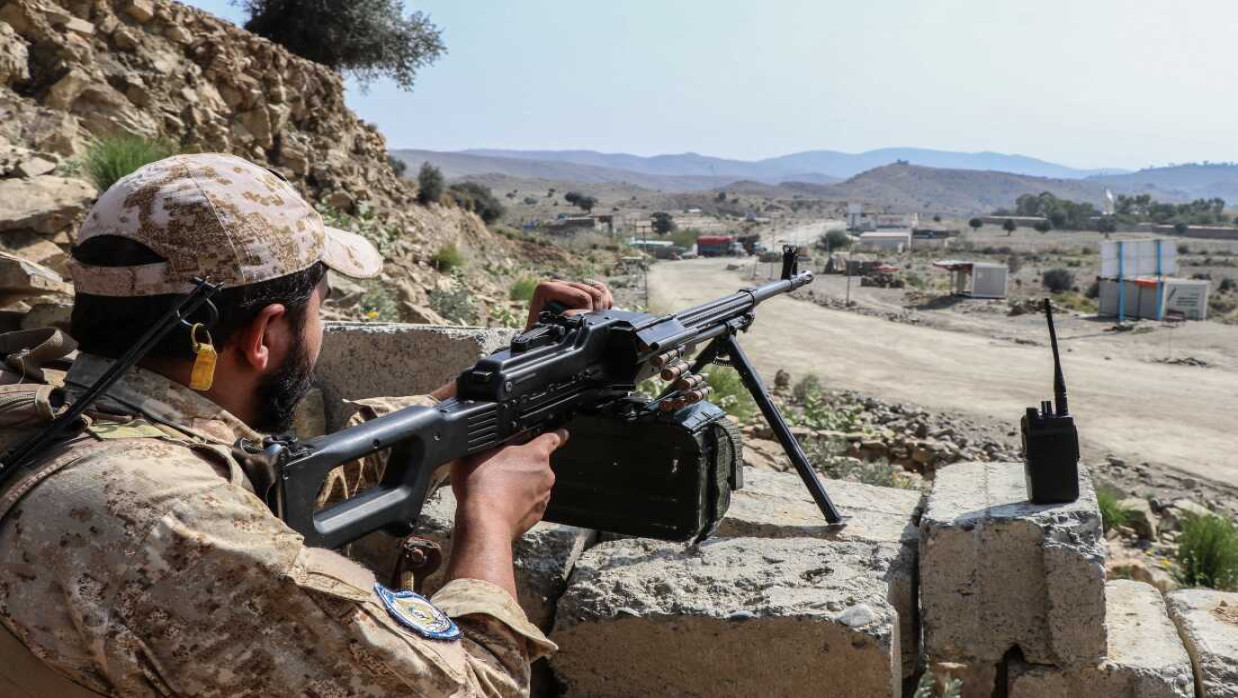
The relationship between Pakistan and Afghanistan has experienced increasing tension in recent years because both countries face security issues and they accuse each other of harboring armed groups who operate across their shared border. Pakistani security sources reported that Afghan nationals who belonged to a militant group attempted to cross into Pakistan which led to their identification and subsequent elimination. The accounts of the incident demonstrate that Afghan territory functions as a base for armed groups which conduct operations against Pakistan.
Pakistani officials and security commentators argue that Afghanistan continues to function as a permissive environment for a range of militant actors. The groups they study use border areas that lack proper control to conduct their recruitment and training activities which help them organize their cross-border operations. The claims presented here have existed since 1990 because Islamabad security officials established a permanent belief that Afghan instability creates security dangers for Pakistan. The analysis describes militant networks as flexible organizations which use weakly monitored areas to operate their activities because security forces cannot control those regions.
In Pakistan, officials view the problem as a permanent threat because they believe it exists beyond separate events. Officials assert that militants use the border region for their operations because counterterrorism operations create pressure on their activities in Pakistan. The security forces in Khyber Pakhtunkhwa and Balochistan face attacks from insurgent groups which develop challenges for border area stability because of this situation.
The Afghan response to the allegations focuses on three main points which include their right to sovereignty and their security needs and their inability to manage border areas entirely. Afghan authorities have periodically rejected claims that their territory is being systematically used against neighboring countries. They show their commitment to protect Afghanistan from militant threats by explaining their military operations along the Afghan border with Pakistan. The country remains challenging to govern because of its history of war which destroyed infrastructure and created economic problems that especially affect remote rural areas and mountainous regions.
International observers have often described the Afghanistan-Pakistan border region as one of the most complex security environments in the world. The Durand Line which remains disputed in political terms cuts through tribal and ethnically linked communities making cross-border movement historically fluid. The situation has created ongoing difficulties for enforcement operations at both border checkpoints. The area has seen continuous movement patterns which allow for both legitimate travel and illegal transport to happen since military personnel maintain a strong presence in the region.
Multiple armed groups have been found to exist within Afghanistan according to independent assessments which include United Nations monitoring bodies. The different interpretations of these findings result in major differences between the two sides. Some analysts view them as evidence of limited state control in certain regions while others caution against using such reports to draw broad conclusions about state-level complicity or intentional support.
The development of militant groups which transcend both ideological and organizational boundaries has created greater security problems for Pakistan. Security analysts observe that regional groups operate with decentralized structures because their members can change their connections. The combination of splinter factions and local commanders and shifting alliances creates challenges for attribution which hinders diplomatic efforts. The conflicting accounts that emerge from this situation occur because both sides understand security incidents according to their particular security requirements.
The issue contains another dimension which requires examination through the external influence allegations. Pakistani security experts have claimed that foreign intelligence agencies operate in Afghanistan to back specific militant groups which they use to create pressure against Pakistan. The claims remain disputed because they lack verification and yet they show the ongoing regional conflict which has determined South Asian international relations throughout history.
Afghanistan's leaders have made multiple demands for regional collaboration while they call for restraint because they believe mutual blame blocks effective counterterrorism efforts. Afghan officials have stressed that instability in their country should not be used as justification for cross-border tensions and they have urged Pakistan to focus on joint mechanisms for border management and intelligence sharing.
The two countries maintain diplomatic relations but their trust remains weak. The two countries maintain their relationship through border closures and trade interruptions and their periodic military conflicts. Security incidents create different narratives for each side which become more entrenched through each occurrence. The process of establishing long-term stability experiences difficulties because organizations fail to achieve necessary progress.
The picture becomes more complicated through the humanitarian dimension. People from both sides of the border depend on cross-border access to support their business activities and family connections and their methods of earning a living. Security personnel implement stricter access controls which succeed in their goal to stop unauthorized entry but they disrupt the daily travels of people who need to move about. The situation forces authorities to find a solution which enables them to protect their territory while maintaining current economic activities and social structures.
The situation shows a larger regional difficulty which requires solutions to control transnational militancy between three factors which include governmental abilities and historical conflicts and international power struggles. Pakistan maintains its focus on urgent cross-border security threats while Afghanistan demonstrates its internal limitations and different views about responsibility. The ongoing cycle of allegations and counter-allegations will continue because both parties need to establish permanent communication systems and validation methods to end their ongoing security problems which damage their already delicate relationship.


0 Comments
LEAVE A COMMENT
Your email address will not be published