

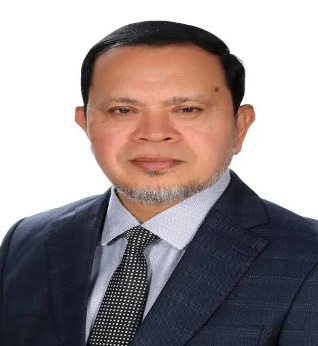

An In-Depth Interview with Dr. Md. Sabur Khan, President of PUAB
Conducted by Dr. Serajul I. Bhuiyan
In recent years, private universities in Bangladesh have emerged as key drivers of national development, increasing access to higher education, stimulating innovation, and cultivating global academic linkages. Even so, the institutions continue to be run within the structural confines of the present regulatory framework dominated by the University Grants Commission (UGC). Originally designed to control public universities, UGC’s standardized regulatory policy has proved to be inappropriate for the entrepreneurial, self-funded, and performance-based nature of the private universities. From the cascading delays in approval and overloading bureaucratic intervention to the absence of targeted research funding and inhibition of collaboration policies, the UGC framework has a tendency to discourage rather than enable progress of quality, innovation, and academic excellence in the private sector of higher education.
In this exclusive interview, Dr. Md. Sabur Khan President, Private University Association of Bangladesh (PUAB) and Founder & Chairman, Daffodil University and Daffodil Family makes a powerful and urgent case in support of the establishment of a separate Higher Education Commission (HEC) exclusively for private universities of Bangladesh. Drawing on South Asian comparative models and global best practices, Dr. Khan argues that the current UGC regime, which is focused on public institutions, cannot accommodate the distinct entrepreneurial, autonomous, and innovation-oriented nature of private universities. The consequences have been far-reaching: protracted academic approvals, stifled research, deterred international collaborations, and a regulatory style that suspects high-performing institutions rather than encouraging them.
Seeing the complex restrictions and institutional chokepoints which now operate more as impediments than enablers of quality higher education, this timely debate draws attention to policy reform at a critical juncture in Bangladesh’s educational revolution. With this extensive interview, Savannah State University Professor and South Asia Journal senior columnist Dr. Serajul I. Bhuiyan interviews Dr. Khan in an official Q&A format to analyze the rationale, road map, and reform agenda necessary to enable private universities as national development partners and global leaders in higher education excellence.
Structural and Policy Justification
Q1: What are the bare minimum weaknesses of the current regulatory framework under UGC in regard to controlling private universities of Bangladesh?
Dr. Sabur Khan: The University Grants Commission (UGC), having been established for managing state-funded universities, operates on a model geared towards state-funded institutions. The process with a naturally inherent assumption bypasses the unique characteristics of private universities, which are self-funded, self-managed, and entrepreneur-led. The UGC employs uniform processes that overlook this distinction, leading to bureaucratic inefficiencies, unreasonable delays in academic approvals, and lack of responsiveness to institutional needs. This regulatory imbalance dismotivates academic leadership, hinders operational agility, and deters long-term investment in academic innovation.
- Do you believe the one-size-fits-all policy style of UGC suppresses the innovation and development of private universities? If so, can you give examples?
Dr. Sabur Khan: Absolutely. Private universities should be run with entrepreneurial spirit, agility, and responsiveness to market and global demands. But under the straitjacketed, uniform UGC system, curriculum updating, new program approvals, and international partnerships are held up by indefinite delays. For example, ideas for new front-line streams like Artificial Intelligence or Data Science have been pending for years, whereas global demand surges.
- What would you see a separate Higher Education Commission for Private Universities doing differently in terms of governance, funding policies, and academic freedom?
Dr. Sabur Khan: It would be facilitative and enabling, not controlling. It would:
- Set performance-based targets, not prescriptive constraints.
- Focus on institutional diversity in terms of infrastructure, faculty quality, and research capacity.
- Foster innovation through effective approval processes and competitive funding.
- Impose academic autonomy but with accountability and transparency.
Innovation, Autonomy, and Academic Excellence
- Private universities argue that the UGC’s bureaucratic control delays curricula modernization and research innovation. How would an independent commission eliminate these hindrances?
Dr. Sabur Khan: An unbiased commission would make quicker approval of curricula institutionalized, foster autonomy in academics design, and support sector-related research. It would also provide advisory boards comprising industry-academia professionals to ensure responsiveness, competitiveness, and innovation.
- In the era of the Fourth Industrial Revolution, how can a stand-alone HEC enhance the agility and responsiveness of private universities towards emerging areas such as AI, FinTech, and sustainability?
Dr. Sabur Khan: By reducing bureaucracy and encouraging industry-aligned program development. A stand-alone HEC can:
- Certify market-driven programs within months instead of years.
- Foster interdisciplinary research centers.
- Create adaptive credit-based systems in keeping with global trends.
- Could you give some specific examples of cases where delays in approval of UGC or regulatory rigidity have negatively impacted private universities’ academic programs or international collaborations?
Dr. Sabur Khan: Most private universities have suffered over 12–18 months of delay in seeking approval for launching new programs. Collaborative degree program linkages with foreign universities easily collapse with long-term uncertainty. Such obstacles dissuade global linkage and restrict student mobility.
Comparative Regional Models
- India and Pakistan have drifted towards alternative regulatory paradigms for public and private institutions. What can Bangladesh derive from such South Asian paradigms?
Dr. Sabur Khan: India has established the National Accreditation Council and is urging the Higher Education Commission of India (HECI) to separate governance and accreditation. Pakistan has also given more autonomy to private universities within provincial frameworks. Bangladesh can adopt a dual-system approach—having a national UGC for policy control but shifting regulation of the private sector to an expert HEC.
- How would the planned HEC differ from global best practices in quality assurance and accreditation frameworks for private higher education providers?
Dr. Sabur Khan: The HEC would follow global examples such as the UK QAA or Malaysia MQA—setting performance targets, comparing global rankings, and performing external quality audits, but not micromanaging daily operations.
Equity and Partnership
- How would you counter critics that argue that a stand-alone commission would result in further fragmentation or lower standards in the higher education system?
Dr. Sabur Khan: Quite on the contrary, differentiated governance only makes it more efficient. Better coordination devices between UGC and private HEC would enable standards to be improved by interventions customized according to needs. The goal is not fragmentation but regulation based on context.
- How would the proposed HEC enable greater public-private partnerships between private and public universities while preserving their respective missions and financial models?
Dr. Sabur Khan: By operating as one platform for joint research, credit transfer, finance for innovations, and faculty exchange. Public-private sector synergies can be brought under one national umbrella with two working wings.
Stakeholder Impact and Policy Pathway
- How will the students and staff members benefit from the setting up of an independent HEC for private universities?
Dr. Sabur Khan: Students will gain quicker access to cutting-edge programs, industry-driven expertise, and global exposure. Faculty will benefit from intellectual independence, research funding, and merit-based hiring. The entire academic atmosphere will be more dynamic and competitive.
- What kind of stakeholder consultation or national debate would you envision in preparing the policy framework of such a commission?
Dr. Sabur Khan: Full-fledged, multi-stakeholder national consultation with UGC, MoE, private university leadership, faculty association, student unions, and international experts. APUB is ready to organize regional roundtables and white paper presentation.
- Can the proposed HEC get politicized or face opposition from public sector organizations or government departments? How can it be avoided?
Dr. Sabur Khan: There is always an associated risk with change. But legal cover, stakeholder interaction, and transparency can lower it. Clear mandates and tenure-inclusive appointments can protect it from undesirable pressures.
Strategic Vision
- What would be the role you would envision for a Higher Education Commission for Private Universities to render Bangladesh competitive at the international level in higher education?
Dr. Sabur Khan: It would be the driver of international ranking, productivity in research, and international collaborative academic approaches, these three robust pillars towards global competitiveness.
- If a commission were to be established, what would be its top priorities for the first five years? Would it include digital transformation, international rankings, or employability?
Dr. Sabur Khan: Its top priorities would have to be:
- Academic approvals on fast track.
- A national research grant system.
- Digital transformation of private universities.
- Global benchmarking and rankings.
- Curriculum with industry focus with a focus on employability.
- Would you envision this commission contributing to a more research-oriented, networked, and inclusive private higher education sector in Bangladesh?
Dr. Sabur Khan: Yes, definitely. With defined metrics, research grants, and international alignment, it can make Bangladesh’s private universities hotbeds of innovation and people-centered development.
Legislative and Political Considerations
- Where are things at in your campaign for this reform at the policy and legislative levels? Have there been any positive responses from Parliament or the Ministry of Education?
Dr. Sabur Khan: We’ve already raised this in policy debates with MoE, UGC, and parliamentary standing committees. The reaction has been heartening, particularly regarding the imperatives of differentiated governance. More formal advocacy in the way of white papers is in progress.
- What is APUB’s role in designing a white paper or policy roadmap for an independent HEC for Private Universities?
Dr. Sabur Khan: APUB will be the leader in this process. We will collectively endeavor with the help of legal, academic, and policy experts to draw a blueprint outlining structure, legal basis, operational framework, and accountability mechanisms.
Closing Reflections
- In one sentence, what is your most important message to remaining fence-sitters among policymakers?
Dr. Sabur Khan: Real reform is to enable—not control private universities to shine as partners of national development and international class standards.
- If you were allowed to directly address the Chief Advisor or the Education Advisor on this matter, what would your strongest appeal or proposal be?
Dr. Sabur Khan: I would respectfully request them to support an independent Higher Education Commission for Private Universities—focused on facilitation, innovation, and global relevance—so that Bangladesh can unleash the full power of its private higher education sector.

0 Comments
LEAVE A COMMENT
Your email address will not be published