
The latest findings of the United Nations Independent International Commission of Inquiry have once again brought the plight of Palestinians into sharp international focus. Its report, released on 26 October 2026, identifies war crimes and crimes against humanity in the Occupied Palestinian Territory and raises grave concerns about the continuing violence in Gaza. More disturbing is the Commission’s finding that Palestinian children in the occupied West Bank have been subjected to deliberate violence and age-based persecution. These findings demand more than expressions of concern; they require concrete international action.
For decades, Palestinians have endured occupation, displacement, restrictions on their movement and repeated episodes of violence. Since 7 October 2023, the scale of suffering has intensified, leaving thousands dead, families displaced and communities struggling to survive. The latest UN findings reinforce a fundamental question: how long can grave violations of international law continue without meaningful consequences for those responsible?
The report’s findings on children are particularly disturbing. According to the Commission, between 7 October 2023 and 30 September 2026, Israeli forces killed 1,080 Palestinians in the West Bank, including East Jerusalem, among them at least 237 boys and seven girls. A further 10,940 people were wounded. The Commission concluded that Israeli forces deliberately killed and inflicted serious physical and mental harm on Palestinian children because of their status as Palestinian children. It characterised the conduct as age-based persecution, a finding that underscores the discriminatory dimension of the violence.
Children are entitled to special protection under international humanitarian and human rights law. They should be able to attend school, play, receive medical care and grow up without the constant threat of violence. Yet, for Palestinian children, these basic expectations of childhood have increasingly been replaced by fear, displacement and bereavement. When children are killed, wounded or traumatised in circumstances that demand independent investigation, the international community cannot dismiss their suffering as an unavoidable consequence of conflict.
The incidents documented by the Commission illustrate the human cost behind the statistics. In Hebron, a seven-month-old baby was reportedly killed on 5 June 2026. In Tammun, on 15 March 2026, Israeli forces killed both parents and their two youngest sons in a car carrying a family of six. The two surviving sons were wounded and reportedly assaulted by soldiers. Such incidents demand transparent investigations to establish individual responsibility and ensure that the victims receive justice.
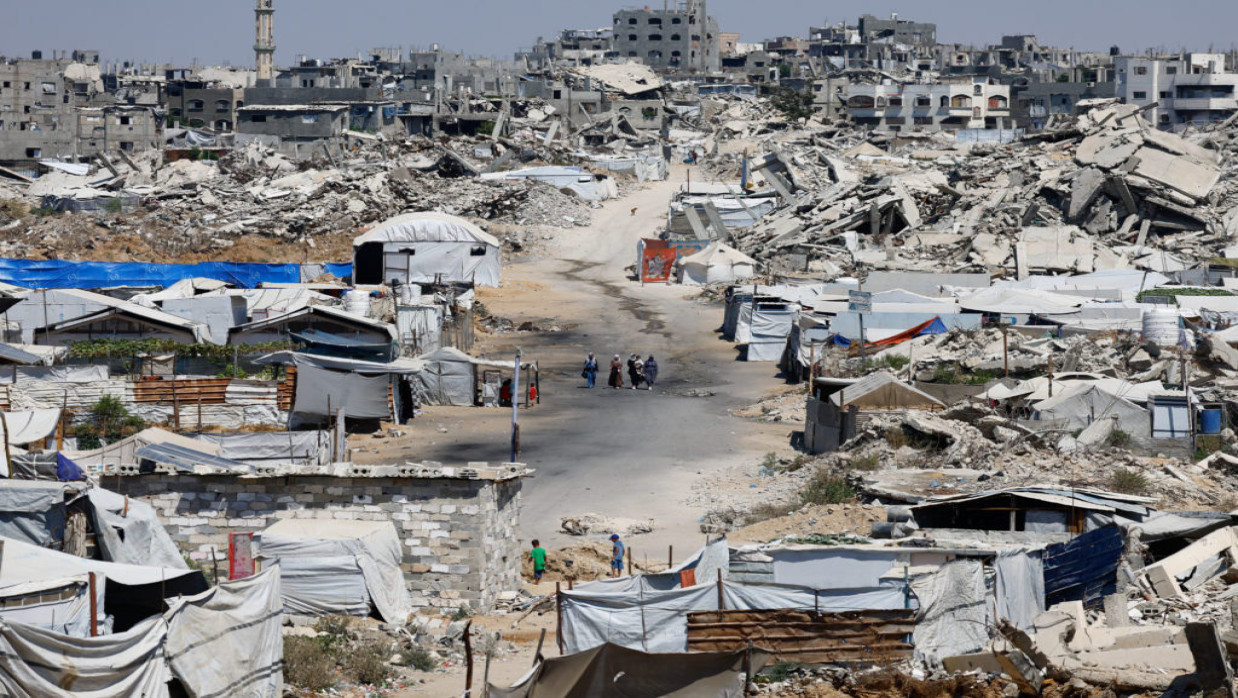
The situation in Gaza remains equally alarming. The report indicates that Israeli territorial control had expanded from approximately 53 per cent of the Gaza Strip to at least 60 per cent by September 2026, while civilians continued to face lethal risks near the so-called Yellow Line. A ceasefire should provide a pathway towards safety, humanitarian relief and reconstruction. It cannot become a political arrangement under which civilian deaths, territorial encroachment and the denial of fundamental rights continue without effective scrutiny.
The central issue is not simply the number of casualties. It is the apparent persistence of a pattern in which civilian protection is repeatedly undermined. International humanitarian law requires parties to armed conflict to distinguish between civilians and combatants, take feasible precautions to protect civilian lives and refrain from attacks that violate the applicable rules of proportionality. These obligations are not optional, nor can they be suspended because a conflict is politically complex. Allegations of war crimes and crimes against humanity must be investigated impartially, with prosecutions pursued wherever the available evidence and applicable law warrant them.
Equally concerning is the credibility crisis facing the international system. Governments frequently invoke human rights, civilian protection and the rules-based international order when condemning violations elsewhere. Those principles lose their authority, however, when their application appears selective. The failure to translate repeated warnings about Palestine into effective protective measures reinforces the perception that international law is enforced according to political interests rather than universal standards.
The United Nations and its member states must therefore move beyond statements of condemnation. They should support independent investigations, preserve evidence, pursue accountability through competent international and national legal mechanisms, and press for full compliance with international humanitarian law. All parties must protect civilians, while humanitarian organisations must be allowed safe and sustained access to those in need. States with diplomatic and political influence should use it to secure these objectives rather than permit strategic alliances to overshadow legal obligations.
Pakistan has consistently supported the Palestinian people's right to self-determination and an independent, sovereign state based on pre-1967 borders, with Al-Quds Al-Sharif as its capital. This position reflects not merely political solidarity but a commitment to the principles of justice, freedom and the rejection of prolonged occupation. Pakistan and other supporters of Palestinian statehood should continue to press for accountability, humanitarian protection and a credible political process that addresses the root causes of the conflict.
Ultimately, the significance of the latest UN report will depend on what follows its publication. Documentation can establish patterns, expose wrongdoing and preserve evidence, but it cannot by itself protect a child standing in the path of violence or restore a family destroyed by conflict. That responsibility rests with states and international institutions capable of turning legal findings into meaningful action.
The world must not allow the suffering of Palestinians to become an accepted feature of international politics. A child's right to life cannot depend on nationality, religion or geography. If the international community is serious about human rights, it must demonstrate that principle in Palestine. Justice delayed deepens the wounds of victims; justice denied threatens the credibility of the entire international system. The time has come to ensure that accountability is not merely promised, but pursued.


0 Comments
LEAVE A COMMENT
Your email address will not be published