

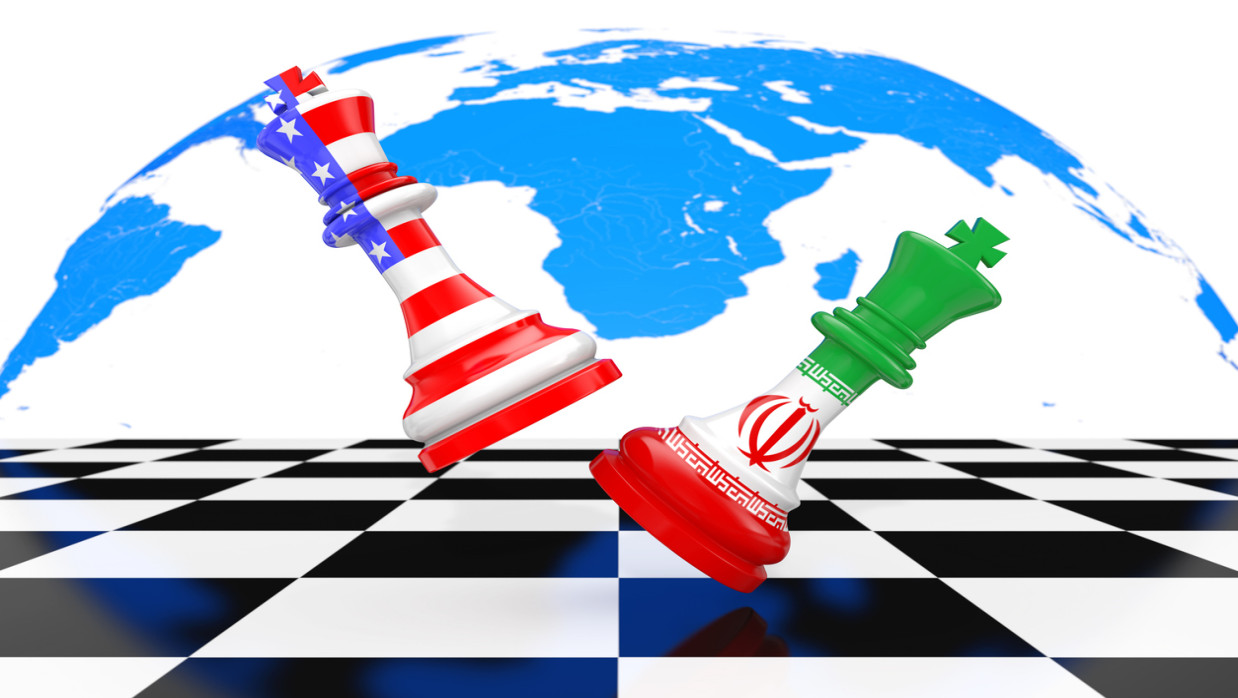
In the recent confrontation between the United States and Iran, different strategies were adopted by both states to overwhelm and subdue each other. Iran pursued a strategy based on decentralization of military command, asymmetric warfare, horizontal warfare, and making the strait of hormuz a bargaining chip. On the other side, the United States lacked a properly calculated analysis and proper preparation. The United States overlooked the strategic significance of the strait of Hormuz which became a central point throughout the conflict.
In a war, the most important thing is to what extent a state is prepared and what its calculations are regarding the post war scenario. Unfortunately, the United States seems to be in troubled waters due to a lack of strategic planning and calculation, a lack of awareness of Iran's response, and Tehran's strategic geography. Hence a state must know about its enemy's military potential and capacity before waging a war.
Iran was prepared for any misadventure since 1979 because it had realized that the United States posed a grave security threat to its sovereignty and territorial integrity. This notion compelled Tehran to build up its military force to counter any upcoming threat. After the Islamic revolution of 1979, Iran divided its army into two parts. The first part of its military force consisted of its old army which was responsible for the protection of borders and and territory. The other one was the Islamic Revolutionary Guards Corps (IRGC) which was created after the revolution of 1979. The purpose of creating IRGC was to counter any future aggression posed by any state. Therefore, in the recent conflict with the U.S., the IRGC fought against the enemy throughout the confrontation. With the help of the IRGC, Iran remained resilient and held the upper hand throughout the military confrontation. Thus its military strategy to bifurcate its force structure into two parts helped it remain composed and sustain and give the U.S. and Israel a tough time.
Similarly, Iran introduced a military doctrine known as Mosaic Defense doctrine which it divided its military command among all provinces and decentralized the military leadership and structure. All provinces had their own military command that allowed them to attack the legitimate target whenever needed without taking permission from the central. This military strategy helped Iran sustain its momentum, and not let its enemy subdue it.
Along with that, Iran used the strait of Hormuz as strategic leverage by completely closing it to shipping trade. It weaponized the strait to exert pressure on the U.S. For the first time, Iran claimed control over the Strait of Hormuz, inflicting great damage on the world's oil markets as 25% of global crude oil trade flows through the Strait of Hormuz. This closure of the strait not only gave Iran huge leverage over the United States but also enhanced the significance of the strait, making seaborne trade paramount for the globe.
The story does not end here. Tehran pursued a horizontal warfare strategy, aimed at spreading the conflict across the region as a means to pressure the U.S. to halt its bombing. Tehran framed all American military bases in the region as its legitimate targets, hitting American military infrastructure and American assets to weaken the enemy. However, all Arab states have shown strategic resilience so far by not targeting Iran in response. Thus, Iran's strategy to spread the conflict throughout the region became a viable approach.
Apart from that, the asymmetric warfare strategy of Iran based on using cheap drones and a huge stockpile of missiles contributed greatly to its projection of hard power and conversion of this confrontation into a protracted war. The reason why Iran has sustained itself against the world's most powerful state lies in the pursuit of asymmetric warfare. It is not a piece of cake for a country that remained under sanctions for the last forty-seven years and now it has managed to stand against the superpower of the time. This is because of the long-term planning and preparation that it carried out from the beginning.
The United States perceived Iran in a very simplistic manner. It assumed that it could win a quick and decisive victory against Iran in a few days. However, the war is still going on and taking the shape of a protracted war. Though the U.S. and Israel successfully decapitated the leadership of Iran in the first instance, Iran's regime is intact and a more radical regime now controls Iran's political system.
Furthermore, Washington looked unprepared for this war as, amid the tensions, many U.S. Army generals suggested that the confrontation should be halted as the U.S. Army was running out of munitions. As a result, the war is becoming very costly for the U.S. after the loss of a large amount of munitions and major military bases in the Gulf region.
One important factor that the U.S. must have contemplated deeply before attacking Iran is the Strait of Hormuz. The Strait of Hormuz turned into a major strategic center of gravity once the war was initiated. On the very first day of the conflict, Iran closed the strait, disrupting the entire oil supply and global energy markets. This response from Iran was not adequately anticipated by Washington which has now become a bargaining chip for Tehran.
Now, the conflict has turned into a war of attrition, where both sides tend to cause damage to each other. According to former MI6 chief Sir Alex Younger, Iran holds the upper hand in the confrontation. Therefore, Tehran does not seem to be putting an end to this conflict. However, the U.S. is deeply interested in stopping the bombing and reaching an agreement so that global oil prices could decline immediately and Republicans could win midterm elections decisively but if the war ends. But, Tehran is not ready to halt the bombing due to having control over the Strait. Thus, in the foreseeable future, the war is not going to end unless both sides reach an agreement, but it requires immediate resolution of the major concern i.e., the future of the Strait of Hormuz. If it's future remains undecided, the war could continue indefinitely.


0 Comments
LEAVE A COMMENT
Your email address will not be published