

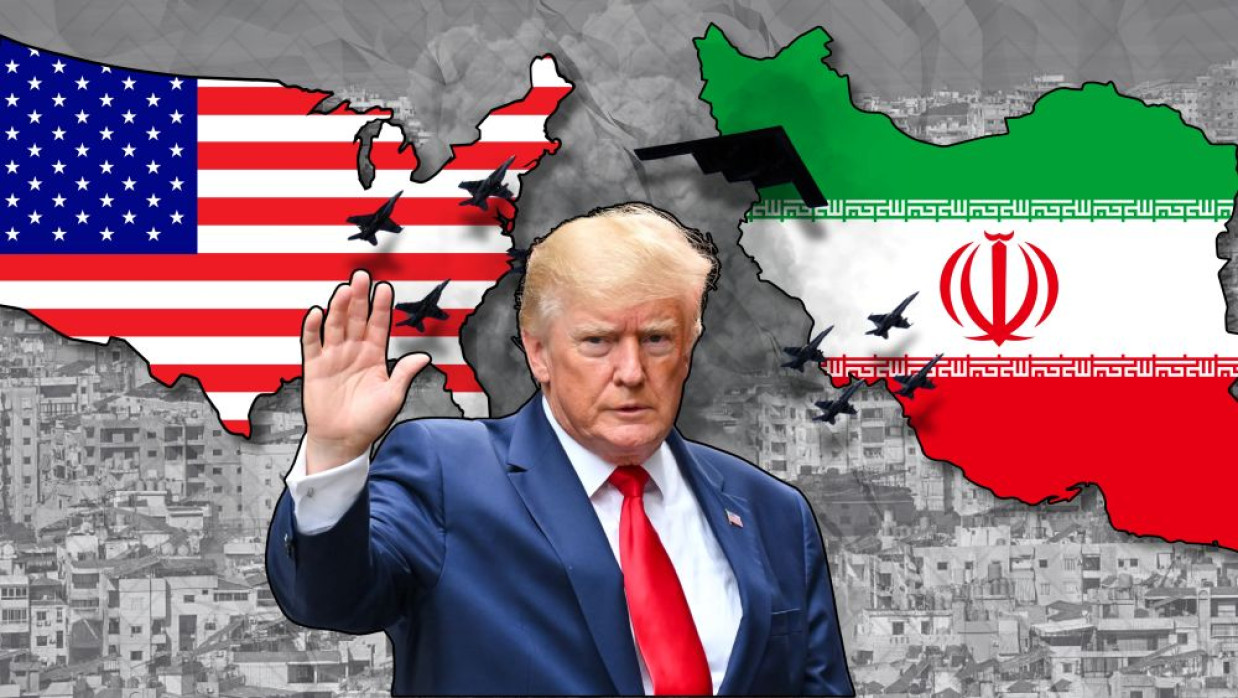
Six months have failed to let President Donald Trump have his way on the Iran-front. Now even prospects of his victory, with United States’ command over Strait of Hormuz, have ceased to prevail. His rhetoric would have certainly carried substantial weight if they were not being questioned in numerous quarters, including outlets of media, which are not dominated primarily by only what he seeks. From day one, the tiding has not totally favored Trump and/or have taken turns hardly desired by him and Israeli Prime Minister Benjamin Netanyahu. Perhaps, the situation would have been different, if at his desire, the rest of the world- particularly western and Arab powers had joined US and Israel in their war against Iran. But they chose not to.
Trump probably never envisaged prospects of his being isolated by his own allies on the Iran-front. He was apparently guided by the assumption that the superpower could not be ignored. What United States said was supposed to be yielded to, at least in his view? Certainly, it would be wrong to assume that this has never happened. It would be equally erroneous to assume that “dictates” of US are not considered. They are, but not just from Trump’s angle or from that of US and Israel, where the Iran-war is concerned. Now, their priority is considering them from their own angle, in context of their respective national interests.
Trump was not prepared for Iran-war to extend beyond six months. He had not envisaged limited reach of his own diplomatic pursuits. What he perceived and calculated was probably only from the angle of one and only superpower in the world. This left little ground for considering that the same could be questioned, opposed and also openly retaliated again. Well, this is what has been faced by his Iran-war. Perhaps, Trump did not spend much time to deliberate over Israel’s stand on Iran-war. Israel has been aiming for this for quite some. It’s a part of Israel’s “ambitions” of expansion. Perhaps, he yielded to pressure from Netanyahu and/or that of Jewish lobby. But he did.
When he asked his “allies” to join US against Iran, perhaps little importance was given to certain hard and fast rules guiding a considerable number of them. All don’t give Israel the same importance that US chooses to give. All are also not as close to Netanyahu as Trump is. Netanyahu probably wouldn’t have considered aligning with any other country to target Iran. In contrast, most Arab countries have no or limited chances of aligning with Israel, giving no importance to superpower being in alliance against Iran. In addition, the other countries have given priority to the war being too costly for them to take the risk of joining it. So what if this amounted to saying “No” to US.
Paradoxically, Trump has not maintained any uniform approach throughout the six-month period. It has been marked by issuing threats of more devastating strikes against Iran as well as few ceasefires, the most significant of which was reached on June 17, for a period of six months. This ceasefire- Memorandum of Understanding (MoU)- was also violated from both sides and since its expiry on Aug 17, little importance has been given to resuming talks. Against this backdrop, it would not be wrong to assume that Trump has lost trust on this front.
Little importance was given by Trump to economic problems it could lead to for the region as well as the world. Had Iran been defeated in just a few days, the result would have been probably different. Trump probably assumed control of Iranian oil refineries to be in United States’ hand just as he has recently announced that of Venezuela’s. The deal with Venezuela gives US control of its 65 billion barrels of proven petroleum reserves. This still remains a distant, practically illusive, goal on the Iran-front for Trump.
On their part, it seems other countries have become sharper and wiser about pursuit of their respective diplomatic approaches, without choosing to be only and/or predominantly dependent on US. With respect to Gulf states, during the course of Iran-war, alliance with US proved to be of no help to them. It failed to provide them the needed security. The Mecca Pact signed on Aug 7 by Saudi Arabia, Turkey and Pakistan in Riyadh appears to have been reached to enhance prospects of stronger regional coordination and unity for regional security. Options are being reportedly considered for inclusion of more countries in the pact.
Iran has not refrained from spelling out importance of national and regional unity among various nations. Of late, it has been engaged in talks with Qatar, Oman and Pakistan for reopening Strait of Hormuz. This also raises questions about the degree other countries may be willing to abide by Trump’s threat of economic sanctions against those engaged in ties with Iran. On the other hand, Iran has not been diplomatically and/or economically isolated as desired by Trump. Rather, Trump hasn’t secured the support he has tried for against Iran, economically as well as diplomatically. Symbolically, he has tried to play the role of a superpower, but has not succeeded.
During the present phase, this reality has surfaced on another front, that is the Canadian. Yes, this refers to Canada’s decision to indulge in a trade-war, practically equivalent to one begun by Trump against it. In retaliation against levies imposed by Trump on imports from Canada, it has announced counter-tariffs on a series of US goods. Rather than remaining quiet and not retaliating against US levies, Canada has reacted strongly. In other words, Canada has refused to be bullied by US. This is also suggestive of superpower’s image being hardly as commanding as probably Trump has desired. The explanation is simple. This image has ceased to prevail for a significant number of countries. These include Gulf countries who have chosen to strengthen their diplomatic bindings within their own region also. These have learned a strong lesson from the US-Israel war against Iran. US cannot be trusted or relied upon from their respective angles. Besides, continuity of the war for more than six months, without spelling victory for any country, has proved to be fairly costly for United States’ image as a superpower!


0 Comments
LEAVE A COMMENT
Your email address will not be published