

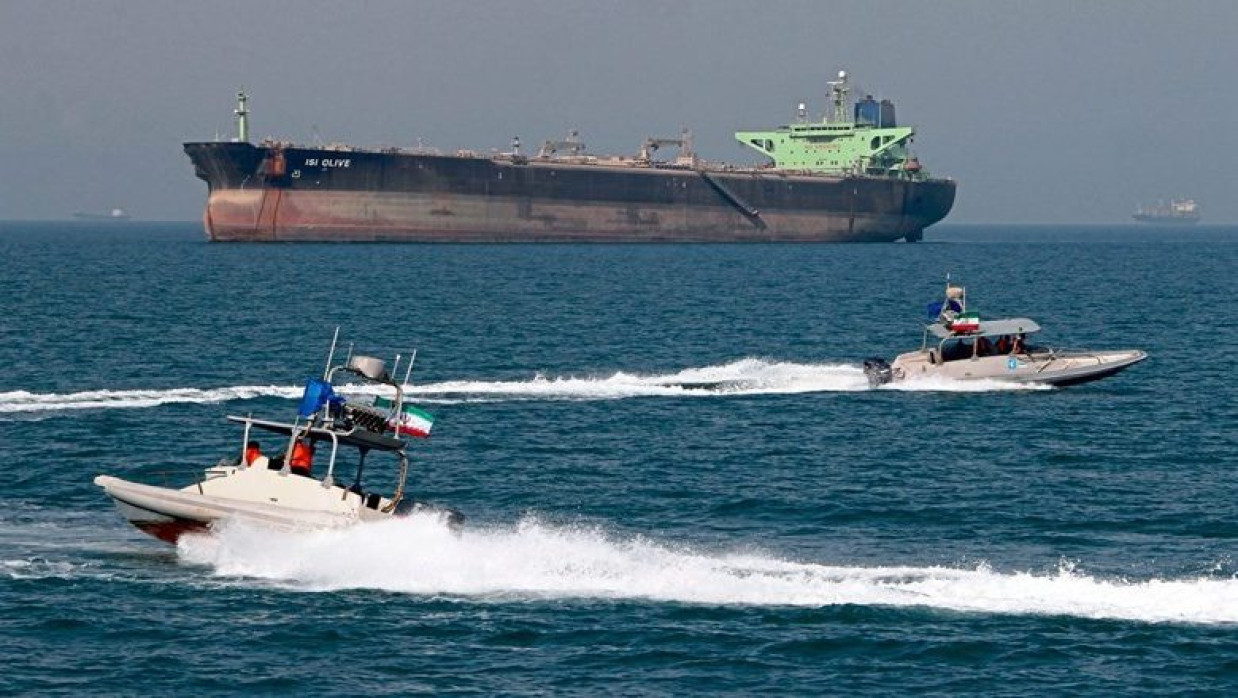
The Middle East has now plunged back into a state of dangerous uncertainty with reports that Iran has launched a second wave of missiles and drones against the United Arab Emirates and the Emirati air defenses have succeeded in intercepting the second wave. The incident, after a previous interception reported on April 8, has cost the region the feeling that it was returning to a pattern of confrontation when many had thought that it was heading out of it. To a section of the globe, which exports about a third of all seaborne oil in the world, and to which so much of the open maritime paths to the four corners of the earth pass, every slight augmentation of the military effort has an infinitely extended repercussion.
The latest development is of particularly great importance because, conventionally, the UAE is not considered a frontline battlefield. It has also tediously developed over the last 20 years to become the most commercial hub in the Arab world. The Dubai International Airport has continued to be one of the busiest international airports in the world in terms of international passengers and Jebel Ali Port has been receiving millions of containers every year and a facilitator between Asia, Africa and Europe. The non-oil based economy of the UAE is today giving over 70 percent of the GDP, this represents a clear change of its reliance on hydrocarbons. In brief, the Emirates has bought itself out as a place of stability in a tumultuous region. Any prolonged risk to that image would not only have economic and psychological impacts on Emiratis, but also on international investors, airline companies, insurance companies and supply chains.
The fact that Iran is still pushing Gulf states must be seen within a larger strategic frame of reference. Tehran has one of the largest missile arsenals in the region, consisting, according to Western defense evaluations, of thousands of short- and medium-range ballistic missiles, and a growing drone arsenal. These abilities enable Iran to generate asymmetric power without necessarily having to engage in a conventional war. Drones and missile strikes are inexpensive, deniable in certain instances, and instruments of political timing meant to convey a message of power without a response escalating to the levels of all out war. The unitary doctrine has been witnessed in Iraq, Syria, the Red Sea and now the Gulf once more.
The short term international market issue is the immediate energy problem. International energy estimates anticipate that about 20 percent of global petroleum liquids use or energy flow is through the Strait of Hormuz. The waterway is approximately 21 miles wide at its narrowest points and is thus among the most sensitive points in the global economy. These lanes are fundamentally important to Saudi Arabia, Iraq, Kuwait, Qatar and the UAE. Although no tanker is struck, the aspect of danger perception only increases the insurance premium, freight expenses and speculative oil pricing. As history reveals, the markets are sensitive: the tensions in the gulf in the past have resulted in sudden crude spikes of 5-10 percent in a few days. The world economy has already experienced enough inflation to be feeling fresh instability in the Gulf is the last thing that policymakers in Washington, Brussels or Beijing want to see.
The UAE itself has spent billions of dollars to lessen vulnerability. The pipeline system in Abu Dhabi enables exports of some of its crude to bypass Hormuz through the Fujairah terminal on the Gulf of Oman. It is also with the establishment of the multi-tiered air-defense systems such as high-end radar and interceptors. But not shield of defense can guarantee complete protection. Defenses against missiles are costly, the process of interception is never 100 percent, and even advanced systems could be tested by a saturation attack with drones and ballistic missiles. The tactical aim of repurposing attacks is not necessarily to eliminate targets--it is to instill insecurity, compel expenditure on defense, and remind enemies that economic centers are vulnerable.
Another aspect is a diplomatic one. Not long ago, several Gulf capitals were at work on a wary de-escalation with Tehran. The Saudi-Iran normalization negotiations facilitated by China was an indication that actors in the region were fed up with living in endless proxy wars. The UAE also had access lines with Iran even though there were disagreements. Historically Iran has been a major trade partner of the UAE with Dubai acting as a commercial point of business operations by the Iranians. This pragmatic co-existence indicated that economics could to some extent blunt geopolitics. But missile transactions break that reason. Commercial pragmatism would be more difficult to maintain when there is an increase in security risks.
The United States too can not be a bystander. The American troops have been of differing presence in the last years in the Middle East with about 30,000 to 40,000 troops here and around 30 years with key assets in Bahrain, Qatar, Kuwait and the UAE. The U.S Fifth Fleet has continued to play a central role in securing the maritime in the Gulf. Any continued pressure with regard to the Gulf states by Iran will invariably lead to expectation of a response by the Americans, maybe in terms of missile defense, naval patrols, intelligence sharing or deterrence attacks. However, another protracted crisis of the Middle East is also strategically inconvenient since Washington is also juggling Europe and the Indo-Pacific.
In the case of smaller and middle powers, it is just as serious. The countries like Pakistan, India, Egypt and Türkiye all possess strong economic interests in the Gulf stability. South Asian expatriates who work in the GCC are in the hundreds of millions and remit home billions annually. The Gulf states, Saudi Arabia and the UAE, especially, are the key remittance sources to Pakistan. Any local warfare that would interrupt production, air lines or economic transactions would be immediately experienced in the South Asian families.
Nevertheless, it would be too early to say that the Middle East is on the way to the full-scale war. The area tends to play in the grey area between peace and war, partial attacks, proxy, cyber attack, maritime attacks, and surgical retaliation. Iran understands that a conventional war against a coalition of Gulf states and the United States would be extremely expensive. Meanwhile, Gulf states lean towards stability in economic transformation agenda and not military build-up. That reciprocated warning is some sort of break, even during aggression.
And these are the risks of miscalculation. History abounds with wars that none of the sides initially wanted to engage in but all of them found themselves in. The missile which pushes aside the defenses, a volley resulting in mass casualties or an assault on shipping infrastructure would quickly alter the political calculating. Markets respond immediately; armies use mobilization blisteringly; diplomacy is generally even slower than the missiles.
Again, then, is the Middle East entering into war? The truth of the matter is that it is once more on the verge of a broader crisis. The area is not at all at war, but once again, it is caught in the old cycle of deterrence breakage, of a strategy of signaling and increasing risk. That ought to worry the whole world in an area whereby a single drone airstrike can shift the oil prices and a sole misinterpreted sentence can start a response.

0 Comments
LEAVE A COMMENT
Your email address will not be published