

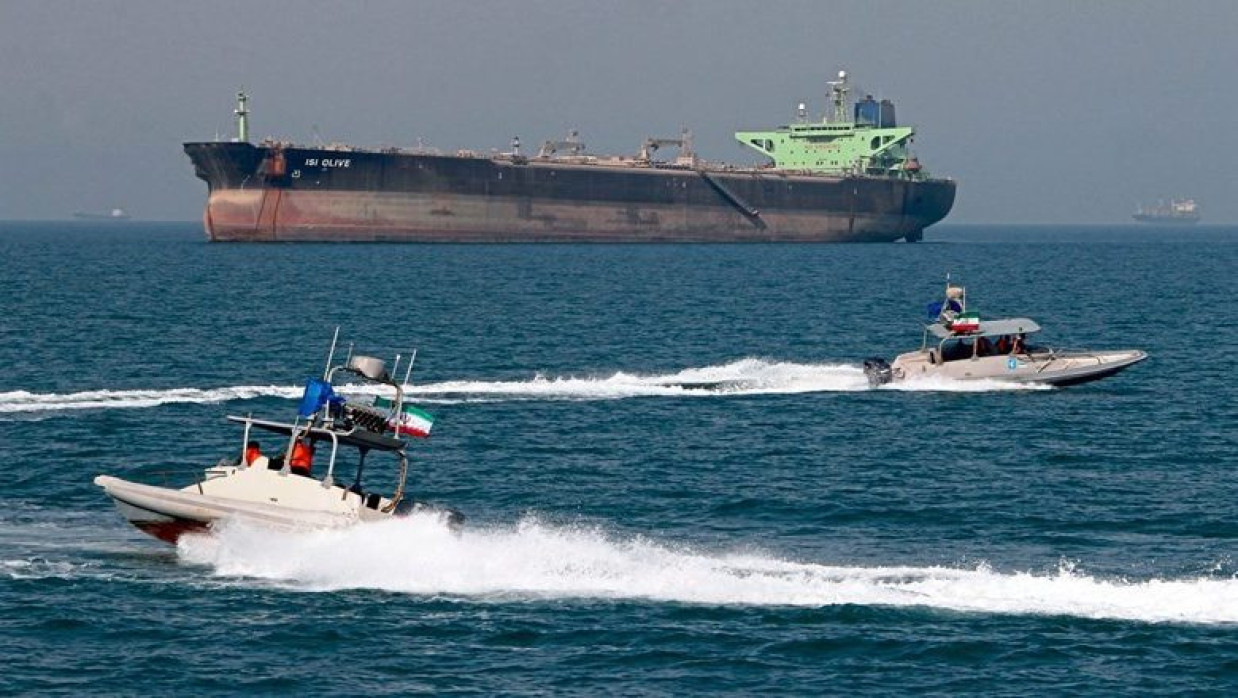
THE WAR IN THE STRAIT OF HORMUZ was one of those rare geopolitical fault lines that defined just how far geopolitics had already changed by 2026. A battle that began as a classic great power confrontation between Iran, the United States, and Israel quickly metastasized into a structural crisis that tested the foundations of the international order. The conflict over Hormuz revealed core questions about the nature of economic independence, the stability of the petro-dollar system, and China's role as a great power willing and able to project coercive power while countering American influence through non-kinetic means.
The Strait of Hormuz as a Strategic Artery
The Strait of Hormuz is one of the most important geopolitical chokepoints on Earth. One-fifth of the world's petroleum and liquefied natural gas passes through the Strait that connects the Persian Gulf to the global market. Any obstruction of traffic through the Strait affects the global supply chain, energy prices, and the financial markets almost instantly.
The Strait of Hormuz was closed by Iran after a series of joint US-Israeli airstrikes on Iranian nuclear facilities and political figures in February 2026. Iran sought to exploit its geographic advantage to retaliate against the West. Oil prices surged while panic spread throughout Asia and Europe, which rely on energy shipments from the Persian Gulf.
What was once a regional conflict escalated into an international crisis.
A Strategic Miscalculation by Washington
The US tried to counter it by threatening to blockade Iran and choke off its economy. Washington hoped that such action would reassert its control over the seas. In reality, however, it showed just how misguided its view of the new world order was. China, Iran's biggest customer for crude oil imports, would just roll over? This belief was rooted in a bygone era when power meant that your military dominance ensured political obedience. Instead, China pushed back. One lesson of the crisis is that blockades do not work like they used to. Globalization has made trade so interconnected that commerce can find ways around such aggressive tactics. There are additional sources of cargo ships, alternative payment mechanisms, etc.
China's Quiet but Decisive Response
China didn't answer belligerence with bravado. China responded by institutionalizing a response. Tankers flying Beijing flags steamed through a flashpoint buzzing with warnings that China would not tolerate attempts to restrict its energy access. This had big-power implications. China could have escalated in kind. But China framed the blockade as an attack on its right to trade. It turned a question of maritime security into one about economic weaponization. China defused the attempt to blockade it into an argument over who rules the waves. China stood its ground without stomping its feet.
The Challenge to the Petro-Dollar System
One aspect of the crisis that may have been more significant was the economic one, rather than the military one. Iran was increasingly selling its oil in alternative currencies to the US dollar, such as the Chinese yuan, to avoid Western banks.
While this change may have seemed small, it gradually undermines the petro-dollar system that's kept the US in a position of power since the 1970s. Washington has leveraged who gets to set the price of energy and in what currency to maintain control of the global economy. And Hormuz showed that the US could be weakened if that control slipped…
When more countries began using alternative payment methods during the Iran blockade, they demonstrated that currency independence can be just as powerful a weapon as warships.
Commercial Shipping as Strategic Signaling
One interesting aspect of this story is how the blockade started to break down. It wasn't forced open through military power. Instead, market pressures started to make it untenable. As far back as April 2026, some ships transited the straits despite the US Navy's presence.
It signaled the extent to which the global economy has a life of its own. Oil needs cannot be made to yield to great-power politics. Lobbying from the tanker industry, underwriters, and oil futures would outmuscle any coalition of warships.
Historical Lessons from Imperial Overreach
Analysts have looked to history and drawn parallels to events such as the Athenian expedition to Sicily during the Peloponnesian War. Hegemons of yesterday have learned that material preponderance means little when checked by economic interdependence.
America's military advantage was vast. However, dominating numerous targets of economic coercion, like Iran, proved easier said than done. The US Navy could not easily bend dozens of trading nations to its will.
The lesson of history may be that power declines not when others match your strength, but when they can defy you at lower cost.
The Emerging Logic of Economic Sovereignty
Fundamentally, Hormuz revealed a shift in sovereignty. Previously defined by territory and sovereignty, it is now defined by economics. China's reaction showed that energy trade routes are now considered matters of national sovereignty on par with territory. By appealing to economic sovereignty, China expanded the scope of security to include economic matters.
This reaction is unsurprising. States around the world are beginning to view sanctions/blockades/currency wars as attacks on their national survival. Instead of criticizing coercive economics as an ideological matter, states are reacting as if their economic sovereignty were under attack. This has turned economics into a battlefield.
The Strategic Dilemma Facing the United States
Blockading vessels posed its own conundrum for Washington. Acting against Chinese-affiliated shipping would be an escalation against a nuclear peer. Permitting ships to traverse could signal weakness and embolden China. These choices gave no clear benefit to Washington. The situation exemplified how unilateral enforcement will have less room to maneuver in the future. Great-power rivalry now unfolds on a web of interdependence rather than in discrete arenas. As such... Chinese maritime aspirations challenge notions of sea control.
Implications for the Future Global Order
The crisis in the Strait of Hormuz in 2026 will be remembered not just as a flashpoint in great power politics. It will be seen as a before-and-after moment in international relations. Last week showed that dollarization, supply chains, and oil tankers can be as potent as drones and destroyers.
The lesson for would-be hegemonics in the future is this: you can exercise power without firing a shot. The lesson for incumbent hegemons: the sticks you built may not work how you want them to.
It did not take military might to break the Iranian blockade of the Strait of Hormuz. It took the steady refusal of the global economy to bend to Iranian intimidation, along with a whole lot of signaling.
When viewed through that lens, last week's events tell us something important about how power works in the 21st century: power in this century will flow through networks rather than chains of command, and sovereignty in the 21st century will depend less on borders than on bandwidth.

0 Comments
LEAVE A COMMENT
Your email address will not be published