

The West Asia War and the Emerging Multipolar Order: Strategic Lessons for India and the Region
The recent 39-day conflict involving Iran, the United States, and Israel represents one of the most consequential geopolitical crises in West Asia in recent years. Far from being a regional military conflict, the war revealed fault lines in the rules-based international order, accelerated the transition to a multipolar world, and will influence strategic calculations throughout the Gulf, South Asia, and beyond. The war has also raised and intensified questions around deterrence, energy security, and diplomacy for the region going forward.
The ceasefire brokered jointly by Pakistan and China may have halted immediate hostilities, but it did not resolve the deeper structural tensions driving the conflict. Instead, the war revealed shifting alignments, new technological realities in warfare, and vulnerabilities in the foreign policies of major regional actors, particularly India.
A War Without Legal or Strategic Clarity
The conflict escalated sharply after a joint U.S.–Israeli airstrike on 28 February 2026 killed Iran’s Supreme Leader Ayatollah Ali Khamenei in Tehran as part of a broader campaign targeting senior Iranian leadership and military infrastructure.
Iran responded with missile strikes against U.S. and allied targets across the region, including bases in Iraq and Syria, and threatened wider retaliation against shipping and energy infrastructure in the Gulf. As hostilities expanded, Israel became directly involved in sustained exchanges with Iran, raising fears that regional shipping lanes, oil facilities, and major cities across the Gulf could be drawn into the conflict.
The entire war began without the United Nations Security Council's blessing. It was "pointless and destructive," and totally illegal. The war shows how far countries will go when they don't care about international laws on military conflict. All rules applying to war are being thrown out the window these days.
This war is alarming because countries can't just decide to attack each other without consequences. If big countries continue to make exceptions for themselves when it comes to international law, what is stopping countries from thinking it's okay to attack smaller countries? This war threatens international rules and norms.
Iran's Strategic Resilience
Iran managed to weather the assault with its strategic capabilities intact. Its nuclear program remained mostly intact and in Iranian hands, with roughly 440 pounds of enriched uranium. Its missile and drone programs also continued uninterrupted, demonstrating the limits of conventional airpower against dispersed and hardened targets.
More importantly, Iran strengthened its influence over the Strait of Hormuz, one of the world's most critical maritime chokepoints. Nearly one-fifth of global oil supplies pass through this narrow corridor, making control over its security a decisive geopolitical advantage.
Iran's performance illustrated a broader strategic lesson: geography, asymmetric tactics, and national resilience can offset conventional military superiority. Rather than weakening Tehran, external pressure appears to have reinforced nationalist sentiment inside the country. Even segments of Iranian society critical of the regime rallied around the state in response to foreign attacks.
This pattern echoes historical precedents in Iraq, Afghanistan, and elsewhere, where external intervention strengthened rather than weakened internal political cohesion.
The Rise of Asymmetric Warfare
Iran's capacity to conduct asymmetric military retaliation was another signature of the conflict. Drone swarms, peer regional precision strikes at low altitudes, and live satellite updates enabled Tehran to penetrate sophisticated air-defense systems and strike high-value targets across the region.
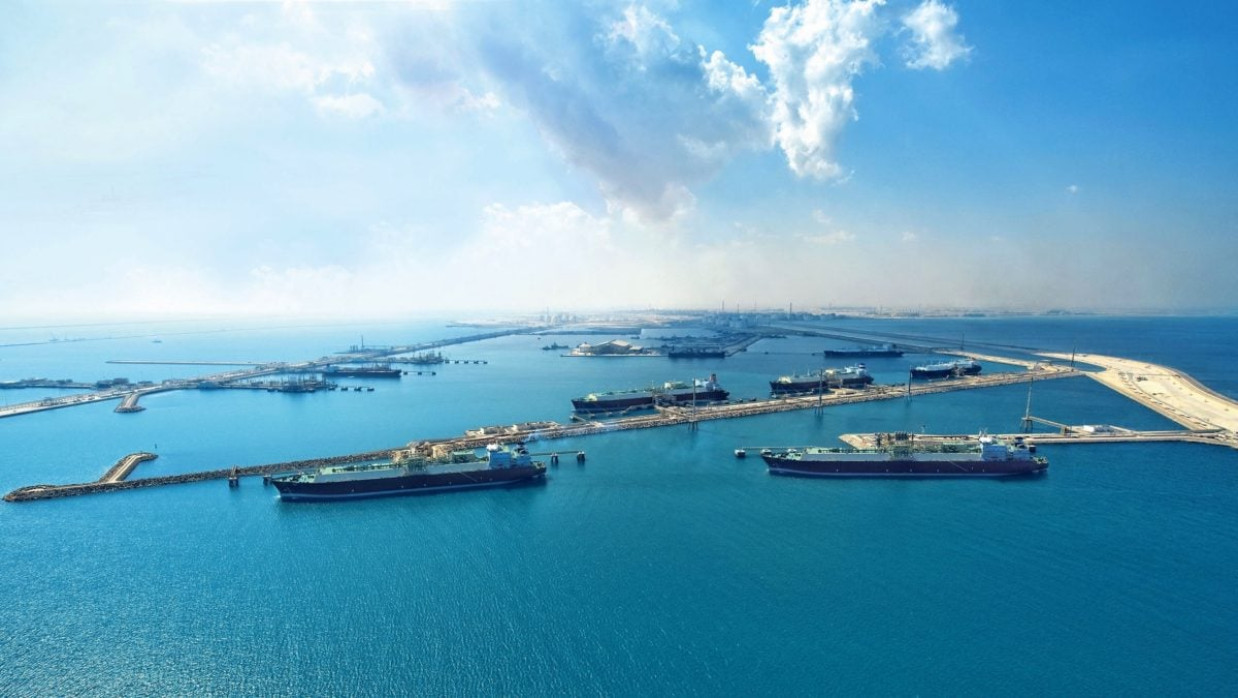
Particularly significant was the reported strike on Qatar's Ras Laffan LNG facility, which accounts for roughly 20 percent of global liquefied natural gas supply. Even limited damage to such installations demonstrated how vulnerable global energy markets remain to targeted attacks.
The war confirmed that the character of modern conflict is changing rapidly. Large armored formations and traditional air superiority are increasingly complemented and sometimes overshadowed by unmanned systems, cyber operations, and AI-enabled targeting networks.
States that fail to adapt to this technological transformation risk strategic obsolescence.
Gulf States and the Strategic Trilemma
For the Gulf monarchies, the conflict produced an acute strategic dilemma. Saudi Arabia, the United Arab Emirates, and Qatar faced three difficult options:
Get involved in the war and anger Iran.
Don't get involved and jeopardize your relationship with the United States.
Vote against Iran and watch Israel turn into a regional superpower.
No good options there. Gulf countries chose to hedge their bets and quietly build up military defenses.
However, the war did impact their economy. Tourism declined in places like Dubai and Abu Dhabi. Foreign workforces began to shrink. Investors retreated. Sure, air-defense systems destroyed over 90 percent of missiles. But the psychological effect of regular bombings chipped away at the safe reputations that had buoyed Gulf growth for years.
Over time, such disruptions could alter the region's attractiveness as a global financial hub.
Pakistan and China as Unexpected Mediators
One of the most unexpected aspects of the crisis has been Pakistan-China shuttle diplomacy and success in mediating a temporary ceasefire. Both Pakistan and China have often been relegated to supporting roles in West Asian diplomacy. Still, the crisis showed that they can play an important role in shaping security outcomes in the region.
Pakistan benefited especially from being seen as a mediator, boosting its international stature and deepening its ties with Tehran and Washington. But long-term growth in Pakistan's regional influence will depend on Islamabad overcoming structural economic issues and domestic turmoil that could prevent it from capitalizing on its newfound visibility.
China's role was more consequential. As a major energy importer and infrastructure investor in both Iran and the Gulf states, Beijing has strong incentives to prevent regional instability. Its growing mediation role reflects the broader shift toward a multipolar international order in which Washington no longer monopolizes crisis management.
India's Diplomatic Balancing Challenge
India finds itself on the losing end, facing tough questions about its foreign policy choices. New Delhi has always been sensitive about balancing its relations with Iran, Israel, and the Arab Gulf states. But in the future, that balancing act will be more challenging.
Prime Minister Narendra Modi's visit to Israel shortly before the outbreak of hostilities was widely viewed as poorly timed. India's delayed response to the assassination of Iran's Supreme Leader further reinforced perceptions of a pro-Israel tilt in its diplomacy.
This development poses dangers as well. Iran is vital to India's efforts to establish alternative routes via its investment in Chabahar Port, and Gulf countries are home to millions of Indian expatriates whose remittances help boost the economy back home. The UAE hosts 4.3 million Indians who send home about $22 billion each year.
India cannot afford prolonged asymmetry, as it will have economic and geopolitical repercussions.
Energy Security and Economic Vulnerabilities
India's dependence on Gulf energy supplies and susceptibility to their disruption were highlighted during the war. Even temporary or threatened disruptions in the Strait of Hormuz cause price shocks that ripple through industrial production, transportation, and household expenditures throughout South Asia. India should accelerate its diversification of energy sources and, concomitantly, build up its strategic petroleum reserves. Most industrialized nations maintain reserve stocks that can sustain several days of imports; India does not enjoy a similar level of strategic coverage.
Strengthening energy security will require investments not only in storage infrastructure but also in alternative supply chains extending to Central Asia, Africa, and Southeast Asia.
The Decline of the Rules-Based International Order
One consequence of the war that has impacted the entire international system is perhaps the further undermining of the post-WWII order. The major powers' willingness to resort to unilateral force and the rise of regional powers' involvement in mediation signal changes to the status quo.
While the US still maintains its overwhelming military superiority, it seems to be losing its capacity to translate that into a political victory by force of arms. Russia and China, on the other hand, are using diplomacy, technological investments, and financial incentives to increase their stake.
However, this does not mean that we are witnessing the decline of the United States. Instead, we are moving towards a multipolar world.
Nationalism and Regime Stability in Iran
A third lesson relates to the link between external intervention and internal legitimacy. While there have been large-scale protests within Iran after the killing of Mahsa Amini earlier this year, attacks from other countries have only bolstered nationalist support throughout Iran.
It will be difficult for attempts at regime change to take place through external force in places that have long histories and institutions like Iran; they will likely react contrary to what these interventions want.
For policymakers in Washington and elsewhere, this reality underscores the importance of diplomacy over confrontation.
Technological Transformation of Warfare
The conflict also demonstrated the growing importance of drone warfare, artificial intelligence, and satellite-enabled targeting systems. These technologies allow smaller states to challenge conventional military superiority at relatively low cost.
For India and other regional powers, adapting to this transformation will require significant investment in counter-drone defenses, integrated command systems, and indigenous technological innovation.
Future wars are unlikely to resemble those of the twentieth century. Instead, they will be shaped by speed, precision, and information dominance.
Toward a New Regional Order
Analysts and policymakers might see in the Iran–US–Israel war just another flashpoint that will pass. But there's much more to it than meets the eye.
This war has altered the trajectory of West Asian geopolitics. Iran came out unscathed from what many thought was existential; China raised its regional profile, Pakistan received unprecedented attention, and even the Gulf states had to rethink their security priorities.
For India, there's perhaps one crucial takeaway. The days of sitting on the fence are long gone. New Delhi needs a more engaged and nuanced diplomacy with Iran, Israel, and the Arab world, and new measures to strengthen energy security if it has any hopes of protecting its interests.
And finally, this war signals a shift in world order, from bipolarity to unipolarity to multipolarity. It's only a matter of time before these power transitions give rise to hot conflicts, but in the meantime, let us all hope for the best and take steps to destabilize information technologies while reviving multilateralism.


0 Comments
LEAVE A COMMENT
Your email address will not be published