

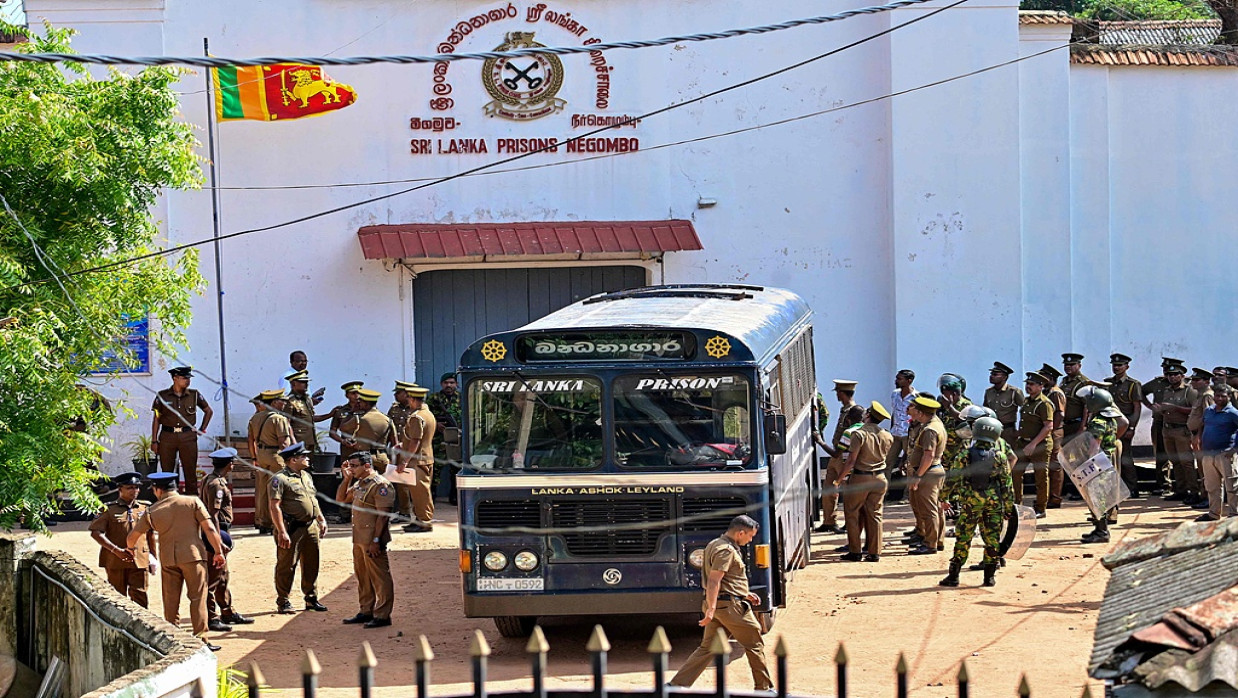
A Tragedy Beyond Prison Walls
Massacres rarely happen inside prisons by chance. Behind the bloody riots at Sri Lanka's Negombo Prison last week that left at least 26 inmates dead and more than 100 injured lies a long tale of structural flaws that have plagued the country's correctional institutions for decades, making it one of the bloodiest riots to occur inside a prison after the 2020 Mahara Prison riot. Although police investigations have suggested that rival drug gangs instigated the week-long riots, the prison unrest highlights Sri Lanka's dysfunctional penal system that successive regimes have failed to fix.
The Negombo Prison riots, which spanned over two gruesome phases, claimed the lives of at least 26 inmates. The first bout of clashes between inmates serving life sentences and remand prisoners killed two inmates and injured dozens more. The bloodbath worsened the next morning, during breakfast time, when chaos ensued throughout the prison, leaving several inmates dead. Six prison officers who tried to quell the inmates were also killed.
Organized Crime Behind Bars
Rights groups have long accused Sri Lanka's prisons of harboring organized crime rings with drug barons and gang leaders said to have remained in contact with their outside partners, as well as running prisons from within. Many prisoners have strong allegiances with their home gangs, and with overcrowding, classification, and supervision of inmates becoming more challenging. Police have yet to determine who was behind the Negombo shootings; however, preliminary findings suggest that two drug cartels were vying for control. If true, this would serve as another example of prisons being utilized as business fronts for criminals.
Chronic Overcrowding and Institutional Weakness
One issue that has long plagued Sri Lanka's prison system is overcrowding. Some facilities have populations exceeding their capacity by multiples. This causes incredibly cramped conditions for prisoners and places immense strain on prison officers. Besides creating unnecessary tension and panic, overcrowding makes it difficult for officers to monitor prisoners properly. It also makes segregating prisoners difficult and allows gangs to easily coerce weaker prisoners into joining their ranks.
Prison facilities have also long suffered from dilapidated structures. Some women prisoners in a nearby dormitory allegedly climbed on top of a roof and threatened to jump off unless they were evacuated or guaranteed safety from the attacks. Later, a section of the roof caved in, and several inmates were hurt as a result. The Sri Lanka Defense Ministry deployed air force helicopters, drone surveillance over the prison, and standby troops to the prison to contain the incident. The government's use of military assets shows you how prison gang violence can turn into a threat to national security in a snap.
Lessons Unlearned Since Mahara
The comparison will inevitably be made with Sri Lanka's worst prison disaster, the Mahara Prison riot on Dec. 20 last year, when 11 prisoners were killed and over 100 injured after the penal facility erupted into violence over COVID-19 containment measures. Emergency release measures for prisoners, along with sweeping prison reforms, were announced after that incident.
But the Negombo tragedy indicates that several reforms were stopgap measures designed to ease congestion rather than to secure institutions plagued by systemic flaws that lead to volatility. Measures such as temporarily reducing prison populations do not take the place of needed modernization, intelligence collection, staff training, and stronger disruption of criminal networks inside prisons.
Especially appalling is the loss of six prison officers' lives. When professionally trained officers are killed as they work to regain control of their facilities, issues come into question about staffing and equipment levels, as well as contingency plans and communication between leadership in times of crisis.
A Test for Sri Lanka's Justice System
The government has established an investigative commission headed by a retired SC judge to look into how the situation deteriorated and whether intelligence available to officials in advance was ignored. It is hoped that the commission will be able to access all relevant material and function independently to establish responsibility and culpability. This incident highlights, yet again, the need for accountability within institutions. As Minister of Justice Harshana Nanayakkara said, "Whether they are convicts or prison officers, we will investigate every death." While other convicts murder some criminals regularly in prisons, the state is responsible for protecting those lives as well. Rather than reacting with yet another set of short-lived solutions, we hope the Negombo riots mark a turning point in strengthening Sri Lanka's prison system. Without improving infrastructure, ensuring professional management of prisons, developing intelligence on prison gangs, and making persistent investment in rehabilitating prisoners and dismantling entrenched mafia groups, we may see this brutal pattern repeat itself.

0 Comments
LEAVE A COMMENT
Your email address will not be published