

Book Review
By Sam Dalrymple
W. W. Norton & Company, 2026
544 pages
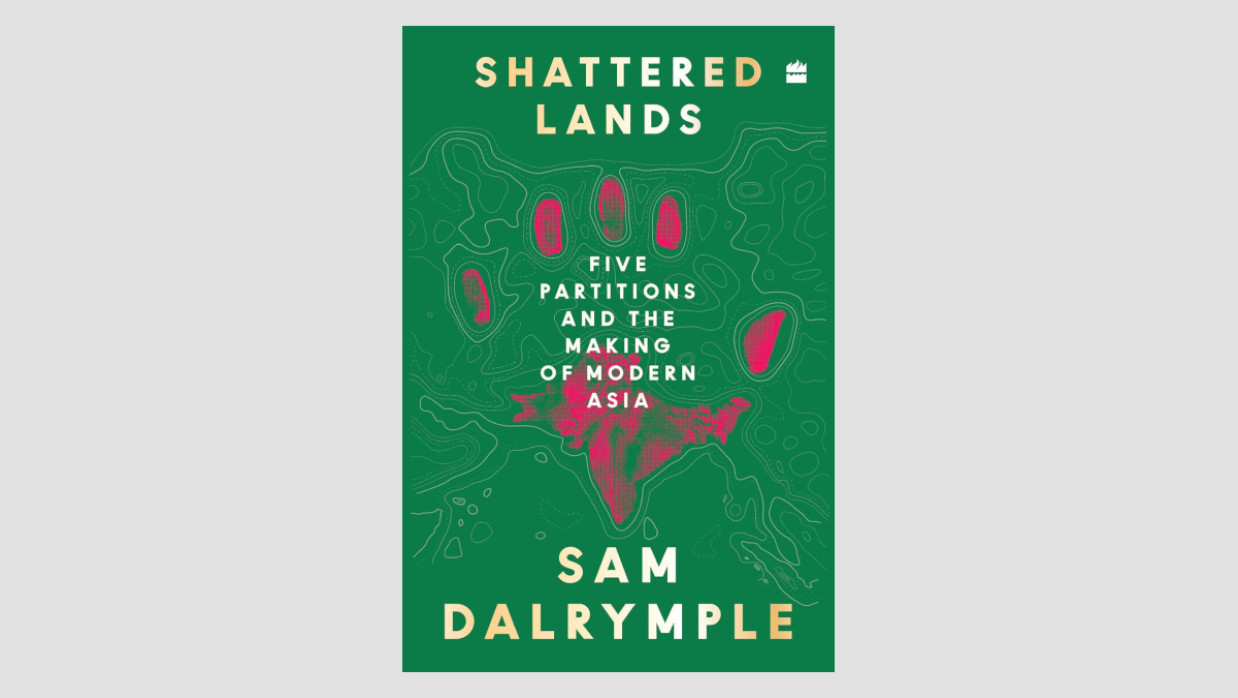
Books can teach us about the past or reshape how we view it. Shattered Lands: Five Partitions and the Making of Modern Asia by Sam Dalrymple falls under the second category. This book not only examines the partition of India but also forces you to forget what happened in 1947. Many partitions between 1937 and 1971 helped shape modern-day Asia.
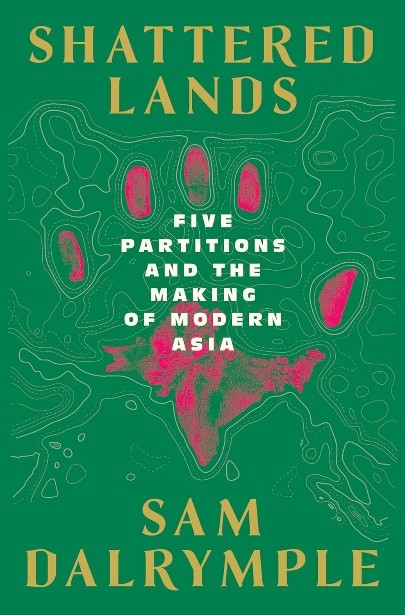
Books can teach us about the past or reshape how we view it. Shattered Lands: Five Partitions and the Making of Modern Asia by Sam Dalrymple falls under the second category. This book not only examines the partition of India but also forces you to forget what happened in 1947. Many partitions between 1937 and 1971 helped shape modern-day Asia.
That change in perspective is startling. In 1928, the British Indian Empire encompassed or administered a vast interconnected world extending from the approaches to the Red Sea to the frontiers of Southeast Asia. India, Burma, Aden and territories around the Persian Gulf belonged, in differing constitutional forms, to an imperial system centered on British India. Trade, migration, military service, finance and administration connected places that today appear on maps as belonging to entirely different geopolitical regions.
Dalrymple invites us to imagine this lost geography before contemplating its destruction. Modern maps encourage us to see India, Pakistan, Bangladesh, Myanmar and the Gulf states as naturally separate entities. Shattered Lands reminds us that political geography rarely possesses such inevitability. Nations that subsequently constructed powerful narratives of antiquity and permanence were, in their modern territorial forms, often products of remarkably recent decisions.
The book organizes this transformation around five partitions. Burma was separated from British India in 1937. Aden was detached that same year, while Britain progressively reorganized its administrative relationship with the Gulf. Then came the vastly more familiar partition of 1947, producing independent India and Pakistan amid communal slaughter and enormous population displacement. Alongside it came the complicated fate of more than 550 princely states, whose rulers had to negotiate, accept or resist incorporation into the emerging states. Finally came 1971, when Pakistan itself broke apart after war and extraordinary human suffering, giving birth to Bangladesh.
Seen separately, these episodes occupy different compartments of conventional history. Burma belongs to Southeast Asian history; the Gulf to West Asian history; India and Pakistan to South Asian history; Bangladesh to the history of Bengali nationalism. Dalrymple's great conceptual contribution is to place them back onto the same canvas.
The result is an imperial history told backward through its fractures.
Yet Shattered Lands works because Dalrymple does not allow his enormous geographical argument to overwhelm the people inhabiting it. His background as a filmmaker is evident. History moves cinematically between palaces and villages, government offices and refugee columns, politicians negotiating borders and ordinary families discovering that a line on a map has transformed them overnight into minorities, foreigners or refugees.
He draws on archival material and letters, as well as testimonies in many languages. Bengali, Hindi, Urdu, Punjabi, Arabic, Burmese and Konyak, to name a few. Letting these voices be heard keeps this book from being just one more story about men at the top making decisions for the masses. While maps may have been made from above, partitions were lived out from below.
Which brings me to my point. The language used to describe these imperialistic shifts in power can be misleadingly non-violent. Accession, secession, and borders. All of which, day to day, meant leaving your home behind and losing family members and possessions. Merchants could no longer travel freely to sell their wares. Massacres took place, and refugees were created. Borders made people into nations but also created refugees who now lived on the other side of said border.
So we come to know the story of 1947 a little differently. Dalrymple doesn't downplay the event but puts it into context. That of many events that led up to India splitting from Pakistan and later on in 1971. We see that when Pakistan was separated from India, they thought that religion would be enough to unite them. Twenty-four years later, they learned that they differed in many aspects of life. From language to political influence. Geographical and financial disputes.
Bangladesh is not treated merely as an appendix to the 1947 settlement. Its emergence completes Dalrymple's larger argument: imperial partition did not end when the British departed. The political structures left behind continued to fracture, evolve, and generate new national identities.
What I liked about this book was that it brought back ideas nationalism took away. At the dawn of India and Pakistan's independence, there was no guarantee they would become bitter rivals forever. They had moments in the 1950s where they worked together on certain issues. Even some that involved security. It's hard to look at those events and think they could ever happen again considering what we know about the relationship between the two countries. But it's good that they happened. Because nationalism tends to make what's happening today seem as if it has always been happening.
Dalrymple also challenges the belief that British officers decided every important line when they left. Rulers of principalities and nationalist politicians all played a role. States like Hyderabad, Kashmir, Junagadh, and many smaller ones were involved. No British officer could decide what happened in each of these states. Many different types of people and ideologies shaped decolonization. Imperialism leaving a region, Nationalism taking over, political maneuvering, and the creation of nations through violence.
Of course, if you're going to cover a large amount of topics, you are bound to gloss over some areas. Some topics in this 544-page book probably deserve their own books. But that comes with trying to write a book about the Gulf, Burma, India, Pakistan, and Bangladesh. Dalrymple did a great job covering this from 1947-1987. He wanted to show how these areas were all connected before borders split them up.
What stood out to me about Shattered Lands was how powerful maps are. Once you put border crossings on maps, put armies and flags along them, and start teaching children about them in school, they will start to seem old. People will one day forget how young these borders are.
Maps aren't the only thing a border can split. Cultures can also be separated. Languages will always be spoken across borders, and food will remind you of another place. Merchants will keep making paths that once existed. People will keep speaking of villages their grandchildren will never know about. Bengal, Punjab, Sindh, Burmese Indians, and people living in South Asian countries around the Gulf are all affected. Borders divided these people from each other but cannot fully separate them.
Which brings us to why Shattered Lands is not just about the British Empire. But why some of what happened is so permanent. People leave office, Empires crumble, and papers sit in a building for years. But a border can shape a person's life.
Dalrymple has therefore written something more valuable than another history of Partition. He has written a history of partitions, and the plural changes everything.
The familiar map of modern Asia remains before us when the book is finished: India, Pakistan, Bangladesh, Myanmar and the states beyond them still occupy their accustomed places. But after Shattered Lands, it becomes difficult to look at those borders with quite the same certainty. Behind the clean lines of the contemporary atlas emerge older worlds of movement and connection, followed by separation, migration and memory.
Maps suggest permanence. History rarely does. Sam Dalrymple's compelling achievement is to remind us that modern Asia was not simply liberated from empire. It was also carved from its ruins.


0 Comments
LEAVE A COMMENT
Your email address will not be published