
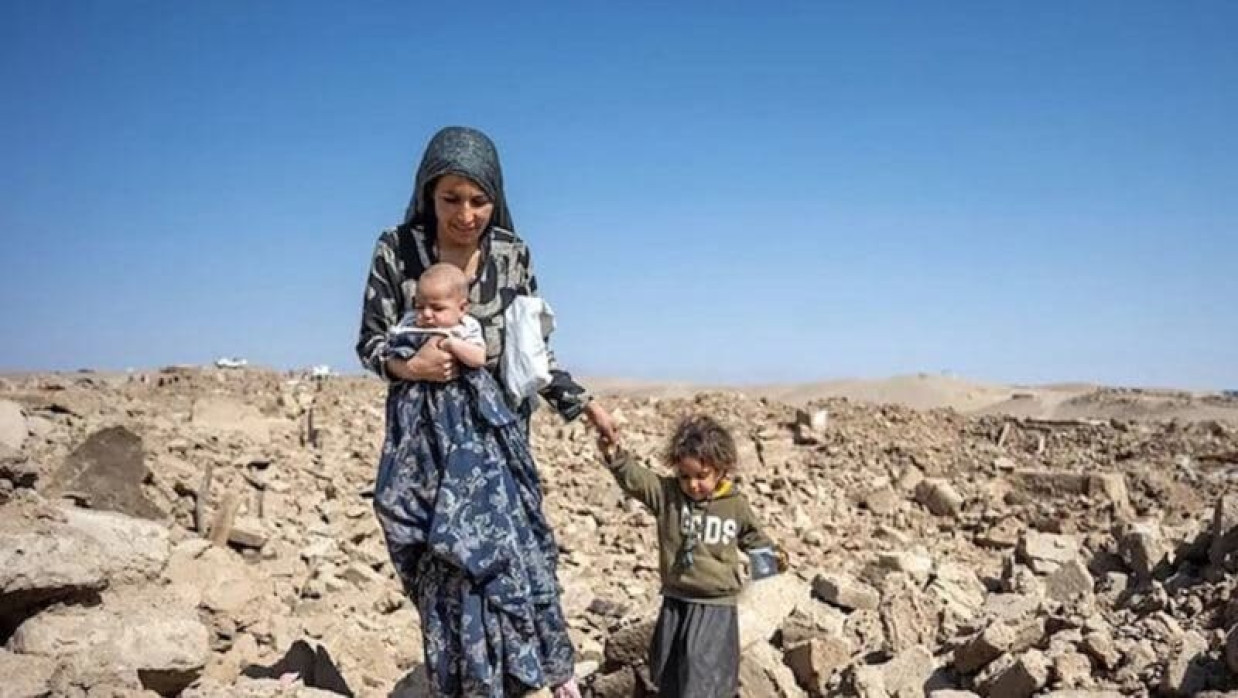
Since the Taliban took over Afghanistan in August 2021. many issues have emerged within the country. From a humanitarian standpoint. Economic crisis and political standpoints. Afghanistan has been in a period of relative peace since the war raged through the country. But these peaceful times haven't allowed them to grow or improve their people's living conditions. Afghanistan is suffering from a lack of economic growth. This has not allowed citizens to have freedom, has deported thousands to other countries, and has decreased aid from the world. They are currently at risk of starvation or death because of the lack of growth in their country. Afghanistan shows that peace alone isn't enough to help a country improve.
On November 7th, 2026. Bruno Lemarquis said Afghanistan is at a crossroads. As the UN Deputy Special Representative and Resident and Humanitarian Coordinator for Afghanistan, he stated that although they have achieved peace. People are still suffering and don't know what will happen in the future. Many countries are struggling with how to help these millions of people in need. While not helping the Taliban take control of women.
Perhaps the most disturbing feature of Afghanistan's present circumstances is the institutionalized exclusion of women from education, employment, and meaningful participation in society. As of 2021, over 2.6 million girls have been prohibited from attending school past middle school. Women's college enrollment is also nearly nonexistent. Not only are these injustices, but they also take away from the growth of Afghanistan as a whole. By restricting half of the population, they limit growth in many fields in Afghanistan.
For years to come, we will see the effects of these changes. How can a country develop if women are not able to become doctors, teachers, engineers, or hold management positions, etc. This will have a major impact on medical care in Afghanistan. Because of cultural reasons, most women will want to be treated only by other women. When more women doctors and nurses pass away or migrate out of Afghanistan, there may be no one left to take care of the people who need help.
The Taliban believe these restrictions should be put into effect due to their religion and culture. Many other Islamic countries allow women to thrive. Countries such as Bangladesh, Indonesia, Malaysia, and even Saudi Arabia allow their women to attend school and advance in the workforce. There has been a ban on Afghan women working for the UN and being on the UN premises since Sept 2025.
The increased migration of Afghans from other countries is another negative that will impact Afghanistan. 6.7 million Afghan citizens have migrated back to Afghanistan since 2020. Many of these individuals were deported from their current home or pressured to leave by Pakistan and Iran. They may never have lived in Afghanistan. This puts an enormous strain on housing, jobs, and medical/education facilities that are already undersupplied.
When families come back to Afghanistan, they may not have any paperwork to prove their homes, jobs, or even family members. Children will not be used to the schooling and environment they were used to before. Women may not be able to roam as freely as they could in their home countries. If we do not provide help to those who come back, they can become a constant stream of poverty and homelessness.
Afghanistan's economy suffers because it relies on agriculture, small businesses, and foreign aid. After the Taliban banned the growth of opium in 2022, it saw a sharp decline in the years that followed. According to statistics given by the UN, there has been a 330% increase in opium production in 2025. So many people still grow opium to help feed their families.
By focusing only on banning opium, there aren't many options for the people who rely on growing poppy to make a living. They need alternative ways to grow profitable crops, with reliable water sources and access to loans. They also need roads to get their products to markets and the opportunity to grow other profitable crops. Banning it will only cause more poverty in the countryside.
With less money coming from other countries, it's starting to take a toll on Afghanistan's needs. From 2023-2025, humanitarian funds dropped from 2 billion dollars to 1 billion and are projected to drop to 570 million in 2026, as of the last UN briefing. More people are returning to Afghanistan and will need aid, and economic and weather issues are also worsening.
One area suffering from a lack of funds is Healthcare. An estimated 700 of the 1,900 Primary Health Care clinics will shut down in 2025-2026. This could leave many without needed health care. Pregnant women, children, and the elderly will be at risk. This could lead to increased death rates, illness that can be cured, and fewer vaccinations.
There is also climate change. Because Afghanistan relies on rain-fed agriculture, there is also a risk of droughts, floods, and other climate anomalies. If El Niño continues to reduce crop yields and infrastructure remains lacking, Afghanistan could see a rise in hunger in 2027.
When responding to this situation, it is important to consider the political implications. Countries in the West will most likely continue not to open up communication with the Taliban due to their oppression of women and lack of political freedom. However, cutting off aid and sanctions may cause harm to the Afghan people as well, who may not have control over what the government does.
There should be some kind of compromise when it comes to sending aid to Afghanistan. Food aid, medical aid, education, and other needs should be addressed, as well as the needs of those returning to Afghanistan. We need to open our eyes and help improve the living conditions of the Afghan people and allow them to regain their basic human rights. Not only we but other neighboring countries also have an interest in Afghanistan.
Whether it be through refugees, drug trafficking, or terrorism, we cannot keep Afghanistan's problems in Afghanistan. If the Taliban are unable to lift their people out of poverty, Afghanistan will continue to pose a threat to the surrounding regions.
There will come a time when Afghanistan needs to better itself not just from the Taliban's rule over its territory but from what its leaders can do for its people. They need to create opportunities for their citizens to improve by learning and finding jobs. If the world cuts Afghanistan off, it will fail to prosper as a nation, and its citizens will suffer. There is no reason to continue to ignore Afghanistan and its problems; we all need to step up and make sure Afghanistan has a chance to thrive. Allowing an entire generation to grow up without hope is a failure we can't allow.


0 Comments
LEAVE A COMMENT
Your email address will not be published