

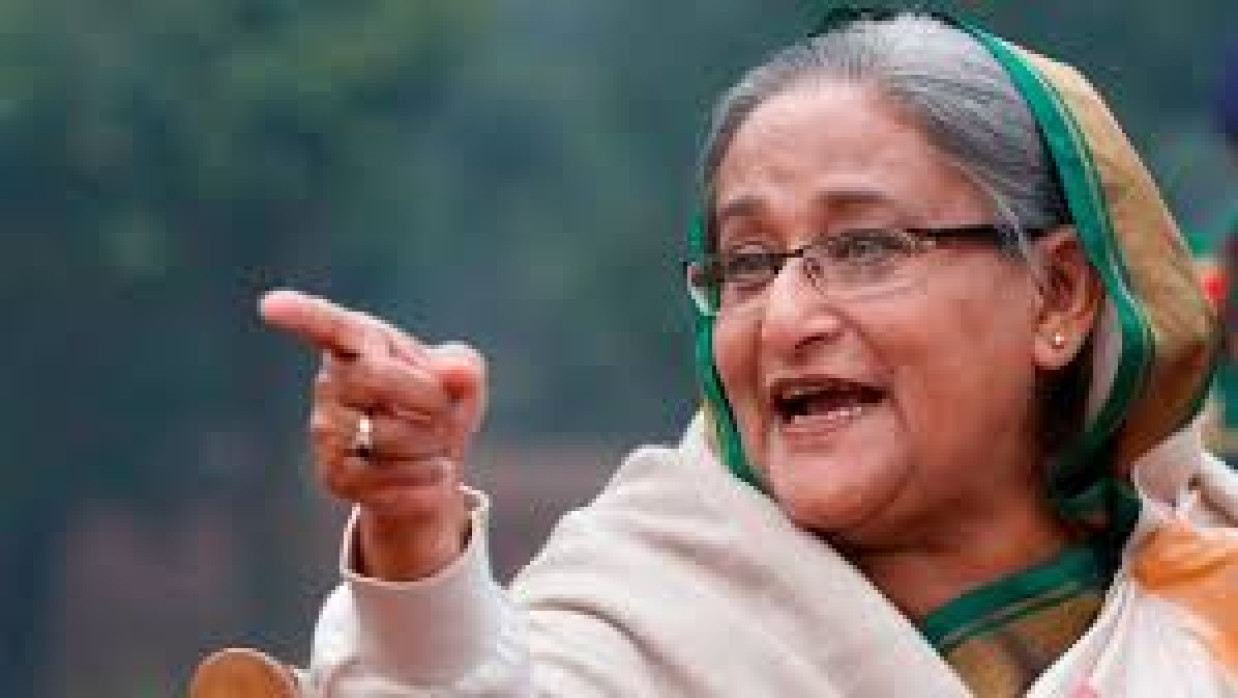
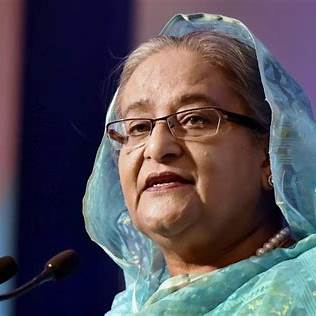
Bangladesh’s exiled former Prime Minister Sheikh Hasina recently claimed she will never return home until the “rule of law” is restored. There is nothing inherently cynical about such a statement. But then again, few things uttered by politicians in exile are. Democratic society requires deeds, not words. In countries recovering from democratic erosion, promises made abroad must be judged by actions taken at home. Commitment to the rule of law should be gauged not by what people say after they lose power, but by how they treated institutions while they had it.
Measured by that benchmark, Sheikh Hasina’s vow strikes a rather hollow tone. Should words of constitutionalism retain any moral force when spoken only after losing political power? And can a democracy debilitated from within be resuscitated merely through words?
Democracy Deferred
Long-time leaders developing an affinity for democratic values isn’t unheard of. It happens all the time, globally. Leaders who presided over centralized systems often become cheerleaders for checks and balances when broadcasting from abroad. Their words can inspire, but only if actions at home inspired similar feelings while they governed.
Ask anyone who values the rule of law in Bangladesh how it fared under Sheikh Hasina’s 15 years in office. Ask them about how Parliament grew weaker, how the judiciary became less independent, and how the police were politicized. Ask them how all branches of government began to mirror instead of check executive power.
Sound hollow? That’s because it is. Calls for restoring the rule of law after you undermine it don’t sound like a concern for democracy. They sound like regret.
Non-Competitive Politics
Politics is about competition. Politics without competition is administration. When elections lack credible contestation, they do not represent the democratic expression of the people's will. Not anymore, anyway.
Bangladesh’s electoral playing field has not been level for years. Opposition leaders from the Bangladesh Nationalist Party (BNP) were jailed, charged with prolonged cases, denied the right to assemble, or faced incessant threats of persecution. The opposition boycotted the 2014 elections, citing a lack of a level playing field. Claims of vote rigging and voter suppression blighted elections in 2018 and 2024, respectively. When the outcome is known in advance, and voters choose between pretenders rather than candidates, voting becomes a farce.
Democracy is more than just logistical arrangements on election day. Opposition parties must have space to organize, campaign, oppose, and holdout credible chances of winning. Take those away, and you take away the essence of democracy itself.
Selective Justice
Selective enforcement of the law speaks volumes about the health of the rule of law in a society. When it comes to the rule of law in Bangladesh, few episodes demonstrate the problem better than former Prime Minister Khaleda Zia’s imprisonment.
Arrested in 2018 on graft charges, she has since languished in prison despite calls for overseas medical attention that were allowed late, when her health was already in sharp decline. Whether she is guilty of her charges is up for the courts to decide. But what is unmistakably clear is that the courts itself was not independent.
Opposition leaders were relentlessly prosecuted, while similar cases implicating leaders in power saw little to no progress in court. The police and justice systems operated less like impartial referees and more like tools for political scorekeeping.
Justice cannot be selective. When it is, the law stops being used to achieve justice and is abused to serve the ends of power.
Human Rights and the Security State
Bangladesh experienced high economic growth under Sheikh Hasina. Bangladesh’s political system appeared stable on the surface, earning it international acclaim. But beneath the veneer lay troubling human rights abuses that became increasingly systematic over time. Forced disappearances, extrajudicial killings, torture in custody, harassment of journalists and activists all became norms of governance.
In 2021, the United States sanctioned Bangladesh’s elite Rapid Action Battalion (RAB) for gross human rights violations, signaling just how severe the US government felt about the incidents. Instead of permitting independent, transparent investigations into the allegations, the Bangladesh government dismissed them as a ruse for national security. National security upheld by circumventing the law is no security at all. It’s bullets wrapped in a bandage.
The rule of law means nothing if state violence is permitted to operate with impunity.
Bad Company: A South Asian Trend
Bangladesh is not the first to suffer democratic backsliding in South Asia. Pakistan's civilians, before her, weakened democratic institutions while in office, only to be toppled by the same once they lost favor with the public. In Sri Lanka, the Rajapaksa government centralized power under the pretenses of economic development and national security. Checks and balances atrophied until the public took to the streets and ousted them from power.
Like Pakistan and Sri Lanka, democracy became treated as something that could be turned on and off like a faucet. It was embraced when it served leaders’ interests, and cast aside when it didn’t. Institutions stayed weak no matter who was in power. Bangladesh now finds itself on the same unfortunate trajectory.
Democracy Ain’t Fair-Weather
Here’s another irony of Bangladesh’s history: Sheikh Hasina was allowed to return to politics and eventually lead the country, in part, due to a more politically pluralistic era in the late ’70s and ’80s. Of course, it wasn’t perfect by any stretch, but enough space did exist for political actors to regroup, organize, and compete with one another. The space that Sheikh Hasina once politically benefited from was actively denied to her opponents.
That pluralism was gradually eroded. The ladder was kicked away after she climbed up.
Conclusion: Democracy is not conditional
Democracy is not conditional. Democracy cannot be turned on and off, or toggled, based on political convenience. The rule of law shouldn’t be revered as some gift bestowed by those in power. It should be seen as a necessary constraint on power, because it’s extremely inconvenient at times.
Bangladesh will not see a democratic revival by listening to what exiled politicians say about past glories. It will come from rebuilding institutions that will outlive individual leaders: independent courts, impartial civil services, accountable security forces, and, most of all, competitive politics that allow credible opposition to thrive.
Till then, calls for the rule of law will remain nothing more than an important, but unsubstantiated part of Bangladesh’s democratic mirage.

0 Comments
LEAVE A COMMENT
Your email address will not be published