
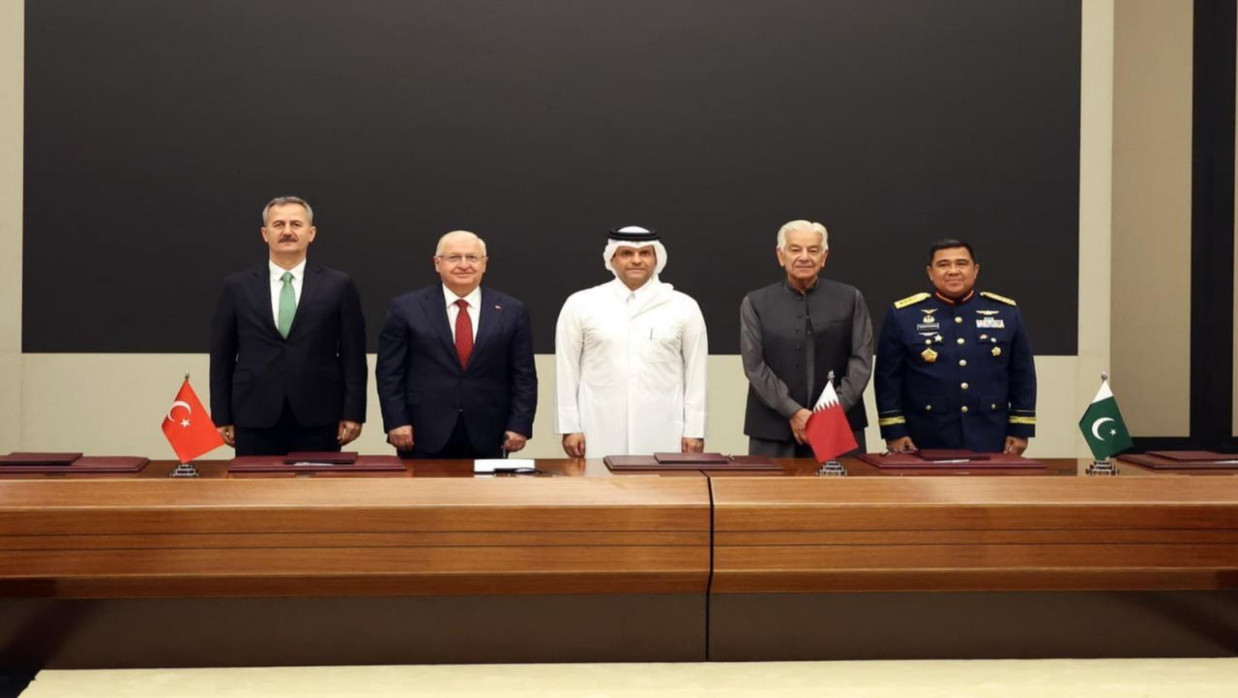
The evolving security landscape in the Middle East and wider Muslim world means there is an increasing need for new partnerships within the region. Increasing geopolitical tension, critical infrastructure vulnerabilities and uncertainty over security guarantees has meant regional nations are seeking new ways in which to protect their strategic interests. One prominent example of this is the Badr Memorandum of Understanding (MoU) launched by Pakistan, Turkey, Qatar and Indonesia on 21st October 2026 in Doha. This introduces a new method to develop defence partnerships between countries which includes industry cooperation, technology transfer and military cooperation. However, there are no binding defence obligations placed on signatories.
The significance of the Badr MoU is the flexible nature of this collective security partnership. Unlike traditional defence partnerships, this agreement focuses on creating indigenous defence capabilities for each partner. This is because regional security cannot solely rely on defence obligations with outside powers. This MoU focuses on increasing domestic capability, increasing technological capabilities and creating sustainable defence industries.
This MoU brings in a variety of nations who can all contribute to this initiative. Pakistan has significant defence manufacturing capability, strong military training, aerospace development and naval capabilities. Turkey has been increasing its defence industry with increasing unmanned capabilities, naval capabilities, armoured vehicles and advanced military technology. Qatar can provide financial investment and Indonesia can provide potential for industrial development. This can allow the four countries to work closely together on producing joint defence products, research, technical training and technology transfer.
The most important aspect of this MoU is that it utilises existing defence industry partnerships. Qatar has had strong investment into Turkey's defence industry. Pakistan and Turkey have worked together to create a strong naval partnership through the MILGEM programme. Turkey and Indonesia have worked together on developing tanks. This means the four countries can work together to create a more streamlined process, increase industry opportunities and create more ambitious joint projects.
This MoU is also very significant as there are increasing security concerns in the Gulf region. The ongoing conflict between the U.S and Iran has revealed vulnerabilities in regional infrastructure, energy and shipping routes. This has shown just how much the instability in the region can affect national security but also global trade, energy and economic stability. While Gulf nations still have strong security partnerships with Washington, many are realising the benefits of having diverse defence partnerships.
This provides regional nations with another option to work together without sacrificing their international partnerships. The flexible nature of this partnership means states can increase their defence capabilities but leave themselves free to make their own foreign policy decisions. This is important for nations who may have different security issues to worry about. This MoU allows for more cooperation between nations based on shared interests.
It is also important to note this MoU should not be confused with the Makkah Joint Defence Agreement (MJDA). This is between Pakistan, Saudi Arabia and Turkey. While Pakistan and Turkey are included in both agreements, the purpose and what they commit to are completely different. The MJDA creates a collective defence agreement meaning if one partner is attacked then it is considered as an attack on all partners. Whereas the Badr MoU focuses on developing defence industries, joint production, technical cooperation and military capabilities with no mutual defence obligations.
Both agreements are complementary to each other. While the MJDA focuses on collective deterrence and mutual security obligations, the Badr MoU focuses on creating strong defence industries and technologies. This shows how regional nations can work with each other in different ways. Pakistan and Turkey play a key role within both of these agreements.
Turkey can benefit greatly from this MoU. Turkey has been increasing its defence industry rapidly. In 2025, defence and aerospace exports increased by 48% (TRT World). Over the past 5 years, Turkish arms exports have increased by 122% (SIPRI), meaning that Turkey is now the 11th largest arms supplier in the world. Having increased cooperation with Pakistan, Qatar and Indonesia could give Ankara more opportunities to increase industry partnerships, enter new markets and become a leading defence technology producer.
Pakistan can benefit from this agreement by creating stronger strategic partnerships. Pakistan has strong defence manufacturing capabilities, aerospace manufacturing, naval capabilities and military training. This can help create joint projects between all partners. Having increased access to technology, investment and international defence markets can help increase Pakistan's domestic industry. It also helps to show Islamabad are an important contributor to regional stability.
However, the long-term success of this agreement depends on how well it is put into practice. All nations will need to find practical projects to work on, clear processes in place, consistent investment and effective technology sharing. Having joint research, technical training, industry integration and clear time lines for projects will be key.
Overall, this MoU looks to the future of defence partnerships in the region. It provides nations with more strategic flexibility by focusing on creating strong industries, technology and military partnerships. If successful it can show that to have sustainable security in the region, you must have strong domestic industries, technology and beneficial partnerships. This gives Pakistan, Turkey, Qatar and Indonesia an opportunity to turn their current relationships into a wider partnership and contribute to a more diverse regional security partnership.


0 Comments
LEAVE A COMMENT
Your email address will not be published