

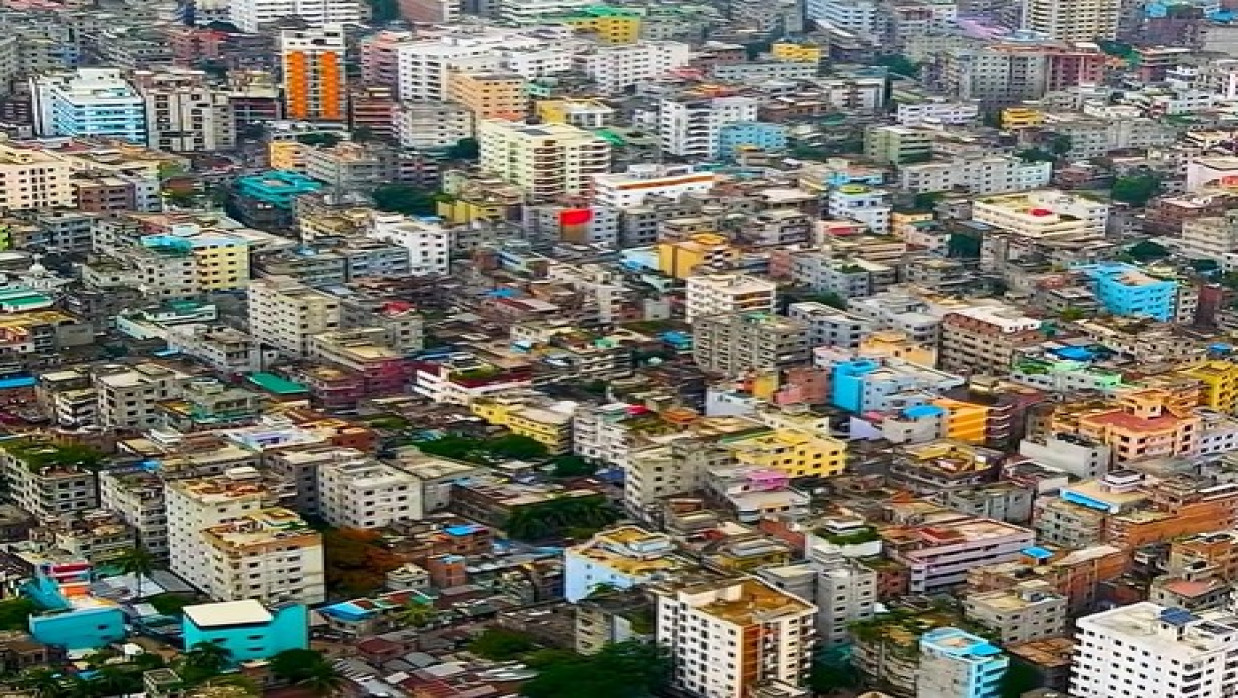
Few cities illustrate the paradoxes of fast-growing urban areas in the Third World as well as Dhaka. A beautiful city with a rich history, canals, fine buildings and other landmarks, a famous muslin trade and general affluence, it is now an over-spreading conurbation, plagued by appalling traffic jams, very unhealthy levels of industrial and other pollution, periodic inundation, poor sewage facilities, and explosive population growth. Yet despite its pre-eminence as Bangladesh's commercial, political, and administrative center, it would rank high on any list of the least desirable cities in which to live. This one city thus poses many basic issues of town and country planning, over-centralization, ecology, and general patterns of desirable future growth.
Many factors have combined to drive the very rapid population growth in Dhaka, including increasing industrialization and other economic attractions, as well as poverty and devastation in rural areas. Large numbers continue to flock to the city, hoping to find work, schools, medical treatment, and, generally, a higher standard of living. Virtually all government offices and departments, many large businesses, most universities and better hospitals, and an extensive range of light industry are based there, so it is natural that most ambitious people would be drawn there.
Climate change is also driving people towards towns. Much of Bangladesh is subject to cyclones, floods, and silting and erosion of river banks, as well as progressive encroachment by the sea. It is not surprising that many, particularly farmers deprived of their land and people from the coastal regions threatened by increasing salinity, move away to the towns. A high proportion will ultimately move to Dhaka to seek work, although there is a grave shortage of cheap accommodation and basic amenities.
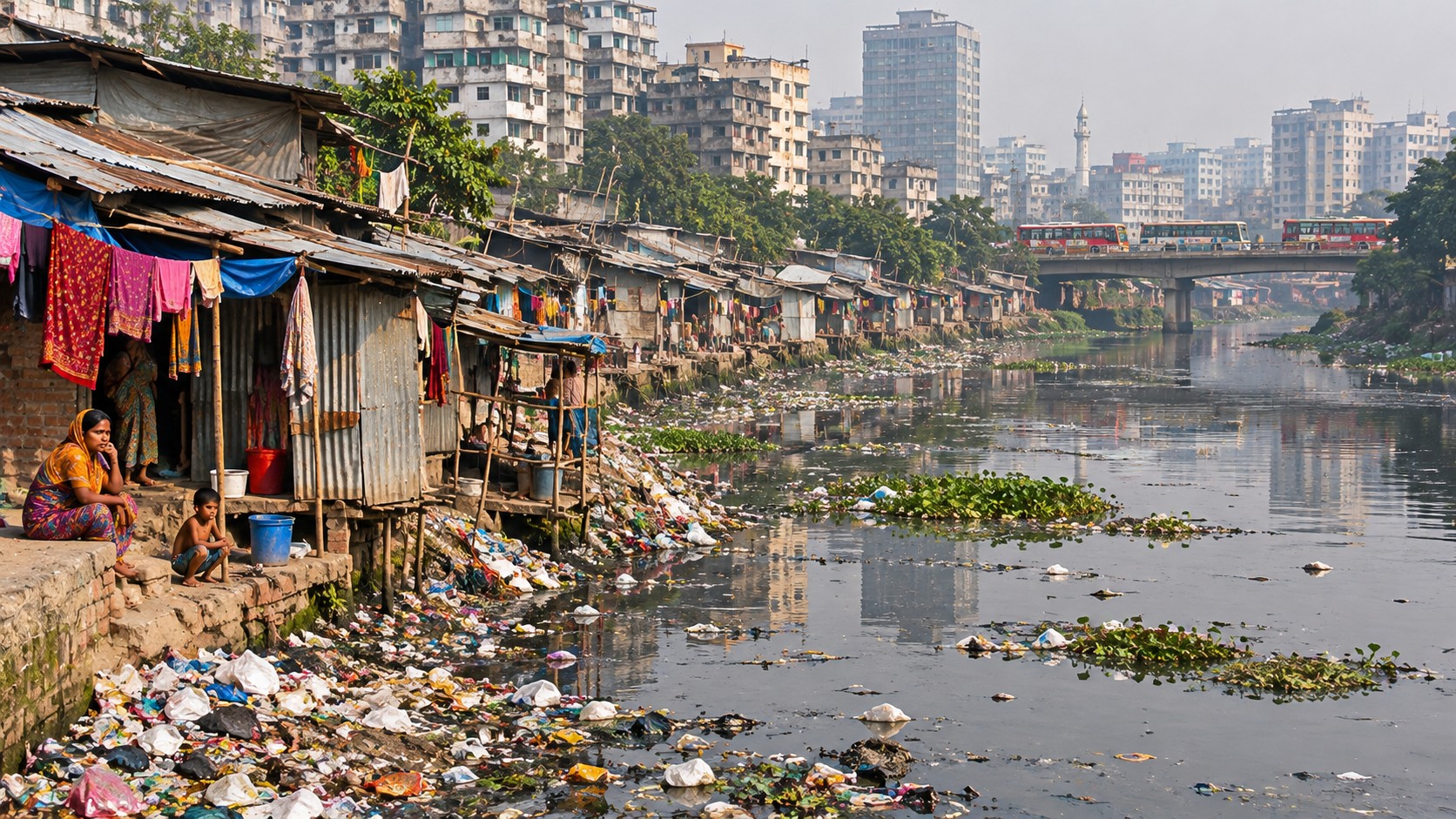
Large areas of the city are therefore occupied by densely packed slum dwellings with little or no sanitary facilities, unreliable water supplies, and tenants subject to arbitrary eviction at any time. A substantial proportion of laborers and skilled workers in building, transport, light industry, shops, and many other trades come from these areas, but urban development plans generally neglect their needs.
Road congestion is probably one of the most obvious symptoms of the problems facing the city of Dhaka. At many times of the day, particularly at peak times, all modes of transport crawl along at speeds of about 5 km per hour or less. This results in enormous losses of man-hours, wasted fuel, lost trade, other business losses, and adverse health effects. All types of vehicular traffic, from buses to cars, motorcycles and rickshaws, as well as large numbers of pedestrians, have to share relatively poor-quality roads, leading to great inefficiency and dangerous conditions.
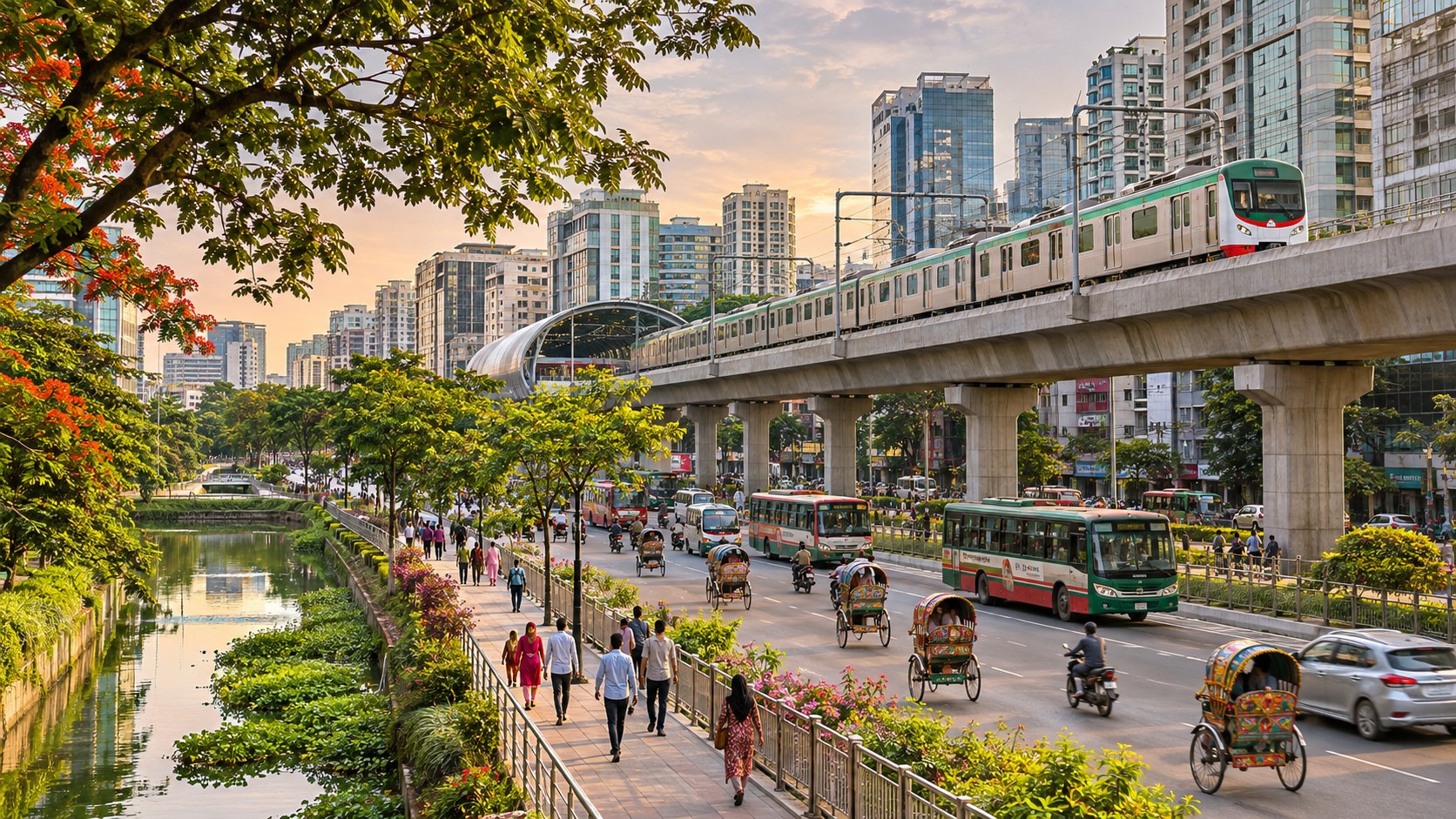
Over the years, various governments have constructed many flyovers and other elevated roads and widened existing roads. These have relieved congestion to some extent on particular stretches, but do little to redress the basic imbalance between the required transport volume and the available facilities. Further road construction may increase private vehicle use if there is no check on the spread of development and public transport remains inadequate.
It was therefore very encouraging that the first stretch of metro rail began operating in December 2023. It shows that quality and fast public transport can be provided in a highly congested city. If this could be extended over a wider area and well supplemented with other forms of public and feeder transport, including adequate footpaths, it may go a long way in alleviating travel problems in the city. Of course, with due regard to the means of the poorer sections of the community.
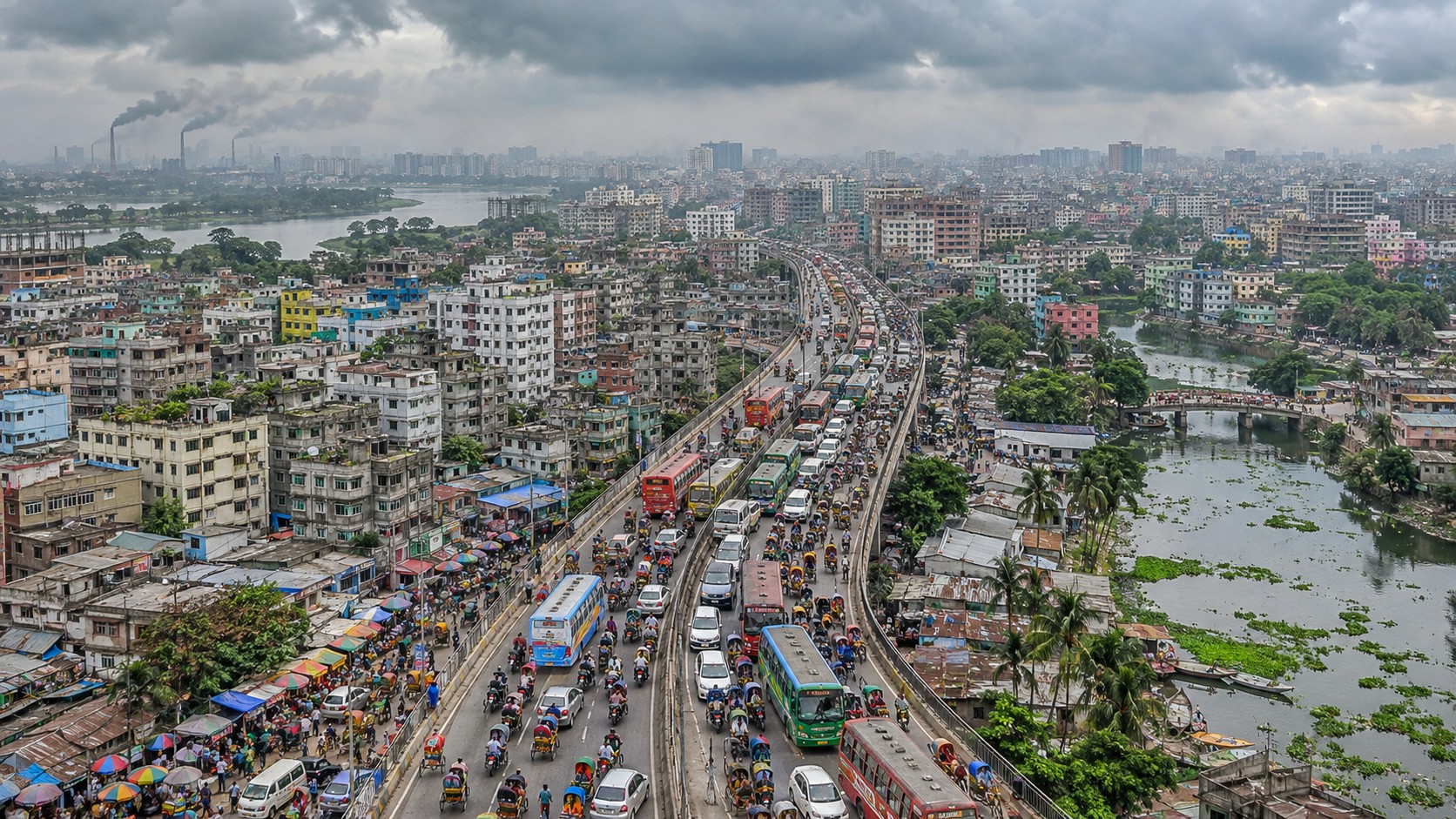
The UN report World Urbanization Prospects 2025 gives some indication of the scale of the problem. According to its projections, Dhaka's total urban population in 2025 would be 36.6 million, making it the world's largest city, following only Jakarta. In 2050, it is expected to be home to 52.1 million people, perhaps the world's largest city. This figure refers to the urban agglomeration. It is difficult to see how the country could cope with such a population increase without major policy changes.
Various sources of airborne pollution are expected to have a very adverse effect on people's health, particularly the large number of brick kilns in and around the city, factories, old and polluting vehicles, building operations, open burning of refuse, and so on. On many days, especially in the colder, drier season, the general level of pollution in the city's atmosphere reaches very unhealthy levels. Various diseases, including cancers of the respiratory system and heart disease, would be more prevalent, leading to earlier death.
Clearly, industry should be required to meet much more stringent limits on effluent and other polluting discharges; less polluting methods of brick-burning should be introduced; all vehicles should be periodically checked; and existing laws should be applied more rigorously. There is little point in economic growth and advancement if one of its by-products is subjecting people to seriously unhealthy levels of air pollution.
Over many years, natural water retention and drainage around and through the old city have been progressively filled in. These included many rivers, smaller watercourses, marshes and depressions. Uncontrolled development, encroachment, filling, dumping of all kinds of refuse, and so on have greatly reduced all of them.
Periods of heavy rain, even of shorter duration, have submerged large stretches of main roads, many housing areas, and some business areas. In addition to bringing much of travel and transport to a standstill, these floods can cause a range of water-borne diseases and extensive property damage. Rehabilitating existing canal systems, conserving remaining wetlands and other natural water bodies, reclaiming encroached areas, and improving and extending the drainage system should all be high priorities for the country as a whole.
Industry also contributes to considerable pollution. All sections of the Buriganga, historically the lifeline of Dhaka city, are badly affected by industrial discharges, raw domestic sewage, and other wastes. It has therefore been desirable to move the large number of tanneries in Hazaribagh out of the city to Savar. But unless adequate arrangements are made to treat effluent, this will merely shift the pollution problem to other areas. Appropriate treatment plants, satisfactory monitoring, and rigorous application of acceptable standards would all be necessary.
On balance, however, much of the answer to Dhaka's problems is probably to be found in the rest of Bangladesh. Almost excessively, the country has been administered with extreme primacy for Dhaka in almost all sectors. With appropriate measures, many towns and cities, including at least Chattogram, Khulna, Rajshahi, Sylhet, Barishal, and Rangpur, could be developed into significant alternatives as administrative seats and commercial and industrial centers.
Port, industrial, and distribution functions could all be expanded at places such as Chattogram and Mongla, with a wide range of other industries, including hi-tech industries, agricultural and other processing, universities and hospitals, generation of alternative energies, and so on, in other localities. Providing employment-generating activities throughout the country, accessible by efficient, rapid rail services, a good road network, waterways, and telecommunications, should help relieve stresses in Dhaka over time.
There are also clear grounds for substantial changes in the pattern and organization of local government. The large number of separate bodies, each responsible for different aspects of urban management, has often worked against effective overall planning and action, and against clear responsibility. A wide range of functions, including movement and transport, the location of new residential development, drainage, conservation, solid waste, and overall area development, would benefit from being brought together in one overall plan for the greater metropolitan area. Corruption, political influence, and unauthorized development of all kinds will need to be tackled, largely by better administration and more rigorous application of current legislation.
It is not inevitable that all aspects of Dhaka's current growth pattern, such as severe congestion, pollution, and general environmental degradation, should continue. Dhaka also has many positive features, including an enterprising and industrious citizenry, a considerable industrial base, rich traditions, and a high level of economic activity. Improving public and other mass transport systems, restoring and conserving watercourses, promoting less environmentally damaging industries, and providing more low-cost housing are all feasible, as is a progressive dispersal of economic activities.
But above all there is a need for political will on the part of Governments to forgo the attractions of quick and showy achievements for a more considered, scientific approach, mindful of environmental conservation and of national requirements as a whole.
Dhaka's position should serve as a cautionary lesson to Bangladesh generally, and to many other South Asian countries, about the hazards of unchecked growth, disregard for environmental considerations, and failure to plan for population distribution. Ultimately, it will be the quality of life available to the bulk of people, in terms of clean surroundings, adequate amenities, and opportunities for gainful occupation, which should provide the best guide to the success or otherwise of Bangladesh's economic and other progress.


0 Comments
LEAVE A COMMENT
Your email address will not be published