

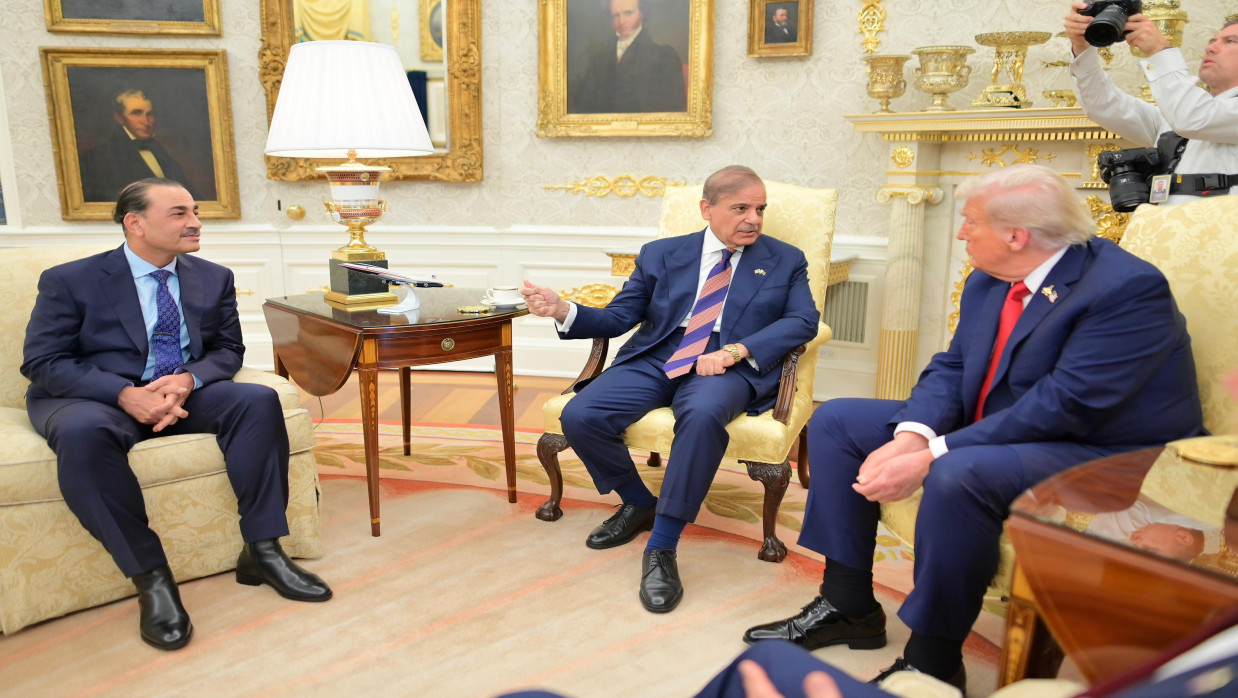
The relationship between the United States and India is often portrayed as a defining partnership of the emerging global order. Shared concerns about China, expanding defence cooperation and growing economic ties have encouraged New Delhi to believe that its strategic importance gives it considerable influence over Washington’s regional calculations. Yet international politics rarely operates according to the expectations of a single capital. For the United States, strategic partnerships are instruments of national interest, not permanent commitments to another country’s preferences. Pakistan’s continuing relevance to American interests illustrates this enduring reality.
The debate surrounding US Secretary of State Marco Rubio’s reported engagements in India raises a broader question: does Washington’s growing relationship with New Delhi mean that Pakistan has become strategically expendable? The answer lies in understanding the difference between diplomatic symbolism and the practical requirements of American foreign policy. Even as Washington deepens cooperation with India, it must account for Pakistan’s geography, nuclear capabilities, regional influence and role in South Asian security.
India’s expanding economic power has undoubtedly strengthened its international position. Its vast consumer market, technological capabilities and growing industrial base make it an attractive partner for American businesses. Corporate groups such as Mukesh Ambani’s Reliance Industries have become major players in telecommunications, energy and retail, giving them considerable economic influence. Their commercial importance illustrates how private capital has become increasingly central to India’s global economic engagement.
However, the growing influence of major corporations should not be confused with the displacement of elected political leadership. Business leaders can shape investment priorities, industrial policy and economic opportunities, but foreign policy remains a product of state institutions, political leadership and wider strategic considerations. Any suggestion that a diplomatic itinerary alone establishes that corporate interests outrank the Indian government requires stronger evidence than symbolism or speculation.
Nevertheless, the relationship between political authority and corporate power in India deserves serious scrutiny. The concentration of economic influence among major conglomerates raises questions about competition, regulatory independence and the relationship between business and government. For Washington, engagement with influential Indian corporations is part of a broader effort to secure commercial opportunities and strengthen economic ties. Such engagement does not necessarily signal dissatisfaction with Prime Minister Narendra Modi or an intention to bypass New Delhi.
The more consequential issue is Pakistan’s place in the American strategic equation.
For years, sections of the Indian strategic establishment have sought to frame Pakistan primarily through the lens of terrorism and regional instability. New Delhi has also attempted to persuade international partners to adopt a harder line towards Islamabad. Yet the United States cannot formulate its South Asia policy exclusively around Indian security concerns. Pakistan possesses independent strategic weight, and developments within its territory have consequences extending beyond its borders.
Pakistan’s nuclear capabilities make regional stability an international concern. Any serious military escalation between the two nuclear-armed neighbours could produce consequences far beyond South Asia, threatening global economic confidence and creating immense pressure for international intervention. Washington therefore has a compelling interest in maintaining channels of communication with both countries, particularly during periods of heightened tension.
Geography further reinforces Pakistan’s importance. Located at the intersection of South Asia, Central Asia, China and the wider Middle East, Pakistan occupies a position relevant to regional connectivity, counterterrorism and the management of cross-border security challenges. Its relationship with Afghanistan remains particularly significant because instability, militant activity and refugee movements can affect the security calculations of multiple regional and international actors.
Pakistan’s strategic relevance, however, should not be reduced to its nuclear arsenal or geographical location. Counterterrorism cooperation, regional diplomacy, economic connectivity and the management of crises all provide grounds for sustained engagement. For Washington, the challenge is to preserve avenues of cooperation with Islamabad while pursuing its expanding partnership with New Delhi.
The lesson for New Delhi is equally important. A close relationship with Washington does not give India a veto over American engagement with neighbouring states. The United States can deepen defence cooperation with India while maintaining diplomatic and security contacts with Pakistan. These relationships serve different purposes and are not necessarily mutually exclusive. Expecting Washington to subordinate every aspect of its regional policy to Indian preferences would misunderstand the nature of great-power diplomacy.
For Islamabad, the opportunity lies in converting strategic importance into a more durable and diversified partnership. Improved economic stability, stronger counterterrorism performance, regional trade and credible diplomatic engagement would provide a firmer foundation for cooperation with Washington. Pakistan cannot rely indefinitely on geography or the risks associated with regional conflict to sustain international attention.
Ultimately, the central message is straightforward: international influence is measured not by diplomatic spectacle but by the ability to shape outcomes that matter to powerful states. India’s growing economic and strategic significance is undeniable, but it does not erase Pakistan’s independent importance. Nor does engagement with an Indian business magnate establish that Washington has rejected Modi’s government.
The United States will continue to pursue its interests through multiple channels, adjusting its partnerships as circumstances change. Pakistan’s task is to ensure that its relevance translates into constructive cooperation rather than recurring crisis management. In a region where the interests of nuclear-armed neighbours intersect with those of competing global powers, Washington’s strategic calculations are unlikely to be dictated by New Delhi alone.

0 Comments
LEAVE A COMMENT
Your email address will not be published