

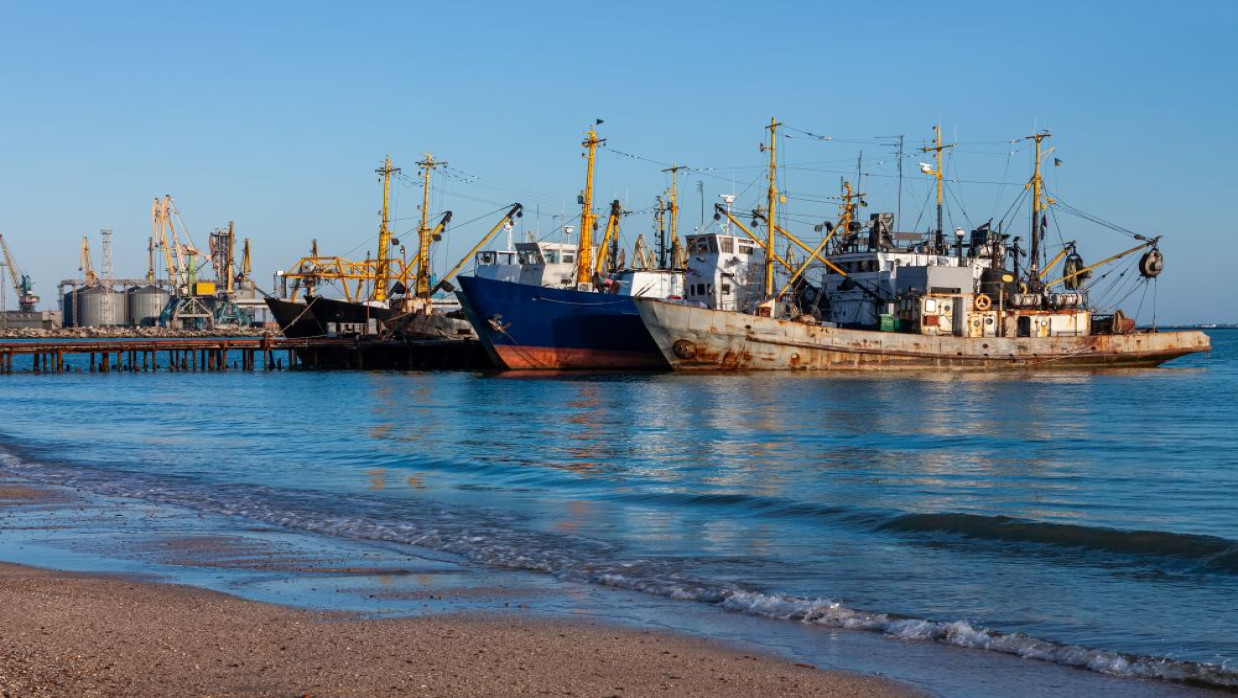
The oceans are no longer viewed merely as vast bodies of water. They are increasingly recognized as powerful drivers of economic growth and sustainable development. According to the World Bank, the term Blue Economy refers to “sustainable use of ocean resources for economic growth, improved livelihoods, and jobs while preserving the health of ocean ecosystem”. It spans wide range of sectors, including fisheries and aquaculture, ports and shipping, shipbuilding, marine renewable energy, offshore oil and gas, marine tourism and deep-sea mining. The Blue Economy was valued at around USD 2.85 trillion in 2024 and is expected to grow at an annual rate of 6.4 percent, surpassing USD 5 trillion by the early 2030s.
According to the US National Oceanic and Atmospheric Administration (NOAA), the US marine economy contributed USD 476 billion to the national GDP in 2022, accounting for 1.9 percent of the economy while supporting 2.3 million jobs. The sector added more than 500,000 jobs between 2021 and 2024, underscoring the growing economic importance of the Blue Economy. According to China's Ministry of Natural Resources, China’s gross ocean product reached 11.02 trillion yuan (approximately USD 1.6 trillion) in 2025, accounting for 7.9 percent of the country’s GDP.
China's Blue Economy has emerged as a key pillar of its economic growth. Through sustained investment in shipping, shipbuilding, fisheries, offshore energy, marine manufacturing, coastal tourism, and ocean technology, it has built one of the world’s largest and most dynamic maritime economies.
Maldives heavily relies on ocean-based activities, with the Blue Economy contributing over one-third of GDP, driven largely by coastal tourism. Norway and Thailand represent diversified Blue Economy models, where ocean based sectors account for around 30 percent of national GDP, supported by fisheries and aquaculture, maritime tourism, and offshore energy. Similarly, United Arab Emirates (UAE) and Singapore derive around 7 percent of GDP from Blue Economy activities, and reflect service-oriented models centered on marine tourism, logistics, and re-export trade.
According to Ministry of Maritime Affairs, Pakistan’s maritime sector has potential to generate over USD 100 billion annually if fully optimized. It is estimated that Pakistan could generate USD 8–10 billion from shipping, USD 7–8 billion from fisheries, USD 10 billion from aquaculture, and USD 5–6 billion from maritime tourism. Additional revenue could be realized through offshore renewable energy, ship recycling and the development of environmentally sustainable green ports.
According to the Planning Commission's Blue Economy under URAAN Pakistan report 2026, Pakistan’s Blue Economy currently contributes only about 1% of GDP. The current contribution comes primarily from fisheries, coastal tourism, and maritime trade. Seafood exports account for approximately USD 450 million, while maritime tourism generates around USD 300 million each year. The report estimates that targeted reforms in fisheries, aquaculture, shipping, ports, shipbuilding and coastal industries could generate nearly USD 4 billion in additional economic impact by 2030. The Policy aligns with Pakistan’s Vision 2035 and the Sustainable Development Goals.
Blue Economy holds vast and untapped potential to drive economic growth in Pakistan. With a 1,001-kilometer coastline, a continental shelf spanning approximately 290,000 square kilometers, and strategic location near major international shipping lanes, making it an important coastal state.
Due to the geostrategic location of Pakistan, its ports have a special value for maritime trade. Pakistan’s maritime domain lies in the proximity of world sea lanes such as the Strait of Hormuz, Strait of Malaca and Suez Canal which are the world’s busiest maritime transport shipping lanes and channels that provide an opportunity to Pakistan to link its maritime Blue Economy with the rest of the world.
Ports are the lifeline of Pakistan’s economy. Approximately, 95 percent of Pakistan’s total trade volume moves through its three major ports: (i) Karachi Port Trust (KPT), (ii) Port Muhammad Bin Qasim; and (iii) Gwadar Port. The remaining trade takes place through land borders. These ports are important not only for cargo handling, but also for strengthening connectivity, attracting investment and supporting Pakistan’s Blue Economy. Port Qasim set a record in May 2026 when it safely received and discharged the world’s largest LNG cargo ship from Qatar. The successful handling of the Q-Flex vessel carrying over 210,000 cubic meters of LNG, demonstrated the port’s capability and strength to accommodate larger cargo. Previously, LNG carriers carried cargoes up to 137,000 to 143,000 cubic meters of gas, but the Q-Flex vessel was loaded with nearly 50 percent more LNG.
KPT also made a landmark achievement by recording the highest volume of annual cargo handling in the port’s 138-year history during 2025-2026. The Port handled an estimated 54.685 million tonnes of cargo. It also recorded container handling of 2.65 million Twenty-foot Equivalent Units (TEUs), marking an important achievement for Pakistan’s national maritime capabilities.
Furthermore, the development of Gwadar under the China-Pakistan Economic Corridor (CPEC) is considered as another important aspect that plays a key role in realizing the maritime capability of Pakistan. Its proximity to global markets across Africa, Asia, and Europe makes it a port of extraordinary commercial and strategic significance. In May 2026, the port handled its largest-ever cargo ship, Motor Vessel (MV) BI JIA SHAN, which arrived from China carrying more than 53,277 metric tonnes of prime steel billets. On 18 July 2026, the Bangladesh-flagged MV Jahan Brothers II berthed at Gwadar after sailing from Singapore with 53,064 tonnes of prime steel billets destined for Al Hamriyah Port in UAE.
On 12 July, Gwadar port successfully completed the first international bunkering operation. During the operation, the UAE-owned LNG carrier ENUGU was supplied with 2,500 metric tonnes of International Maritime Organization (IMO)-compliant Very Low Sulphur Fuel Oil (VLSFO), produced locally by Cnergyico PK Limited at its refinery, highlighting Pakistan's capacity to produce fuel that meets international marine standards. These milestones underscore Port’s growing operational capacity and reinforce the broader vision under CPEC of developing the Gwadar Port into a regional and global trade and transshipment hub.
These developments are indicative of the immense potential that Pakistan holds with respect to Blue Economy. Pakistan's ports are gradually transforming from conventional cargo terminals into integrated maritime logistics hubs. Bunkering operations, handling of large LNG ships and transshipment services would not only make Pakistan’s ports more efficient but also attract international shipping lines, thus generating more revenue and making Pakistan a key player in maritime business in the region and beyond.


0 Comments
LEAVE A COMMENT
Your email address will not be published