

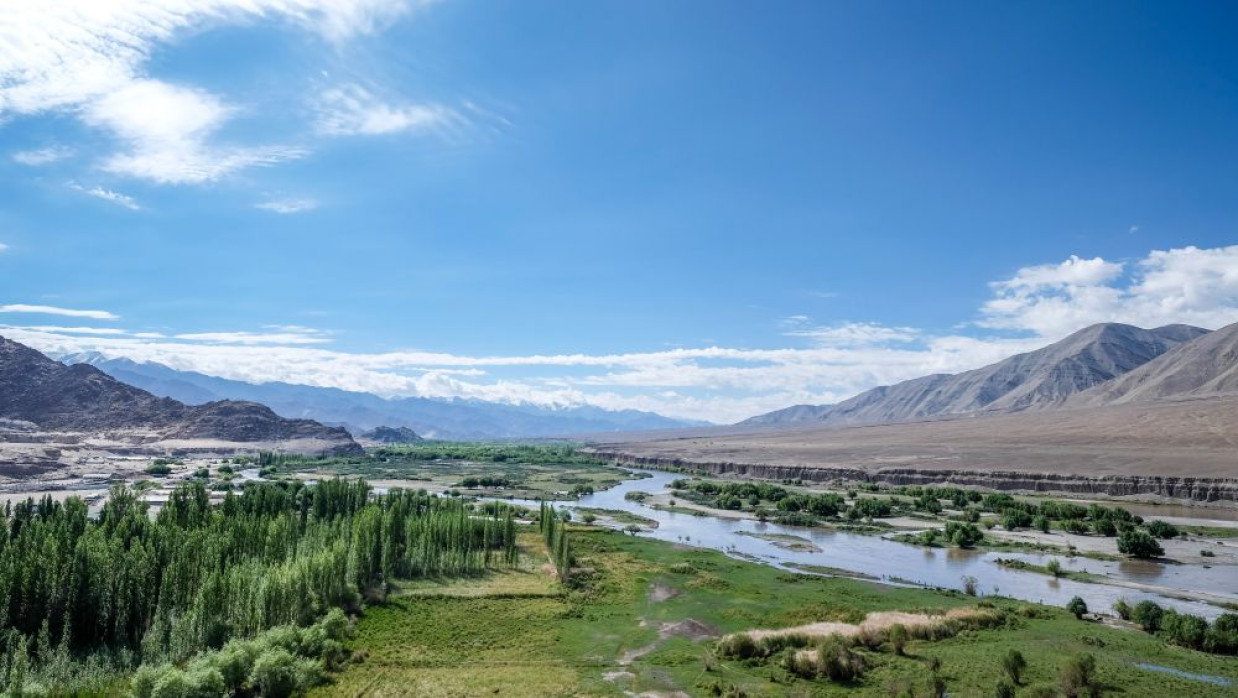
In a landmark decision in the matter relating to the Indus Waters Treaty (IWT), the Permanent Court of Arbitration (PCA), which is located in The Hague, has issued an extremely important judgment with respect to the responsibilities of India in the context of the IWT agreement that was signed by India and Pakistan back in 1960. It has been decided unanimously that there was no ground for the termination of the agreement.
The decision comes at a time when water resources have become increasingly important among the most sensitive elements of India-Pakistan relations. The river Indus is more than just a geographical location, it is the lifeline of Pakistan’s agrarian economy, providing livelihoods for hundreds of millions of people in the larger basin. The politicization of such a resource has far-reaching implications beyond the dispute.
A Treaty Built to Last Through Political Turmoil
The Indus Waters Treaty became effective in 1960 with the support of the World Bank and is regarded to be one of the most enduring water agreements in the history of the world. The treaty guaranteed that even amid all wars, difficulties in diplomacy, terrorism threats, and deterioration of bilateral relations, there would be an arrangement in place for the management of the waters of the Indus basin. As per the treaty, the three eastern rivers, namely Ravi, Beas, and Sutlej, have mostly been reserved for India's use, while the other three western rivers, the Indus, Jhelum, and Chenab, are reserved mostly for Pakistan, although there were some rights for India under the provisions of this treaty.
The longevity of the treaty indicated that it was indeed possible for technical and humanitarian arrangements to stay separate from politics.The step by India to put the agreement on hold was thus a clear deviation from the aforementioned framework. The decision by India to do so came shortly after an attack on tourists in the Indian administered part of Kashmir, and India accused Pakistan of providing backing to those responsible for such an act. Pakistan denied any such involvement.
The Hague Ruling and Its Legal Significance
In effect, the PCA has put into question the legality of India's attempt to temporarily suspend its treaty obligations.The implications of the ruling go beyond the immediate issue regarding the waters of the Indus. It all comes down to the principle of pacta sunt servanda—namely, the well-established norm of international law according to which treaties in force are to be complied with in good faith. Were states to have the right to suspend binding treaties anytime relations between the parties became problematic, the effectiveness of international agreements would suffer greatly.
Moreover, the Indus Waters Treaty continues to be in force, and the construction of India's hydroelectric power plants on the western rivers has to adhere to the treaty provisions regarding the construction and functioning of the facilities. As for the hydroelectric works, the court has adopted certain interim measures in regard to them, which include some requirements pertaining to the construction activities and information provision. A final ruling on remaining technical issues will be made later on.
India's Rejection Raises a Larger Question
New Delhi has turned down the verdict of the tribunal saying that it is "illegally constituted," and India's decision to suspend the treaty continues to remain valid. Here arises a larger issue of the relation of national policy to international law. While there is always the option to reject the international judgment, the state could still challenge the jurisdiction of the concerned international institution or resort to diplomatic means.However, rejection of an international forum is fraught with unpredictability and lack of enforceability of the treaty mechanism.
For Islamabad, this verdict will serve as an important validation of its legal and diplomatic stand. Pakistan's Deputy Prime Minister and Foreign Minister Ishaq Dar has described the verdict as one which vindicates Pakistan's long-standing position that an international treaty cannot be unilaterally suspended.Islamabad's reaction also highlights the significance of resolving the dispute through legal processes rather than allowing it to become an issue of security concern.
Water Security Is Becoming a Strategic Issue
The current dispute comes amid mounting pressure on water resources. There is climate change, population pressures, shifting patterns of rainfall, glaciers and agriculture demands for more irrigation facilities.This is especially true for Pakistan, since agriculture still heavily relies on the Indus river system. Any major change in the availability of water can have implications on irrigation, food security, energy production and the economy of the country.
This is why statements suggesting that "not a single drop" of water would flow into Pakistan have generated considerable concern in Islamabad. Pakistan has repeatedly warned that attempts to alter the flow of transboundary rivers could have severe consequences for bilateral stability. The danger is not limited to the quantity of water. Perceptions of water insecurity can themselves become drivers of conflict. If either side believes that water is being used as political leverage, technical disagreements over dams and hydroelectric projects can rapidly acquire strategic and military dimensions.
Preserving the Treaty Is in Both Sides' Interest
The Hague ruling should therefore be viewed not simply as a legal development but as an opportunity to reinforce the principle of institutionalised water cooperation. The most pressing task for Pakistan is that of making sure that the terms of the treaty are enforced, and all concerns related to the hydroelectric facilities of India are resolved by existing procedures. At the same time, Islamabad needs to make sure that its rhetoric does not turn the legal matter into an irreversible conflict.
India is facing a strategic decision: either treat the treaty as a political tool or realize that securing its water supplies in the future will require clear rules and proper dispute resolution mechanisms. It was possible for the treaty to exist for six decades because it created a set of rules that would function even in case of political enmity between the parties. In the times of global warming, which makes water a scarce and strategic asset, maintaining such rules becomes especially relevant.
Thus, the judgment of the Permanent Court of Arbitration has a much wider meaning: international treaties cannot be considered as temporary tools of foreign policy, the terms of which become obsolete during periods of political tensions. The commitment to the treaty becomes essential for both India and Pakistan in order to provide regional stability and security of their economies.


0 Comments
LEAVE A COMMENT
Your email address will not be published