

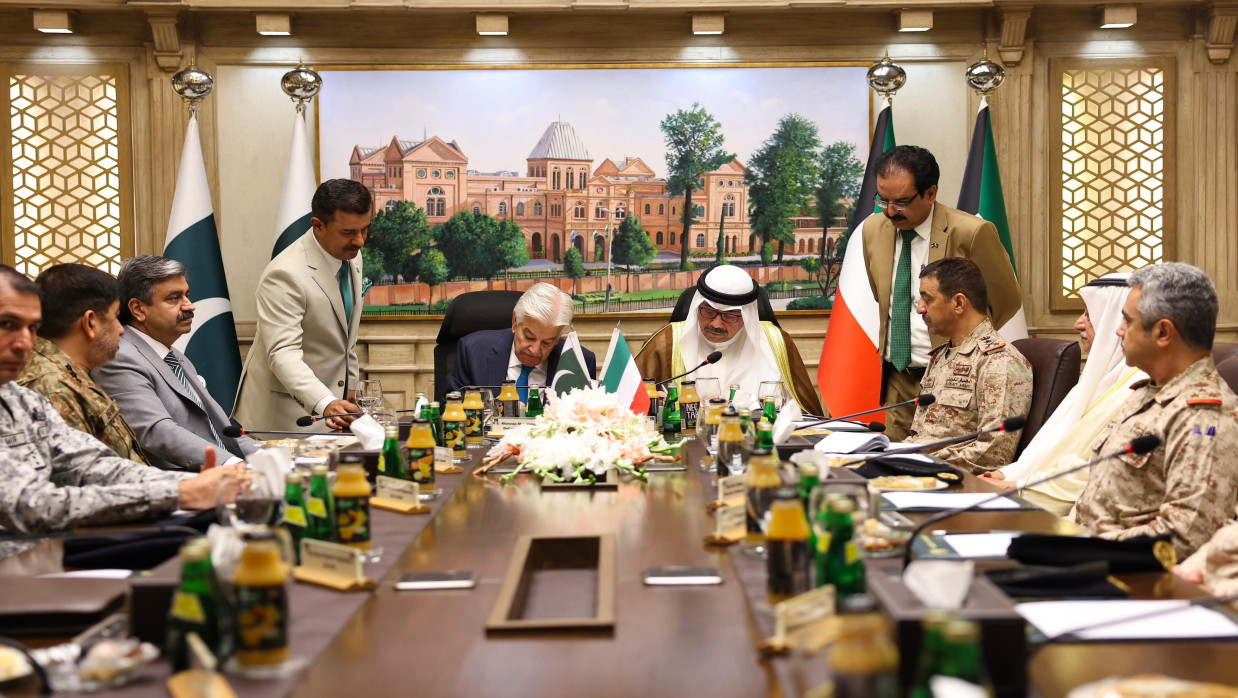
The latest visit of Chief of Army Staff Field Marshal Asim Munir to Iran comes at a moment when diplomacy has become increasingly important to prevent a broader regional crisis. While the visit has attracted attention because of the continuing confrontation involving the United States and Iran, its significance goes beyond the question of who may have encouraged the trip. For Pakistan, engagement with Tehran is part of a broader and continuing effort to reduce tensions, maintain communication and encourage a political solution.
Islamabad has consistently faced a complicated strategic reality. Pakistan has important relations with the United States, while Iran is its immediate neighbor. Any serious deterioration between Washington and Tehran can therefore create problems for Pakistan’s security, economy, border stability and regional connectivity. That reality makes neutrality and communication particularly valuable.
In recent months, Pakistan’s political, diplomatic and security leadership has remained involved in efforts aimed at encouraging dialogue. Prime Minister Shehbaz Sharif, Deputy Prime Minister and Foreign Minister Ishaq Dar, Interior Minister Mohsin Naqvi and Field Marshal Asim Munir have each contributed to maintaining engagement with relevant actors. The central theme of these efforts has been de-escalation.
Pakistan understands that a prolonged military confrontation can quickly become much more complicated than the original dispute. Once regional actors become involved, economic infrastructure comes under pressure and strategic waterways face disruption, the consequences can spread rapidly across borders.
The Strait of Hormuz is a particularly important concern. Any prolonged instability around the waterway can affect energy supplies and international trade, making the situation relevant not only to the Middle East but to economies across Asia and beyond. For Pakistan, therefore, diplomacy is not merely an exercise in international positioning. It has a direct connection with national economic and security interests. This helps explain the importance Islamabad attaches to keeping communication channels open with Iran.
The Islamabad MOU also remains an important element of Pakistan’s approach toward its relationship with Tehran. Islamabad views the understanding as the principal framework for restraint and the management of outstanding issues between the two countries.
Maintaining that framework becomes even more important when the surrounding region is experiencing a wider crisis. Pakistan cannot afford another cycle of escalation along its western frontier. Stability with Iran allows Islamabad to concentrate on economic priorities while avoiding additional pressure on its security establishment.
The broader diplomatic picture, however, is more ambitious. Pakistan increasingly appears interested in using its relationships with both Washington and Tehran to encourage dialogue between the two sides. That does not mean Pakistan has suddenly become a formal mediator with the authority to dictate terms. Rather, Islamabad is attempting to use its access and credibility to keep diplomatic possibilities alive.
That distinction matters. There has been a tendency to portray Field Marshal Asim Munir’s latest visit to Iran primarily through the lens of American involvement. Such a description can oversimplify Pakistan’s motives. Even if Washington and Islamabad discuss the crisis, Pakistan has its own reasons for engaging Tehran.
Pakistan’s national interest requires regional stability. Its diplomatic relationship with Iran requires sustained communication. Its relationship with the United States gives Islamabad another important channel through which it can encourage dialogue. These interests overlap without being identical to the interests of either Washington or Tehran.
The strength of Pakistan’s position therefore lies in its ability to maintain independent engagement. For diplomacy to work, both sides must believe that the intermediary is capable of listening to their concerns without automatically adopting the position of the other party. Pakistan’s simultaneous engagement with Iran and the United States can potentially give it that space. Iran’s positive response to Pakistan’s efforts is significant because it indicates that Tehran sees value in Islamabad’s outreach. Such confidence is essential if Pakistan is to continue serving as a communication bridge.
At the same time, Pakistan must manage expectations. Diplomatic engagement does not guarantee an immediate end to hostilities. The disagreements between Washington and Tehran are complex and involve strategic, political and security concerns that cannot be resolved through a single visit.
The purpose of diplomacy at this stage is therefore more practical: prevent further deterioration, preserve communication and create opportunities for negotiations. This is where the role of senior Pakistani officials becomes important. Traditional diplomacy often operates quietly. Meetings may not produce dramatic headlines, but they can prevent misunderstandings, establish channels of communication and provide space for difficult conversations.
The involvement of Pakistan’s political and military leadership also reflects the nature of the current crisis. Security concerns are deeply connected with diplomatic calculations, and a comprehensive Pakistani approach requires coordination between civilian and security institutions.
Field Marshal Asim Munir’s engagement should consequently be seen as one component of this coordinated effort rather than as a standalone mission. Pakistan’s broader objective is to avoid being pulled into a confrontation between larger powers while simultaneously contributing to regional stability.
That is a difficult diplomatic balance, but it is also an opportunity. If Pakistan can maintain constructive relations with both Washington and Tehran, Islamabad can potentially play a useful role in encouraging restraint and keeping negotiations possible. The country’s geographic position, existing relationships and experience of navigating competing regional interests all provide a foundation for such engagement.
Ultimately, Pakistan’s diplomatic role should not be measured by whether it receives credit for ending the crisis. The more immediate measure of success is whether it can help prevent escalation and preserve a pathway toward dialogue. The latest visit to Iran is therefore significant not because Pakistan is acting as someone else’s representative, but because Islamabad is demonstrating that it has its own reasons to pursue peace.
At a time when military confrontation can quickly produce consequences far beyond national borders, Pakistan’s emphasis on communication offers an alternative approach. Its message is one of restraint, dialogue and regional responsibility. And in a crisis where every additional escalation carries wider consequences, keeping diplomacy alive may itself be an important contribution to peace.


0 Comments
LEAVE A COMMENT
Your email address will not be published