

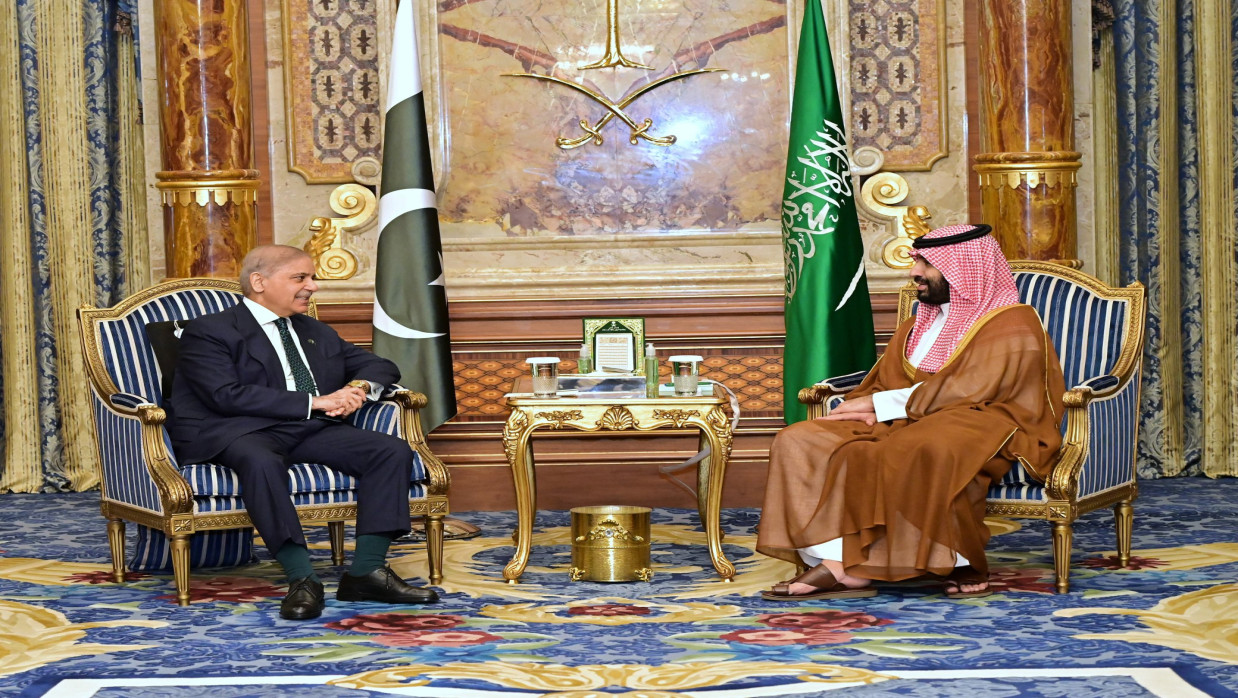
Though Pakistan faces several internal and external challenges such as economic instability and India's continuous misadventures, it has increasingly emerged as a middle power in global politics, owing to its commendable role as a diplomatic mediator in the recent US-Iran conflict, the signing of the Mecca Joint Defense Agreement, and its strategic victory over India in May 2025.
Pakistan's reputation and relevance on a global stage has been steadily improving over time, which has enabled it to emerge as a middle power state, strengthening its role in global politics and enabling it to ensure peace and tranquility across the region and beyond. Nevertheless, Pakistan’s internal and external circumstances remain challenging. The situation in Balochistan is quite unstable and vulnerable, whereas the country's economic conditions also pose serious challenges in achieving prosperity and development. Similarly, along its eastern and western borders, Islamabad continues to face grave security threats. Despite these obstacles, Islamabad has successfully enhanced its international approach and standing by playing a constructive role in several geopolitical domains, including acting as a diplomatic bridge in reducing tensions between the United States and Iran.
The war between the United States and Iran provided Pakistan with an opportunity to evolve into a middle power and strengthen its global standing by playing a central role in de-escalating the conflict as a diplomatic mediator. It was an honour for Pakistan to act as a third-party mediator in this war, showing its commitment to the principles of Article 33 of the UN Charter and making great efforts to halt the fighting between the two warring states. For engaging in diplomatic efforts and facilitating indirect talks, the credit goes to both the military and civilian leadership of Pakistan, who played a decisive role in promoting peace and stability in the region and making a ceasefire possible between the rivals on 8 April 2026. It was not an easy job to make negotiations possible between the conflicting states which have a forty-seven-year history of animosity. This was a really a challenging task for Pakistan as a peace mediator. Nevertheless, Pakistan succeeded. Pakistan also presented itself as a diplomatic bridge between Washington and Tehran, making indirect talks feasible for both parties in pursuit of peace, preventing further escalation, and reducing tensions between the hostile states. It was possible because Pakistan is the country that has robust relations with both states-the U.S. and Iran.
Furthermore, it was Pakistan that helped facilitate the Islamabad Memorandum of Understanding on 17 June 2026 between the U.S. and Iran. Indeed, it was quite an arduous task for Islamabad as a diplomatic intermediary to first broker a ceasefire between the two conflicting states and then also facilitate the signing of the MoU; yet, this became possible due to the tireless and unwavering efforts of Field Marshal Syed Asim Munir and Prime Minister Shahbaz Sharif. Both of them pursued shuttle diplomacy, visiting Iran and other Gulf states to de-escalate the conflict and save the world from catastrophe and another Great Depression, as oil prices were constantly surging, causing great damage to the global economy. However, in this entire context, Pakistan has emerged as a peacemaker and a stabilizing actor. As a result, its stature in international politics has risen, giving Pakistan an opportunity to become a middle power. Hence, Pakistan's efforts to de-escalate the conflict helped it gain international attention and demonstrate its potential as an emerging middle power.
In addition to this context, Pakistan also signed a defense pact with Turkey and Saudi Arabia on 7 August 2026 in Mecca. The agreement, known as “Mecca Joint Defense Agreement” aimed to strengthen collective deterrence against any act of aggression, bolster security partnership, and advance defense engagement. The most significant clause of the agreement is: “An armed attack against any one of the three states will be regarded as an attack against all three states”. This clause quite resembles NATO's Article 5 which contains the same provision related to collective defense.
The agreement underscores the growing relevance of Islamabad in contemporary international politics, marking a historic milestone that enhances Pakistan's image on the global level. Following the signing of the agreement, Islamabad seems to be emerging as a security guarantor for regional states, marking a historic shift in its regional role. The main factor behind the signing of this defense agreement is that Pakistan is the only Muslim nuclear-armed state in the world, encouraging regional states to engage in defense cooperation with it.
Additionally, in the month of July, Kuwait also concluded a defense pact with Pakistan, which ratified an old defense agreement signed in 2023. Kuwait is also one of the states located in the Middle East that sought to advance its security through collaboration with Islamabad amid regional instability and turmoil. This highlights that Pakistan has become an important actor among regional states, influencing and shaping the regional security architecture and persuading them to move closer to it in the field of defense. On the other hand, it shows the lack of trust among regional states toward the U.S. as a net security provider following the U.S.-Iran conflict.
In the assessment of Pakistan’s growing role, one should not disregard the historic military victory of Pakistan over India in May 2025. This landmark victory marked a change in Islamabad's reputation and image on the global stage and enhanced its diplomatic influence regionally and beyond. This became possible because Pakistan, due to its conventional military power, successfully defeated and overwhelmed a state four times larger. Moreover, Pakistan also shot down one of the world's most sophisticated fighter jets_Rafale fighter jets during the four-day war. This conflict became a turning point in Pakistan's strategic image and helped Pakistan receive world appreciation and attention. The demand of J-10 C started rising, making Pakistan more stronger and relevant in international politics. Even President Donald Trump endorsed Pakistan's strategic victory over India and mentioned that fighter jets had shot down by Pakistan. This led to Washington's growing engagement with Islamabad and contributed to the enhancement of Islamabad's power projection and influence in the region and beyond. However, prior to May 2025, Pakistan was not among the highly influential regional states and its international image was not what it is today. The May 2025 war transformed Pakistan's image and helped it project its military power and elevated its diplomatic influence.
Consequently, Pakistan's role as a peace broker between the U.S. and Iran, the signing of the Mecca Joint Defense Agreement, and its military triumph over India in the May war have demonstrated Islamabad's growing relevance, international reputation, and emergence as a middle power. All of these major developments helped Pakistan play an active and crucial role in international politics, project its military strength, and promote peace, security, and tranquility across the region and beyond. Hence, Pakistan needs to maintain this momentum so that it can become a much more powerful state and address its internal and external challenges.


0 Comments
LEAVE A COMMENT
Your email address will not be published