

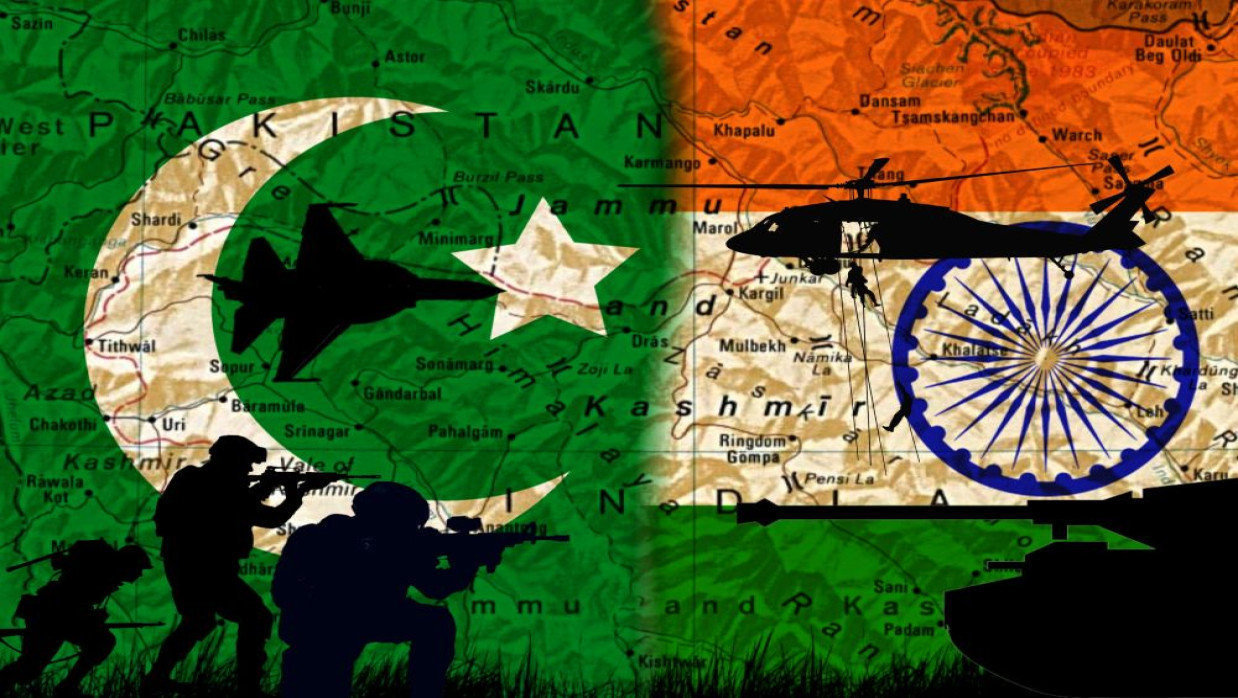
The most risky strategic premise in South Asia is that any military confrontation between India and Pakistan may be initiated, contained and concluded under certain preconditions. However, the May 2025 incident brought that premise into question. A minor confrontation quickly grew into a multidomain contest involving fighter planes, missiles, drones, air defense, electronic warfare and information warfare. More significantly, however, it proved that in the case of nuclearization, the line between a “limited attack” and the rest of a conflict becomes dangerously thin.
In light of this broader strategic perspective, it becomes clear why Pakistan has issued such a recent warning about any further adventurism on India’s part. Pakistan has stated that it still wants to keep peace and stability in the region, but at the same time it made it clear that it is ready to protect its sovereignty, territorial integrity and national interests through its armed forces.
It is especially important given the evolution of India’s approach to national security, which has focused increasingly on the potential for using selective military force without crossing into full-scale conflict. This is premised on the notion that selective conventional force may be used without resulting in uncontrolled escalation. The events of May 2025 have revealed just how dangerous this notion could be. Once military force starts being applied between two nuclear neighbors, no one is able to ensure that escalation does not spill over from the planned boundaries.
This is when the problem of stability-instability paradox is especially pertinent. While nuclear arms may make total war unlikely, they certainly do not preclude conventional conflict. Actually, the very confidence that nuclear deterrence prevents escalation from going to the top level may lead people to believe that limited conventional actions may be carried out safely. Pakistan’s actions in May show that one cannot base their calculations on the assumption that the attacked country will just endure them.
The importance of May 2025 therefore lies far beyond competing accounts of the losses suffered on the battlefield. Pakistan has contended that their military forces responded successfully to Indian military aggression and shot down eight Indian aircraft, including Rafales, and damaged military installations. These form a part of the competing accounts of the crisis between India and Pakistan, but it is an undeniable fact that the encounter was consequential for both countries. International assessments have recognized the loss of several Indian aircrafts and also commented on the sophisticated nature of the air war.
The Stimson Center, in particular, has termed this crisis as the most important India-Pakistan crisis in decades.
However, the far more important point of realization which emerged out of the confrontation was the new way warfare can be fought. Effectiveness of the military now depends on sensors, data-links, electronic warfare, command-and-control, intelligence, air defence systems, and precision weapons rather than the mere numbers of aircraft, missiles, or tanks that any country possesses. India has clear advantages over Pakistan in many areas, but May showed that numbers do not always mean freedom of action.
This has clear implications for future strategic thinking in New Delhi. The emergence of sophisticated combat planes, long-range weapons, integrated air defence system, unmanned systems and indigenous technology in Pakistan has increased the complexity of the military balance in the region. The point here is very simple. Military superiority does not ensure strategic freedom of action.
The point is precisely where the importance of Pakistan’s latest warning lies. The objective of this warning was to convey to the Indians that they cannot believe that having superior military capability means having the control over the escalatory process. What really matters in any future crisis situation is not only which side has superior weaponry, but which side can control the aftermath of the initial attack. If one side believes that he can dictate the timing, intensity and geography of the conflict, while the other side will have no other option than to accept the attack, then deterrence becomes very fragile.
The information domain brings its own complications. While May 2025 was associated with the war of narratives with each side trying to set out its own version of facts amidst information warfare on social media using unconfirmed video footage. Therefore, the modern conflict takes place at the same time on the battlefield as well as in the information domain. Strategic communication plays its role in the deterrence process as perceptions of the military potential of the adversary matter almost as much as the capability itself.
Nuclear factor raises the significance of these trends. Both Pakistan and India have advanced conventional military capabilities together with their nuclear weapons arsenal. The real threat could be the unintended consequence rather than the deliberate decision to use the nuclear weapons. The development of long-range missiles, drones, electronic warfare systems and airpower capabilities leads to shortening the decision-making process and the political leadership is left without enough time to make sure whether it is intentional or accidental act.
Political considerations can add yet another layer of complexity to crisis management. When military operations come to be entangled with political realities, it can become hard for governments to show restraint without seeming weak. This results in a vicious cycle whereby each move leads to more pressure to make another move. Under such conditions, escalation is less likely to be the result of strategic considerations than politics.
This is why Pakistan’s focus on both readiness and peace is crucial. Deterrence and diplomacy are not mutually exclusive. Deterrence through credible military power can enhance diplomacy through demonstrating to the adversary that any sort of coercion will not reap easy benefits. On the other hand, diplomacy is vital to ensure that deterrence does not turn into a never-ending cycle of retaliation. A government’s strategic goal must not be, accordingly, readiness for the next war, but prevention of the next crisis.


0 Comments
LEAVE A COMMENT
Your email address will not be published