

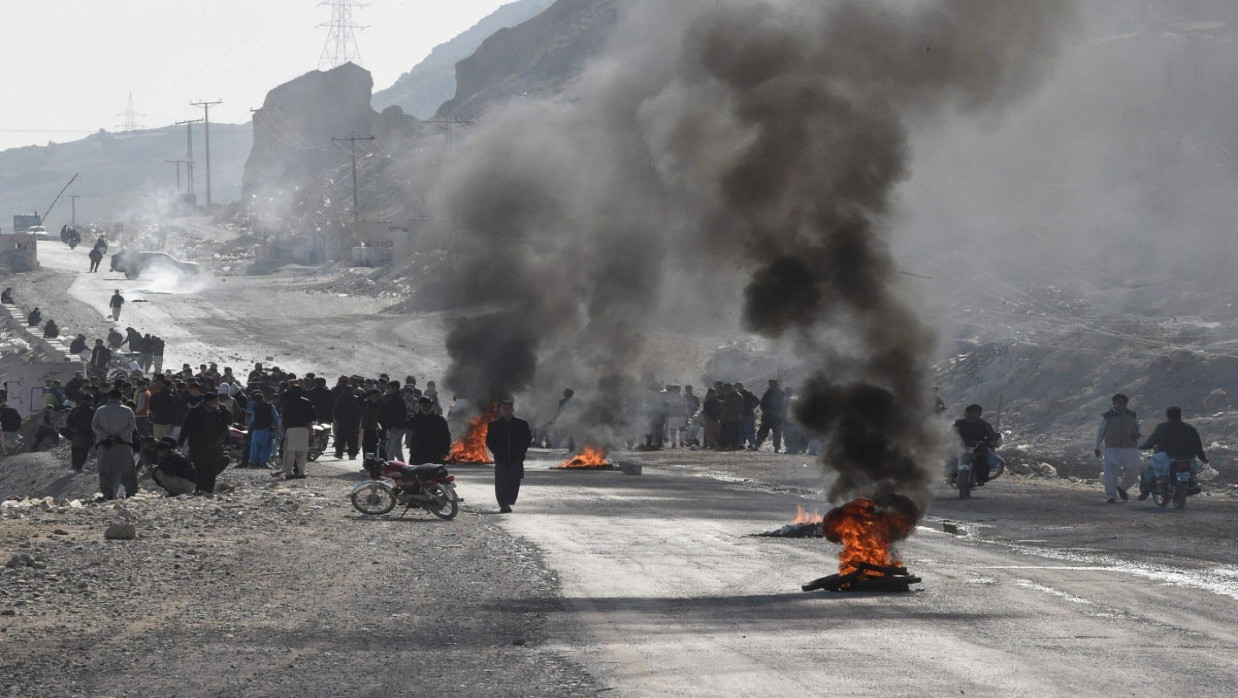
Balochistan gets talked about a lot, mostly through the lens of terrorism, militant attacks and general instability. Every time a security incident shows up it tends to get folded into a bigger storyline that makes the province look perpetually unstable. But these kinds of readings can end up mixing things together, like, taking the visibility of violence and treating it as the whole political and social picture of Balochistan, when that’s not really the same thing, is it.
The security situation in Balochistan should be understood in a broader context of ongoing counterterrorism campaigns against militant organisations and also the continuing work by the state to unmake networks behind the violence. An uptick in reported security incidents does not always mean there’s more public sympathy for militancy or that governance has started to fall apart. Sometimes, it just means there is more direct contact between security forces and terrorist networks, because law-enforcement agencies broaden operations against them.
Militant organisations in Balochistan have moved to tactics that aren’t only about causing injuries and deaths but also about creating dread, visibility and a sense of unsteadiness. Their targets have ranged from security personnel, to civilians, infrastructure, transport networks and development projects. Attacks on these types of targets are meant to give the impression that regular state activity cannot go on and that investment and development, simply remain out of reach. This is precisely why isolated attacks has to be interpreted carefully.
The capacity of militant organisations to carry out sporadic acts of violence should not, be taken as automatic proof of broad public approval for their aims. Terrorism, by its nature, tries to magnify limited operational capability through psychological pressure. Even a relatively small group of perpetrators can draw an outsized amount of attention when their actions are violent and sensational. The wider social picture in Balochistan is considerably more complicated too.
Most people in the province, if we are being honest, look for security, a bit of economic momentum education, employment, and even better public services… not this long-drawn-out violence. In places where terrorism hits most directly, people know the human and economic costs, like not in theory but in real life. Families lose loved ones, local enterprises see disruptions, transport gets vulnerable and development initiatives are delayed, sometimes for ages.
The priorities of everyday citizens, really do not match with the aims of militant organisations that are actually chasing instability.
Public cooperation with law enforcement institutions also stays as a key part in counter terrorism efforts, sort of. Local information plus community engagement can help the authorities spot suspicious motions, unsettle the networks and even stop attacks before they happen. This kind of collaboration, somewhat complicates the thought that militant organizations have universal backing or at least wide social approval. Political conversation offers a further indicator too.
Mainstream political leaders and elected representatives keep stressing constitutional politics, dialogue, and socio- economic development. There are, of course, differences out there in governance, resource allocation, political rights, and even development priorities, but this disagreement inside constitutional politics shouldn’t be taken as the same thing, as support for terrorism.
Actually, the mere presence of political debate itself shows that peaceful mechanisms still exist, and that they can be used to express grievances and also lay out competing ideas for Balochistan’s future.
The province’s political voices increasingly turn their attention to things like education, jobs, infrastructure, healthcare, local progress and administrative effectiveness, and it kind of becomes obvious, or at least thats how it feels. These concerns show the priorities of a society hunting for more opportunity and better governance, more than just endless confrontation and back and forth.
Development efforts have to be treated as a core part of any serious appraisal of Balochistan.
Road networks, educational institutions, healthcare facilities, communications infrastructure, and other public services are still expanding despite ongoing, stubborn security difficulties. Every time one of these efforts kicks off it boosts connectivity and, in turn, builds the state’s capacity to deliver services to communities that have long been stuck with geographical isolation.
Connectivity is especially critical in a province as geographically vast as Balochistan. Improved roads and communications can chip away at isolation, make it easier to reach markets, link far flung settlements with health and education services, and also help economic activity move faster, more naturally.
Security operations and development should not really be seen as clashing approaches, I mean, they sort of go together in a way. They are mutually reinforcing, in practice.
Counterterrorism efforts are meant to make that safer context needed so investment, infrastructure, trade, and public services can actually run. Meanwhile, economic development as well as sturdier institutions can reduce the weaknesses that militant organisations try to use, to their advantage.
A sustainable strategy therefore requires both security and governance.
This does not mean ignoring genuine grievances or administrative shortcomings. A balanced narrative must acknowledge problems in service delivery, economic disparities, political representation and institutional performance where they exist. Denying legitimate concerns would be as misleading as portraying the entire province through the actions of terrorist organisations.
The critical distinction lies between political grievances and militant violence.
Constitutional demands can be debated, negotiated and addressed through political institutions. Terrorism deliberately targets that process by attempting to replace political participation with coercion and fear.
Balochistan’s resilience is most visible in how everyday life keeps going, even when there are serious security threats. Students keep going to school, businesses continue to operate, political representatives take part in democratic processes, development work moves forward and communities—again and again—show, in a quiet way, that they want peace.
These daily realities do not usually draw the same focus as an attack does, but they’re just as telling, maybe even more, when it comes to the province’s direction.
Balochistan, kind of describes as Pakistan’s most volatile province, and that alone feels like it misses a lot. It mostly zeroes in on separate incidents while sort of skipping over resilience, wider political involvement, development, and also the ongoing counterterrorism work that keeps going.
A more credible assessment would need to hold both sides together, at the same time. Yes, militant violence is serious, but the broader reality is also there, that state institutions, elected representatives, and even local communities keep moving, trying to maintain stability.
Balochistan has real security problems, but terrorism should not be the thing that ends up defining either the province, or its people.
Its coming future will be decided ultimately not by how much militant organizations can push out loud headlines, but by whether constitutional politics, good governance, development, and the public wish for calm can win over violence.


0 Comments
LEAVE A COMMENT
Your email address will not be published