

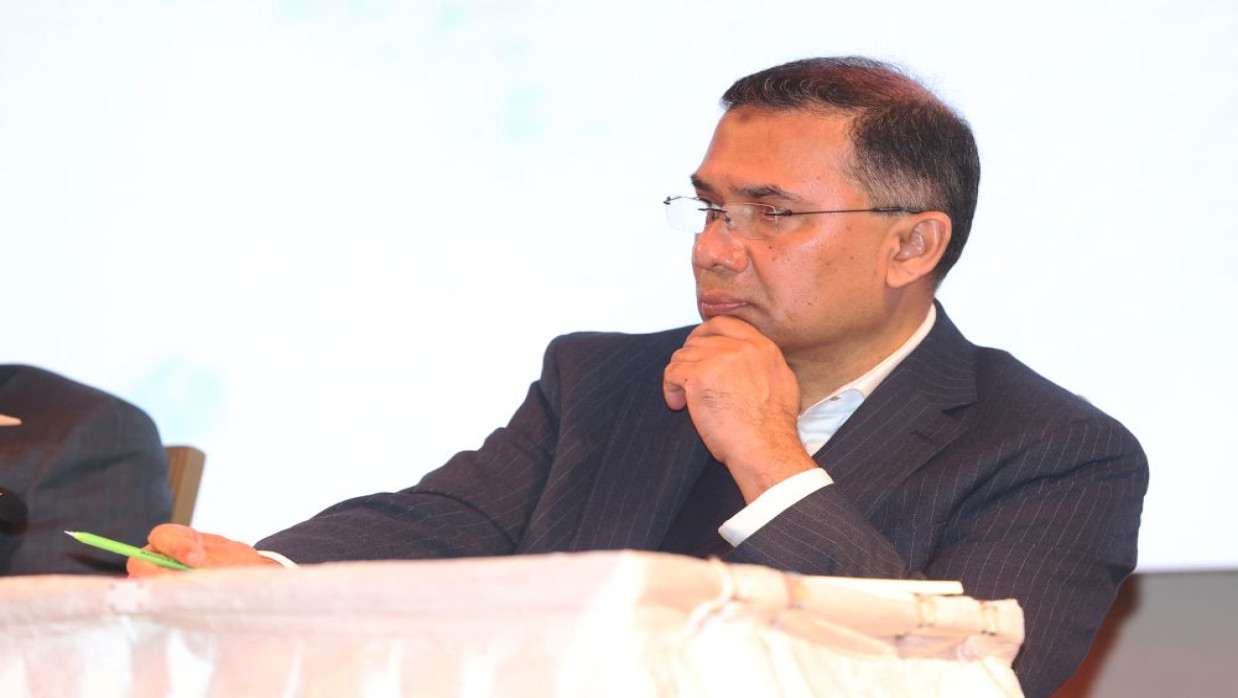
As October begins, the Bangladesh Nationalist Party government led by first-time Prime Minister Tarique Rahman is approaching eight months in office. When the PM and his team took office in mid-February, they announced ambitious goals and pledged to rigorously monitor their performance at the 180-day mark. With this milestone passed and the PM returning from a high-profile visit to the United States, now is an appropriate moment to assess the government’s performance and analyze its most likely path forward.
To start with the good news, the Prime Minister has brought energy and a strong work ethic to the job and has smartly set aside some of the pomp and circumstance that surrounded the office during Hasina’s tenure. Government insiders speak admiringly about the PM’s long hours in the office and his expectation that advisors and cabinet members keep up with the pace he has set. This has been a real shock to the system, particularly for some of the older and more experienced member of the government who became accustomed to a more leisurely pace as opposition political leaders. On the whole, the Prime Minister has largely retained those who joined him in government in February, with only some minor tinkering to the composition of his Cabinet. Given the age and frail health of a number of Ministers, however, it is likely that there will be a number of additional Cabinet changes over the course of the government’s remaining tenure in office. It appears that the Prime Minister has given significant authority to a small group of Ministerial-ranked advisors who form his inner circle. This was seen prominently in New York, where a number of these advisors were by his side in key meetings.
Recent public opinion polls indicate that the Bangladeshi public appreciates the efforts that the Prime Minister has made, with his personal popularity outpacing that of his government. That said, overall satisfaction with the government’s performance remains strong, indicating that voters are still willing to give the BNP the benefit of the doubt. Whether the PM and government retain this popularity will largely depend on the performance of Bangladesh’s stressed economy.
Where the Prime Minister has had seemingly greater challenges has been in preventing excesses by some members of his party who are seeking to use their positions for personal advancement and enrichment. There is nothing new about this phenomenon in Bangladesh, but it has nonetheless been jarring to see reports of extortion, cronyism, and corruption involving lower-level party leaders and workers. The Prime Minister and his inner circle appear to understand the damage that these reports can do to his image and have acted swiftly to discipline some involved in public and egregious cases of misuse of power. At the same time, it is hard to dismiss the critique that there has been a certain return to business-as-usual vis a vis the interaction between party and government. With the BNP now led by an Acting Secretary General following Mirza Fakhrul Alamgir’s elevation to the Presidency, there is a risk that internal party discipline might continue to suffer.
By far the biggest challenge facing the government is managing the economy in the context of severe energy supply and price shocks related to the U.S.-Iran war. The press is full of reports of the negative consequences of energy shortages on industry, agriculture, and day to day life. The financial cost of meeting a vastly increased energy bill has forced the government to rethink or scale back some of its signature social welfare programs. While remittances and garment exports remain healthy, the government realized the need to develop new industries to bring in foreign exchange and provide employment.
In foreign relations, the BNP government’s performance has been consistently strong, with the Prime Minister and his foreign affairs team giving substance to the campaign pledge of pursuing a “Bangladesh first” policy. The PM’s decision to make his first foreign trip to Malaysia and China made good sense in this regard and was welcomed by the Bangladeshi people. The Prime Minister also had a strong debut in New York, making very good use of his truncated schedule to hold important bilateral and multilateral meetings on areas of priority for his government. These include the Rohingya crisis, the dangers posed by climate change, and the need to attract investment to Bangladesh.
Many had expected that one of the PM’s top priorities would be pursuing a “reset” in Bangladesh’s relationship with India. Foreign Minister Dr. Khalilur Rahman made an early visit to New Delhi and plans were put in motion for subsequent high-level interaction. These hopes were thwarted, however, after Indian authorities allowed Sheikh Hasina to use her refuge in India to continue efforts to destabilize Bangladesh’s political transition. As the Bangladesh side had warned, Hasina’s press conference scuttled plans for PM Tarique to visit India and cast an overall pall over the relationship. Meanwhile, Bangladesh has been able to capitalize on the election of FM Khalil as UNGA President to gain additional clout on the world stage. Relations with a number of partners, to include the U.S., European Union, Turkey, Pakistan, United Kingdom and Saudi Arabia remain strong. In many ways, India remains the odd man out.
Meanwhile, the Parliamentary Opposition led by the Bangladesh Jamaat e Islami and National Citizens Party is continuing to find its way, alternating between working within the system and putting pressure on the government on the streets. Social media remains a contested space and accusations by party supporters against their opposite number remain heated. There continues to be a mix of misinformation and disinformation, at time amplified by outside actors. Much of the opposition’s political program centers around implementation of the July Charter, which was approved by a strong majority of voters in February. Despite pledges to implement the July Charter (albeit with some amendments) this has clearly not been a priority for the government.
For its part, the Bangladesh Awami League remains stuck in the past and seemingly incapable to breaking with Hasina and others who bear the primary responsibility for crimes committed in their government’s name. In an attempt to remain relevant, Hasina continues to claim that she and her party leaders in exile will return to Bangladesh in December—even as few judge that to be a realistic possibility. As long as Hasina and her cronies remain recalcitrant, there is little hope that the government will move forward with an effort to promote national reconciliation. At the same time, international and domestic human rights groups have warned about backsliding on issues related to preventing enforced disappearances, reforming security agencies, protecting rights to freedom of expression, depoliticizing the judiciary and empowering an independent human rights commission.
In sum, while it is possible, after eight months, to draw some conclusions about the BNP’s performance and make hazard predictions about the future, there is still significant scope for change. Much will depend on whether the economic situation stabilizes and gives the government additional breathing space. For the PM, it has been an incredible two years going from a life in exile to the leadership of his party and government. After a tumultuous period, culminating in the overthrow of Hasina’s government and the transition from an interim to an elected government, Bangladesh needs the current government to succeed.


0 Comments
LEAVE A COMMENT
Your email address will not be published