

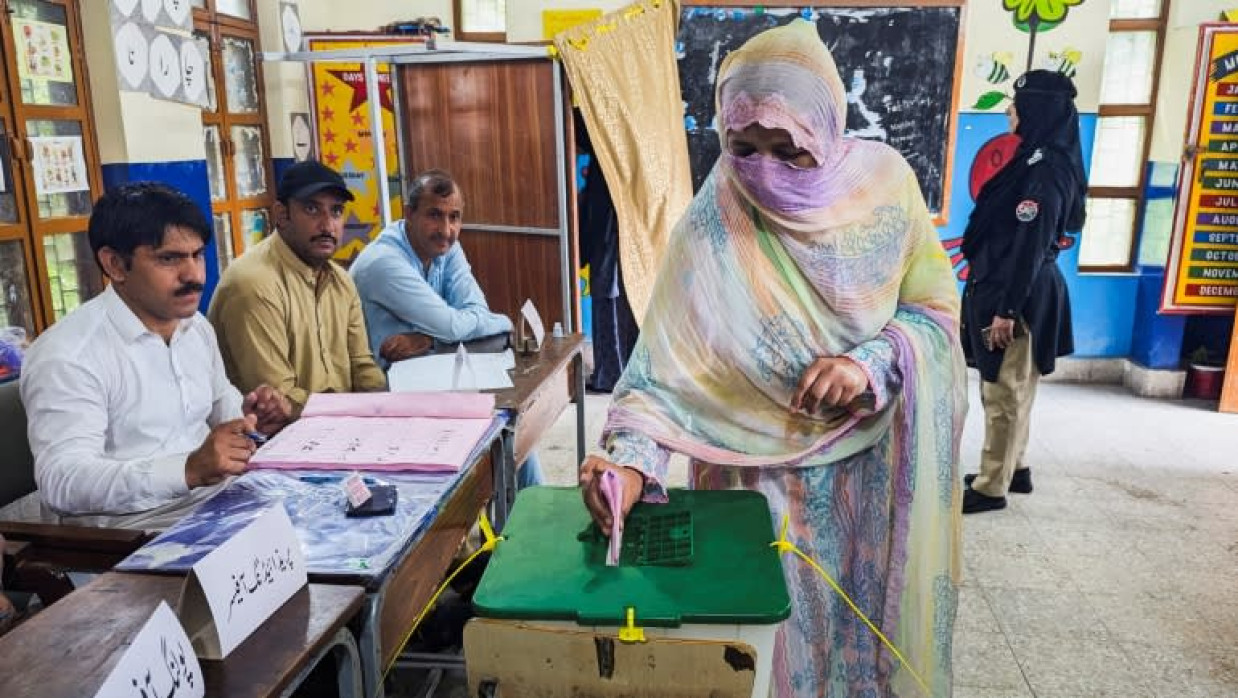
The current political strife in Pakistan-administered Kashmir is beginning to look like an existential threat to Kashmir's administration as well as Islamabad. What began as a protest against higher food and electricity costs has transformed into demands over political autonomy, control over resources, and the citizenry's democratic rights. The current level of protest activity has picked up ahead of regional elections set to begin on July 27, 2026. Voting will take place in three phases until August 10.
The group at the heart of the unrest is called the Jammu Kashmir Joint Awami Action Committee, or JAAC. Established in 2023, the JAAC is an umbrella organization representing traders, transporters, lawyers, students and civil society groups that galvanized public sentiment over rising living costs. The group demanded subsidized flour, reduced electricity rates and an end to special privileges enjoyed by politicians and senior bureaucrats. But their agitation snowballed into a broader challenge to Azad Jammu and Kashmir's political system - as Pakistan refers to the territory.
The Dispute over Refugee Seats
The biggest point of disagreement is over who should have seats in the regional Legislative Assembly. 45 of the regional assembly seats are directly elected. Of these, 33 seats are reserved for constituencies within Pakistan-administered Kashmir. The other 12 seats are reserved for refugees from the Indian administered side of Kashmir who reside in other areas of Pakistan.
The arrangement reflects Pakistan’s long-standing position that the whole of Jammu and Kashmir remains disputed territory and that those displaced from the Indian-administered portion retain a legitimate political connection to the region. The JAAC, however, argues that people who do not reside in Azad Jammu and Kashmir should not determine the government's policies. Activists allege that political parties based in Pakistan exploit the refugee constituencies to influence the formation of regional administrations.
In June, the regional Supreme Court ruled that the seats cannot be abolished unless the constitution is amended, as they are guaranteed by the constitution itself. The verdict strengthened the government's legal position but also infuriated people further. Authorities claim these seats preserve the political identity of displaced Kashmiris. The protesters, however, see these seats as the means by which Islamabad controls the region's affairs.
“This fight is thus not just about electoral math. It goes deeper. The real question is whether PoK should mainly stand for the people who actually reside in it or whether its institutions must forever reflect Pakistan’s broader territorial claim on Kashmir.”
Rawalakot at the Center
Rawalakot, in the Poonch division, has emerged as the principal center of the agitation. Security forces have attempted to stop protesters from marching toward Muzaffarabad, the regional capital, while strikes, road blockades and business closures have disrupted daily life. The elections were divided into three phases, partly due to insecurity and severe disruption in several districts.
Some reports put the cumulative toll since June above 40 or 50, while JAAC representatives have claimed an even higher number. These figures cannot yet be independently confirmed. Reuters reported that JAAC alleged more than 30 deaths around Rawalakot, while the authorities provided a much lower account of civilian casualties.
The government has accused violent elements and possibly armed infiltrators of exploiting the protests. Activists and victims’ families, by contrast, accuse security forces of firing upon civilians. Both allegations require an independent and credible investigation.
Governing through Information Control
Attempts at accountability have been stymied by internet blackouts used to censor reliable news reporting, restrict movement, and silence journalists. Reporting by Pakistani news agencies has been restricted, and independent journalists have been largely denied access to affected regions. The information vacuum has given way to counterpropaganda. Videos of questionable origin, some purporting to depict massacres that did not occur, have surfaced online. In some cases, officials have provided partial statements.
Restrictions on information might slow mobilization in the short run, but they breed cynicism. If journalists can't do their jobs, citizens must decide whether to believe government spokesmen or the opposition. Neither is a good substitute for open news coverage, unfettered access to hospitals and morgues, or an objective investigation into the deployment of force.
Information blackouts may assist governments in the short term to restrain mobilization. But they breed suspicion. Denied the scrutiny of journalists, citizens are forced to take official denial or opposition charges. Neither can replace open media coverage, access to hospitals and mortality data, or an independent investigation of the use of force.
Banning the JAAC using anti-terrorism laws didn't help matters. While governments have an obligation to respond to violence, branding a wide-ranging civil- society coalition a terrorist group seems like criminalizing political demands. Terrorism laws shouldn't be a handy tool for stifling critics.
A Wider Crisis of Governance
Issues like the refugee seat controversy are only part of it. The pro-JAAC campaigners are also fighting for cheaper electricity bills, improved healthcare facilities, equitable distribution of locally produced wealth, and demanding accountability. Areas under Pakistan-administered Kashmir produce hydroelectricity worth billions of dollars every year, but the locals allege receiving peanuts.
Similar frustrations are visible elsewhere in Pakistan. Protest movements in Balochistan and Khyber Pakhtunkhwa have challenged enforced disappearances, insecurity and political exclusion. Supporters of former Prime Minister Imran Khan continue to condemn his imprisonment and question the legitimacy of the 2024 national election. Although these movements differ considerably, they share a conviction that established institutions are insufficiently responsive to ordinary citizens.
Kashmir’s disputed international status makes the present crisis especially sensitive. Both India and Pakistan claim the territory in full while governing separate portions. Islamabad traditionally presents Azad Jammu and Kashmir as an expression of Kashmiri self-government. A violent crackdown, manipulated elections, or prolonged communications blackout would weaken that claim and provide India with diplomatic ammunition.
A stalemate cannot be enforced through roadblocks, arrests, and information blackouts. Protest leaders should condemn violence, but authorities should allow peaceful protests, look into civilian deaths and return to negotiations. Changing the refugee-seat law might take constitutional measures, but economic and governance concerns can be tackled now.
Pakistan faces a simple choice: it can decide to treat Kashmir's people as partners in their own rule or prolong a crisis that coercion will never resolve.

0 Comments
LEAVE A COMMENT
Your email address will not be published