

Kuruvilla Pandikattu
India’s Census 2027 will be more than an exercise in counting people. For the first time since Independence, it will include a broader enumeration of castes alongside the established counts of Scheduled Castes and Scheduled Tribes, the official terms for socially poor Dalit or formerly untouchable people and tribal people.
The government has presented the digital census as a foundation for targeted and inclusive policymaking. That promise deserves to be welcomed. Yet its fulfillment will depend on whether the census can see communities whose social identity does not fit neatly into a single religious or administrative category.
This question is especially urgent for Dalit Christians, tribal Christians, and Adivasis who practice indigenous religions.
A census can count bodies and still miss lives. It can record religion without recognizing inherited disadvantage. It can record caste without acknowledging that caste survives across religious boundaries. It can classify a tribal person under a major religion while overlooking a distinct indigenous identity, culture, and relationship with the land.
The central issue is therefore not simply whether every person will be counted. It is whether people will be counted truthfully, respectfully, and completely.
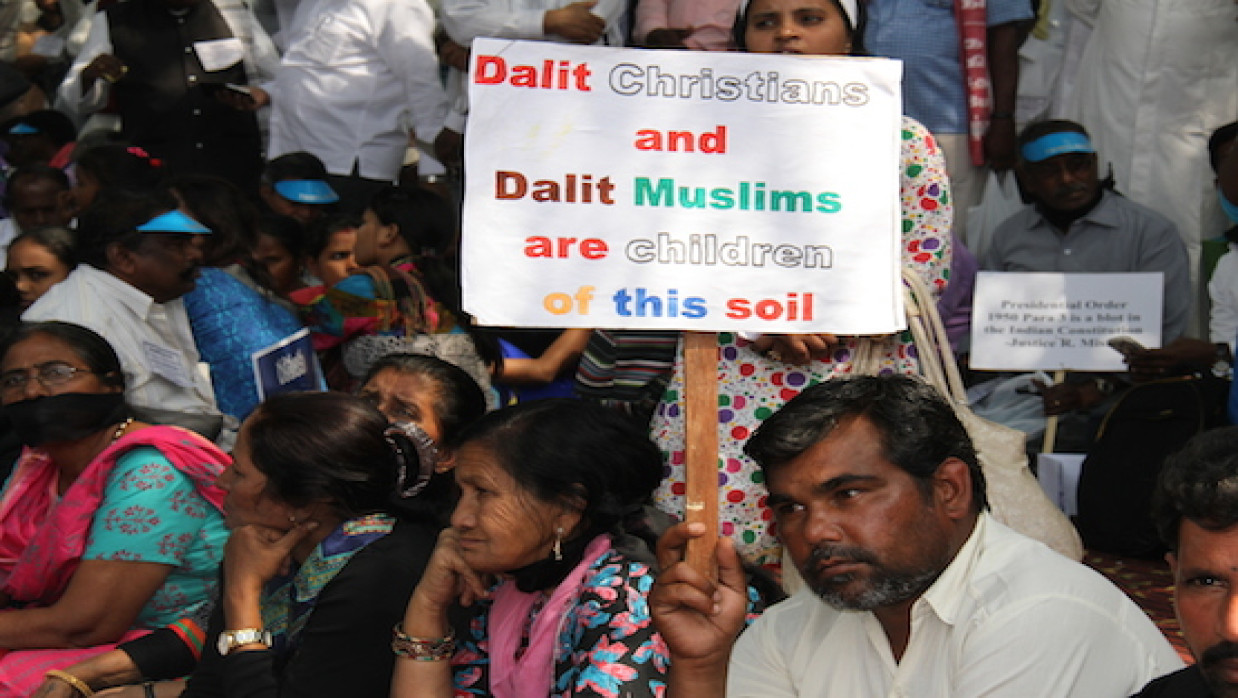
For Dalit Christians, the difficulty is immediate. Under the Constitution (Scheduled Castes) Order of 1950, Scheduled Caste recognition is currently limited to persons professing Hinduism, Sikhism or Buddhism. On March 24 this year, the Supreme Court reaffirmed that conversion to a religion outside these three results in the loss of Scheduled Caste status and the statutory protections attached to it.
The law thus assumes that a change of religion ends the social disabilities associated with caste. Social life, however, is rarely transformed so quickly.
A Dalit who becomes Christian may acquire a new religious identity, spiritual community and understanding of human dignity. Yet neighbors may continue to remember the person’s caste. Marriage networks may remain caste-conscious. Access to land, employment, housing and social influence may still be shaped by inherited status. Even within Christian communities, old caste identities can survive in subtle and sometimes visible forms.
Danger and opportunity
The government-appointed National Commission for Religious and Linguistic Minorities, chaired by Justice Ranganath Misra, examined this question and recommended that Scheduled Caste recognition be made religion-neutral. Its reasoning rested on evidence that caste-related social and economic disadvantage does not necessarily disappear through conversion.
Census 2027 therefore presents both a danger and an opportunity.
The danger is that Dalit Christians may disappear statistically. When asked their religion, they may honestly identify themselves as Christians. When asked about caste, however, their inherited caste identity may not be recognized within the Scheduled Caste framework. Their religious identity becomes visible, while their history of caste deprivation becomes administratively invisible.
Some may consequently feel pressured to choose between faith and legal recognition. No citizen should have to conceal religious belief to preserve access to protections created in response to inherited discrimination.
The census should not determine constitutional policy on its own. But accurate data can enable a more informed national discussion. India needs reliable information on the educational, occupational, economic and social conditions of people from Dalit backgrounds who profess Christianity or Islam. Without such disaggregated data, their deprivation can easily be disputed, underestimated or ignored.
The situation of tribal Christians is different, although equally important.
Under existing government guidelines, a person claiming Scheduled Tribe status may profess any religion. Tribal identity is constitutionally connected to membership in a recognized tribe, not restricted to a particular faith in the manner applied to Scheduled Castes.
A tribal person does not cease to belong to a people merely by becoming Christian. Religious conversion does not automatically erase language, kinship, customary practices, collective memory, traditional territory or participation in tribal community life.
Yet this principle is now being contested. On May 24 this year, a large gathering in New Delhi demanded that tribal people who had converted to Christianity or Islam be removed from the Scheduled Tribes list. The organizers sought an amendment to Article 342 of the Constitution to make religious conversion a ground for “delisting.”
This demand raises a fundamental question: What makes a person tribal?
If tribal identity is reduced to adherence to a particular religious tradition, the complex historical identity of Adivasi communities will be simplified into a religious test. Such an approach could divide families, villages and tribes along confessional lines. Members of the same tribe, sharing the same language, ancestry, land and social disadvantages, could be assigned unequal constitutional status solely because they worship differently.
There is a further dimension. Many Adivasis do not identify themselves primarily as Hindu, Christian, Muslim, Buddhist or adherents of another major religion. They follow indigenous traditions such as Sarna, which are closely connected to nature, ancestors, sacred groves and community life.
Jharkhand Chief Minister Hemant Soren has renewed the demand for a separate Sarna or tribal religion code in the 2027 Census. He has argued that inaccurate classification could have long-term consequences for tribal identity and policymaking.
Questions before the Church
This concern deserves serious consideration. Indigenous communities should not be absorbed statistically into a religious category they have not freely chosen. Self-identification is central to human dignity.
At the same time, the Sarna question must not be used to create suspicion between followers of indigenous religions and tribal Christians. Both belong to tribal societies. Both may share language, ancestry, festivals, customary institutions and concern for ancestral land. Their religious differences need not cancel their common struggle for dignity, cultural survival and ecological security.
The Church has an important responsibility here.
It must defend the constitutional rights of Dalit and tribal Christians. But advocacy directed toward the state will lack moral credibility unless the Church also confronts caste and ethnic inequality within its own institutions.
Caste cannot be condemned in government policy while being quietly tolerated in parish life.
The Church must ask uncomfortable questions. Are Dalit Christians adequately represented among bishops, priests, religious superiors, school administrators and decision-makers?
Are parish councils and diocesan bodies socially inclusive? Are there Christian communities in which marriages, festivals, or burial grounds remain influenced by caste distinctions?
Do Catholic schools and colleges provide meaningful opportunities for Dalit and tribal students, especially those who cannot claim reservation benefits?
Similar questions concern tribal communities. Does Church leadership respect tribal languages, customary knowledge, and community decision-making? Are tribal Christians treated as partners in mission or merely as recipients of pastoral care? Does development work protect tribal land and culture, or unintentionally encourage cultural assimilation?
The Church should undertake an honest social audit of its dioceses, congregations, seminaries, educational institutions, and healthcare organizations. Representation must be measured. Discrimination must be documented. Corrective action must be visible.
This is not an attack on the Church. It is an invitation to become more faithful to the Gospel it proclaims.
Role of Catholic institutions
Catholic institutions also play a constructive role in the census. Parishes, schools, and social-service organizations can promote awareness without instructing people to conceal or manipulate their identity. They can explain the importance of truthful self-identification, help vulnerable communities understand census questions, and document cases in which enumerators fail to record answers accurately.
The government, for its part, should ensure that census enumerators are trained to handle caste, tribal, and religious identities sensitively. People must be permitted to state their identities without intimidation. The resulting data should be sufficiently disaggregated to reveal the conditions of Dalit Christians, tribal Christians, and followers of indigenous religions.
A well-conducted census can become an instrument of social justice. It can help India recognize communities that have remained statistically hidden. It can provide evidence for better education, healthcare, housing, livelihood, and representation policies. It can also replace exaggerated claims and communal suspicions with reliable public data.
India’s greatness lies not in reducing its people to uniform categories but in recognizing the many histories that constitute the nation.
Dalit Christians should not become invisible because they have chosen a particular faith. Tribal Christians should not lose their peoplehood because they worship as Christians. Adivasis practicing Sarna and other indigenous traditions should not be absorbed into identities they do not claim.
Census 2027 must count all of them — not merely as numbers, but as citizens, communities and bearers of dignity.
What the state chooses to count reveals what it is prepared to see. What the Church chooses to reform reveals whether it is prepared to practice the equality it preaches. India now has an opportunity to do both.
The article appeared in the ucanews

0 Comments
LEAVE A COMMENT
Your email address will not be published