

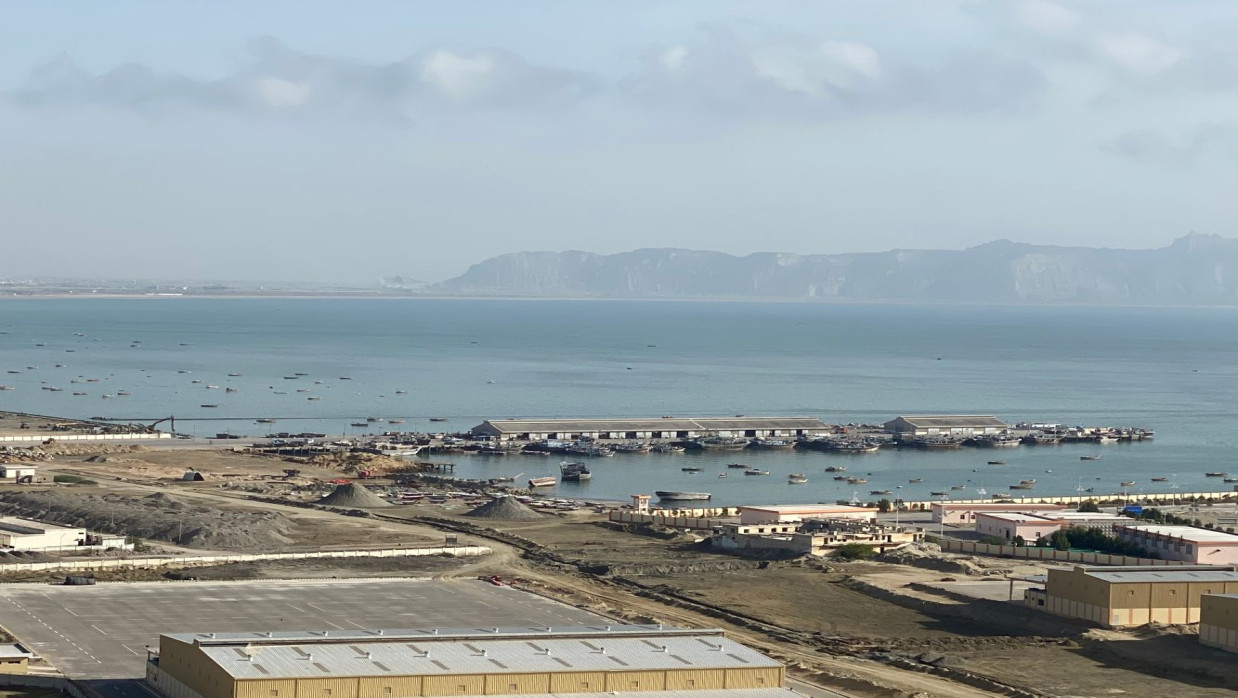
As global trade lanes start getting more unsure, and geopolitical frictions start rewriting the usual rules of international commerce, the sea chart is changing in a way that’s sort of subtle but still very deep. Right in the middle of this transformation sits Gwadar, Pakistan’s deep-sea port. For a while people talked about it mostly as a high stake’s construction plan with huge potential, but now Gwadar is slowly moving past that “just a concept” phase. Under the China-Pakistan Economic Corridor, specifically CPEC Phase 2.0, the port is moving into a real operating hub something more like a regional logistics center, trade engine, and a link point for economic connectivity at the same time.
The latest developments, mid 2026 already shows a kind of pivotal moment. Even with stubborn regional bottlenecks, persistent security concerns, and a fair amount of skepticism, Pakistan is somehow making Gwadar actually work, turning it into a steadier option compared with the older trade corridors that keep looking more and more shaky.
For years, critics argued that Gwadar was getting fewer than twenty ships each year, so they treated the big harbor as sort of a barely used, dormant asset. Still, the newest figures really upset that whole view. Just in April 2026, Gwadar Port moved about 11,000 standard shipping containers, which is honestly a huge number and it well exceeded the full-year count of around 8,300 containers during all of 2025.
This rapid, almost steep growth doesn’t look like a random glitch either. It seems to be a straight reaction to the way global conditions are changing. Right now, instability and maritime chokepoints around the Strait of Hormuz have pushed shipping companies to look elsewhere, safer and also more time efficient. Gwadar has moved into that empty space, and it is now attracting a sudden, meaningful lift in international confidence.
The momentum carried forward into May 2026 with a steady convoy of major cargo vessels arriving from both China and the Gulf states. Notably, the bulk carrier MV Sho-Long docked, to discharge over 16,000 metric tons of industrial machinery and commercial cargo. Simultaneously, vessels originating from Abu Dhabi and Kuwait delivered another 34,000 tons of bulk goods and 20,000 tons of lighter commercial items, including fertilizers and piping infrastructure. This continuous loop of transshipment operations shows that Gwadar is now able to handle large-scale, high-frequency business logistics on a weekly basis.
This operational breakthrough has not happened in isolation. It is the outcome of a coordinated push by the Pakistani government to sweeten the arrangement for global maritime players through aggressive tariff restructuring. To draw traffic away from older, congested regional hubs, Islamabad announced deep policy cuts in May 2026. Berthing fees for container ships were slashed by 25 percent, while charges on international transshipment containers were cut hard by 40 percent. Along with investor-friendly nudges like tax exemptions, and free storage facilities within the Gwadar Free Zone, the port has basically morphed into a far more competitive commercial proposition.
Beyond the docks, the physical landscape of the Gwadar region is kind of catching up, to its maritime ambitions, more or less. The completion of the East Bay Expressway has fundamentally shifted the port’s logistics, in a way that links the berths, to Pakistan's national highway network, pretty seamlessly. Meanwhile work is still moving forward on the New International Airport, plus specialized desalination plants to secure water security, and also dedicated export industrial parks. By threading these projects into the FY2026–27 national development planning, Pakistan is essentially signaling that Gwadar is being built as a modern, self-sustaining industrial city, not just a simple transit station somewhere in the middle.
Geographically, Gwadar gives Pakistan a rare kind of leverage. It sits in a really favorable spot at the intersection of South Asia, Central Asia, the Middle East, and Africa, so it becomes the ultimate cut-through route. For western China, it provides a more direct pathway to the Arabian Sea, and it avoids thousands of miles of winding sea lanes. On top of that, Pakistan is actively pitching Gwadar as the natural maritime outlet for landlocked Central Asian republics, you know. More recent diplomatic engagements have even framed the port as a future warm-water access corridor, for Russian trade that’s looking south.
Even if the macroeconomic numbers look a bit like an upbeat poster, Gwadar’s long-term future really depends on something smaller and, kind of, local. I mean, for the port city to actually become a global hub, the benefits of all this development have to be seen up close, on the ground. So, policy frameworks are starting to wander away from only big picture plans and they are moving toward internal sustainability. Problems like water shortages at the neighborhood level, a more dependable municipal electricity supply, and creating direct work chances for local people are no longer treated as side concerns. It’s now viewed as essential that local communities are active participants in this whole windfall, not just spectators. Only then do you get the real national integration and the public trust that end up being the last missing pieces, the ones that keep Gwadar’s infrastructure from getting strained by domestic friction.
In the end, how Gwadar moves through 2026 looks like a wider strategy pivot, from vision into execution. The record-breaking cargo volumes, the broad tariff reforms, and the improved structural connectivity they all suggest the port is finally stepping into the role it was meant for. And as global trade keeps looking for routes with least resistance and maximum security, Gwadar’s rise starts to feel less like some far off promise. More like something that will happen anyway, an economic reality that’s ready to reshape regional commerce for decades to come.

0 Comments
LEAVE A COMMENT
Your email address will not be published