

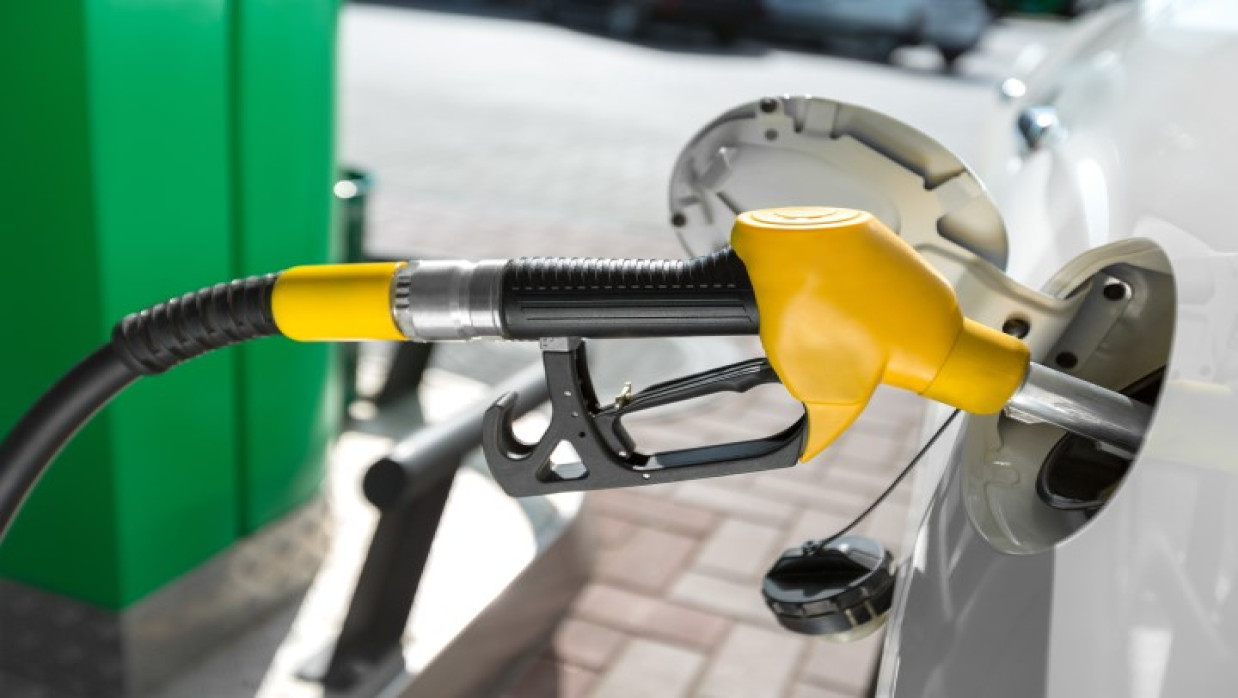
Pakistan’s transport sector has historically remained one of the largest consumers of imported fossil fuels, and the recent escalation in the US-Iran conflict has further increased economic pressure through rising global oil prices. Higher petrol and diesel prices directly raise transportation and logistics costs, contribute to inflation, widen the import bill, and place additional strain on Pakistan’s foreign exchange reserves.
The situation also highlights the country’s vulnerability to external energy shocks and underscores the urgent need to promote energy-efficient public transport, electric mobility, alternative fuels, and indigenous renewable energy solutions to reduce dependence on imported petroleum products.
Prior to the escalation of the US-Iran conflict, Brent crude prices averaged nearly $71 per barrel in February 2026. However, due to ongoing geopolitical tensions and supply disruptions in the Middle East, Brent crude prices have surged to around $110–113 per barrel, representing an increase of nearly 55–60% within a short period. The International Energy Agency forecasts that oil prices will gradually decline, averaging approximately $89 per barrel in the fourth quarter of 2026 and falling further to around $79 per barrel in 2027.
Even at modest initial blending levels, ethanol offers Pakistan a practical pathway to reduce dependence on imported fuels, ease foreign exchange pressures, improve air quality, and support a more resilient and diversified energy and agro-industrial system. Ethanol blending has already been implemented successfully not only in developed countries, but also in Brazil and neighboring India.
Driven by escalating tensions in the Middle East, the recent surge in petrol prices in Pakistan has once again exposed the country’s deep reliance on imported fuel. Before the escalation of the US-Iran conflict, petrol prices in Pakistan were around Rs 285–295 per liter (≈ USD 1.00–1.04), while high-speed diesel was approximately Rs 290 per liter (≈ USD 1.02). However, with petrol now nearing Rs 410 per liter (≈ USD 1.46) and high-speed diesel reaching comparable levels, fuel prices have increased by nearly 40–45% within a short period.
This sharp rise is cascading across households, businesses, and productive sectors, intensifying inflationary pressures and transportation costs. Persistently high prices of high-octane fuel further reflect the combined effects of global oil market volatility, supply disruptions, currency pressures, and domestic market distortions.
The challenge is no longer merely about price spikes only, it is a deeper issue of energy vulnerability. As costs rise, Pakistan’s dependence on external energy sources becomes increasingly unsustainable, underscoring the urgent need for policy instruments that can reduce exposure to global shocks and gradually diversify the energy mix.
For years, Pakistan has recognized ethanol as a potential alternative fuel, yet on grounds the progress has remained limited. Despite early policy approval for ethanol blending in 2006, implementation never moved beyond pilot scale. In contrast, countries such as Brazil and India have successfully scaled ethanol programs through consistent policy support.
Pakistan’s paradox is striking. As a major cane-sugar producer, it generates over 3 million tonnes of molasses annually, yielding around 400,000–450,000 tonnes of ethanol. Yet most of this ethanol is exported as industrial-grade product, even as the country continues to import expensive petroleum. This disconnect reflects a missed opportunity to align domestic resources with energy needs.
Recent geopolitical tensions, particularly in the Middle East, have further highlighted the risks of import dependence. Encouragingly, policy thinking is beginning to evolve. In early 2026, a government committee proposed voluntary E5 blending—a cautious but important signal of shifting priorities.
Economic conditions are also becoming more favorable for ethanol blending. Globally, ethanol trades at around $0.6–0.8 per liter, with Pakistan’s export-equivalent prices in a similar range. Even after accounting for its lower energy content, ethanol can be competitive within a blended fuel framework when petrol prices remain above $0.6. However, this competitiveness depends on supportive policies, including pricing structures, tax adjustments, and blending logistics.
International experience offers clear lessons. During periods of low oil prices, countries like Brazil and India sustain ethanol demand through mandates, pricing mechanisms, and incentives. These policies ensure long-term stability, protect domestic industries, and conserve foreign exchange. Pakistan, by contrast, is now reaching a point where market conditions themselves are beginning to justify ethanol blending. The missing component is the policy clarity.
Blending 5–10% ethanol with petrol not only reduces the import demand, it also help in easing pressure on foreign exchange reserves and improve air quality. It also enables the sugar industry to evolve toward a biorefinery model, creating a stable revenue stream from molasses and surplus sugar. This diversification improves mill liquidity, supports more timely farmer payments, and helps moderate price volatility across the agro-industry.
While ethanol’s initial contribution may be limited, around 5% of national fuel demand, it remains a necessary step. It is not a substitute for petroleum, but a practical, incremental measure toward building long-term energy resilience. Experience from developed economies shows that such opportunities are not dismissed simply because their immediate impact is modest.
That said, the transition is not without challenges. Pakistan’s vehicle fleet, dominated by older models, raises compatibility concerns beyond low blending levels. Supply consistency is uncertain, as producers currently prefer export markets offering stable returns. Infrastructure for blending, storage, and distribution is underdeveloped, while regulatory and pricing uncertainties continue to deter investment. Entrenched interests within the petroleum sector further complicates the reforms.
To move forward, Pakistan must shift from fragmented initiatives to a coherent strategy. A phased approach, starting with E5, progressing to E10, and aligning with global benchmarks, should be supported by clear regulations, incentives for domestic allocation, and investment in fuel-grade ethanol production and distribution systems.
The current moment presents a rare convergence of necessity and opportunity. High fuel prices have altered the economic equation, domestic agricultural capacity provides the feedstock, and industrial capability already exists. What is missing is policy coherence.
Recent analyses suggest that while short-term shocks can trigger immediate spikes in energy prices, a return to normal levels is often slow, sometimes taking more than 18 months. In an era marked by recurring global disruptions, energy security cannot simply be imported; it must be built upon domestic strengths.
Ethanol is not a complete solution, but it represents a practical and achievable starting point. Integrating ethanol into a broader national strategy that links agriculture, energy, and climate policy can help Pakistan transition from vulnerability to resilience and from exporting opportunity to harnessing it at home.

0 Comments
LEAVE A COMMENT
Your email address will not be published