

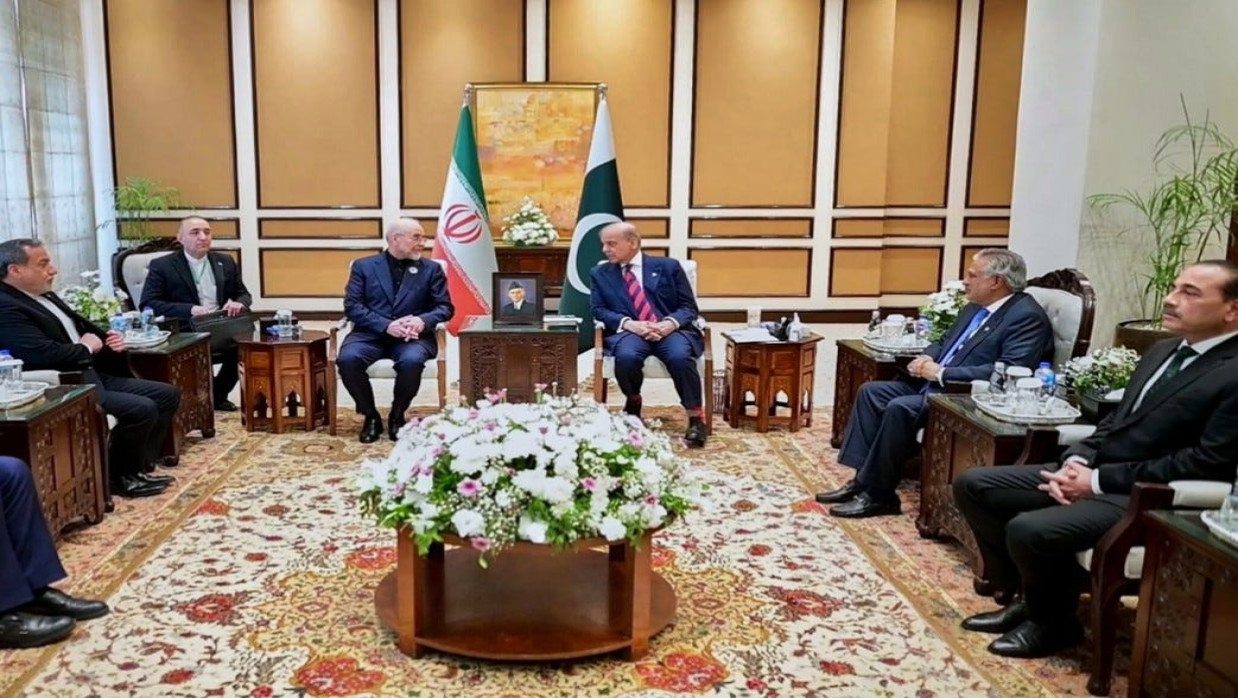
Pakistan is once again at the center of a major war it didn’t start. This time, however, it is not as a problem state but as a peace broker. Islamabad is performing a delicate diplomatic balancing act that would have been unthinkable only a few years ago with marathon talks continuing between high-level US and Iranian officials in Islamabad in a bid to end the hostilities in the Strait of Hormuz.
A country long defined in Western policy as a security liability is now being treated as a necessary intermediary in the US-Iran confrontation. That shift is not the result of transformation so much as convergence: war elsewhere, credibility earned in a different conflict, and a regional order running out of neutral spaces.
Pakistan’s current diplomatic visibility represents a notable reversal from its recent international standing. Only a few years ago, it was widely viewed through the narrow lens of counterterrorism and internal instability. Today, it is being described as a “critical interlocutor” between Washington and Tehran, hosting talks and facilitating ceasefire negotiations at the highest level.
This shift is partly structural and partly opportunistic. As the US–Iran conflict escalated in early 2026, traditional mediators such as Oman and Qatar faced limitations—either because of Gulf exposure to Iranian retaliation or because intra-Gulf divisions weakened their consensus position. Pakistan, by contrast, offered a rare combination of attributes: formal ties with Saudi Arabia, functional relations with Iran, and a recently strengthened working relationship with Washington. Ultimately, Islamabad has been explicitly chosen as a venue precisely because it is one of the few states that maintains operational channels with both sides of the conflict. Yet this transformation did not begin in the Gulf. It began much closer to home.
Thanks to India’s war on Pakistan
A critical but often underexamined driver of Pakistan’s diplomatic repositioning lies in its military confrontation with India in May 2025. While details remain contested, Pakistani elites have leveraged its widely acknowledged operational success—particularly in the air domain—to reshape their international narrative from instability to capability. This matters because credibility in international mediation is rarely purely diplomatic. It is also reputational: states are more likely to rely on intermediaries that are seen as strategically relevant and capable of managing escalation risks.
In Pakistan’s case, the post-2025 period saw a visible tightening of civil–military coordination in foreign policy and an expansion of engagement with key global actors, particularly the United States. That shift accelerated after Pakistan publicly credited President Trump for helping broker a ceasefire with India and subsequently deepened engagement with his administration. The result is a recalibrated image: Pakistan is no longer only a “problem space” in global security debates, but increasingly a “functional actor” in crisis containment architectures.
This repositioning has been reinforced by Pakistan’s evolving counterterrorism doctrine, which increasingly avoids the earlier distinction between “good” and “bad” militant groups. Instead, the state has adopted a more unified framing of internal insurgencies, including the TTP and IS-K, aligning its rhetoric more closely with global counterterrorism discourse.
Together, these shifts have created the conditions under which Pakistan could plausibly present itself as a security-relevant diplomatic actor rather than merely a theatre of instability.
Constraints matter more than ambition
Pakistan’s mediation role is also shaped—perhaps more decisively—by constraints rather than ambition. The most immediate is geography. Sharing a long and porous border with Iran while simultaneously maintaining a defense partnership with Saudi Arabia places Islamabad in an inherently delicate position. Any direct Iran–Saudi escalation risks spilling into Pakistan’s internal security environment.
Equally significant is Pakistan’s sectarian composition. As one of the largest Shia-populated countries outside Iran, a direct confrontation with Tehran would risk triggering severe internal fragmentation—something that was visible immediately after Khamenei was killed. This vulnerability is not abstract: it intersects directly with Pakistan’s ongoing counterinsurgency operations against the TTP and Baloch separatist groups, both of which already stretch state capacity.
It is precisely this convergence of external and internal risk that explains Islamabad’s cautious diplomacy during the early phases of the US–Iran conflict. Despite its formal defense commitments to Saudi Arabia, Pakistan avoided any overt activation of the pact and instead pursued a calibrated rhetorical strategy, maintaining communication channels with Tehran while signaling alignment with Gulf partners when necessary.
This balancing act became especially visible when Iranian strikes on Saudi-linked infrastructure forced Islamabad to adopt a more critical public posture toward Tehran, even as backchannel diplomacy continued uninterrupted. In effect, Pakistan’s mediation is not a voluntary projection of power. It is a form of strategic risk management.
Washington, Trump, and the politics of access
The final enabling condition of Pakistan’s mediation role lies in its improved access to the United States under the Trump administration. Following the 2025 India–Pakistan conflict, bilateral engagement intensified significantly. Trump’s personal involvement in ceasefire diplomacy, combined with high-level visits by Pakistan’s military leadership to Washington, created a new channel of elite-level political trust.
This matters because mediation in high-intensity conflicts depends less on formal alliance structures and more on executive-level confidence between actors. Pakistan’s ability to simultaneously communicate with Tehran and Washington—while maintaining credibility in both capitals—has allowed it to occupy a rare intermediary space.
At the same time, Pakistan has also benefited from a vacuum in Gulf mediation capacity. While Oman historically played this role, and Qatar has often been involved in backchannel diplomacy, the current escalation has rendered Gulf states either too exposed or too divided to serve as effective neutral platforms. This vacuum has effectively elevated Pakistan—not as the first-choice mediator, but as the only viable one left.
Strategy, not status
In short, Pakistan’s emergence as a mediator in the US–Iran conflict should not be misread as a linear rise in global status or a permanent shift in geopolitical hierarchy. Instead, it reflects something more contingent: the convergence of war, regional fragmentation, and Pakistan’s own structural vulnerabilities.
Its diplomatic relevance is not grounded in neutrality alone, but in necessity. Pakistan is not mediating because it is universally trusted, but because it is sufficiently connected to all parties while being fully owned by none. That distinction is crucial.
At the same time, this moment reveals a deeper transformation in Pakistan’s external identity. The country is increasingly learning to convert its geopolitical constraints into diplomatic utility. Its proximity to conflict zones, its internal security challenges, and its overlapping alignments are no longer only liabilities—they are also instruments of relevance and leverage.
Yet this is a fragile form of power. Should the US–Iran conflict escalate further, Pakistan’s balancing act could quickly turn from mediation to entanglement. And in that scenario, the very conditions that enabled its rise as a broker could just as easily expose its limits. For now, however, Pakistan sits at a rare intersection of global crisis management—not as a great power, but as an indispensable intermediary in a war it cannot afford to ignore.
The article appeared in the asiasentinel



0 Comments
LEAVE A COMMENT
Your email address will not be published