

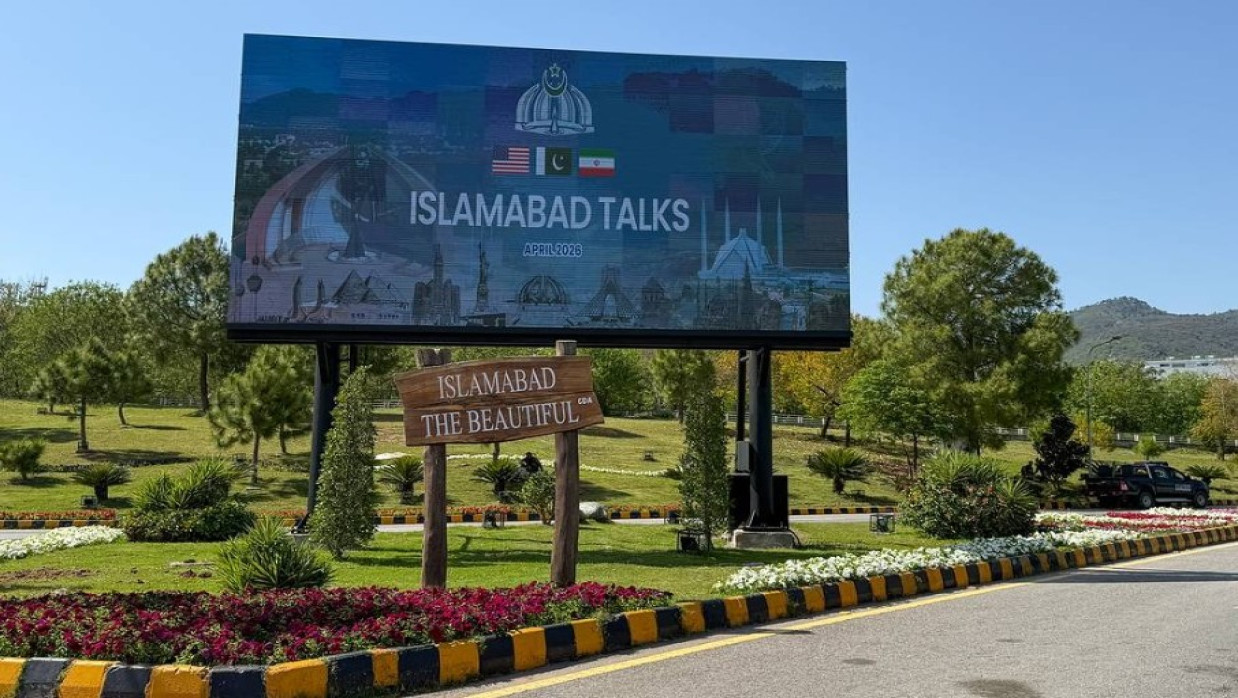
On April 8, 2026, the United States and Iran agreed to a two-week ceasefire, stepping back from a confrontation that risked widening into a far more destructive conflict. Diplomacy prevailed—quietly, deliberately, and with Pakistan playing a meaningful role.
Pakistan’s Prime Minister Shehbaz Sharif and Field Marshal Asim Munir deserve recognition. Through their statesmanship, they helped bring two adversaries to the table at a moment when trust was in short supply. They not only averted a global catastrophe but also strengthened Pakistan’s position as a credible diplomatic actor.
Yet a ceasefire, by definition, is only a pause. The real challenge lies in transforming this fragile calm into a foundation for durable peace. That requires more than temporary restraint; it demands confronting the structural drivers of instability that repeatedly push West Asia to the brink. Unless regional actors and global powers alike address these underlying tensions, the cycle of confrontation will simply resume.
The stakes could not be higher, and the fragility of this moment must be recognized. West Asia supplies more than 30% of global energy, and any sustained disruption—particularly around critical chokepoints such as the Strait of Hormuz—has immediate repercussions for international markets. The current crisis has already demonstrated how quickly volatility in the region translates into global instability. Lasting peace, therefore, is not a matter of choice but a strategic necessity for both energy security and economic stability worldwide.
At the heart of this instability lies the security architecture that has governed the region for decades. The presence of United States military bases across the Gulf is viewed by Iran as a direct strategic threat. Whether one agrees with that perception or not, it remains a central driver of mistrust between Iran and the USA.
To resolve the issue, history provides us with a clear precedent: the 1962 Cuban Missile Crisis. The world avoided catastrophe not because one side capitulated, but because both sides were given an off-ramp. The Soviet Union agreed to withdraw its nuclear missiles from Cuba. Quietly, behind the scenes, the United States agreed to withdraw its missiles from Turkey—within a few months. That balance of concessions created a face-saving off-ramp for both sides and helped defuse what could have become a catastrophic conflict.
A similar off-ramp is possible in West Asia today. Iran must immediately open the Strait of Hormuz to stabilize energy markets and signal a commitment to de-escalation. And the United States, in turn, commits to a phased withdrawal of its military bases from the GCC states over an agreed timeline—six months, twelve months, negotiated in good faith.
This is not surrender. This is statecraft.
However, an American military withdrawal from the Gulf would create a vacuum. We have seen in Iraq and Afghanistan that vacuums in this region are quickly filled by chaos or non-state actors.
The question then is what replaces the existing security architecture. One possible solution could be the creation of an UN-sponsored coordination framework involving Pakistan, Türkiye, Egypt, and Saudi Arabia. This would not function as a traditional military alliance but rather as a cooperative mechanism designed to manage security challenges without being perceived as either anti‑American or pro‑Iranian. As influential military and diplomatic actors within the Muslim world, these states are well-positioned to contribute to a balanced security environment. Pakistan’s role would be particularly significant, given its ability to engage simultaneously with Iran, China, and the United States, while serving as a bridge that connects South Asia, Central Asia, and the Middle East into a coherent strategic space.
Even this architecture will remain unstable if the oldest wound in West Asia—the Palestinian question—remains unaddressed. True lasting peace requires a political settlement of the Israel-Palestine issue. The way forward is that the Muslim world should offer Israel a clear, conditional path: collective recognition of Israel’s status as a state, provided it withdraws to the internationally recognized borders of 1967, with East Jerusalem as the capital of Palestine. In return, Israel must halt all settlement activity, withdraw from the occupied territories, and accept a just resolution for Palestinian refugees.
If this bargain is struck, the final point to address will be how to denuclearize the region. Iran’s nuclear ambitions are rooted in perceived existential threats, while Israel’s undeclared arsenal serves as its ultimate deterrent. By eliminating the presence of American bases, establishing a regional security framework, and resolving the Palestinian issue, the rationale for the expansion of nuclear capabilities on both sides is effectively undermined. A nuclear-weapon-free West Asia, negotiated in parallel with the regional security pact, would be the crowning achievement of 21st-century diplomacy.
None of these steps will be easy. They will require sustained pressure, coordinated diplomacy, and, above all, political courage.
A ceasefire is only a beginning. The off-ramps are visible —from the Gulf, to Palestine, to the nuclear question. What remains uncertain is whether the political will exists to pursue them. Pakistan has shown it can play a role in preventing conflict. The harder task now is to help shape a region where such crises do not recur.


0 Comments
LEAVE A COMMENT
Your email address will not be published