

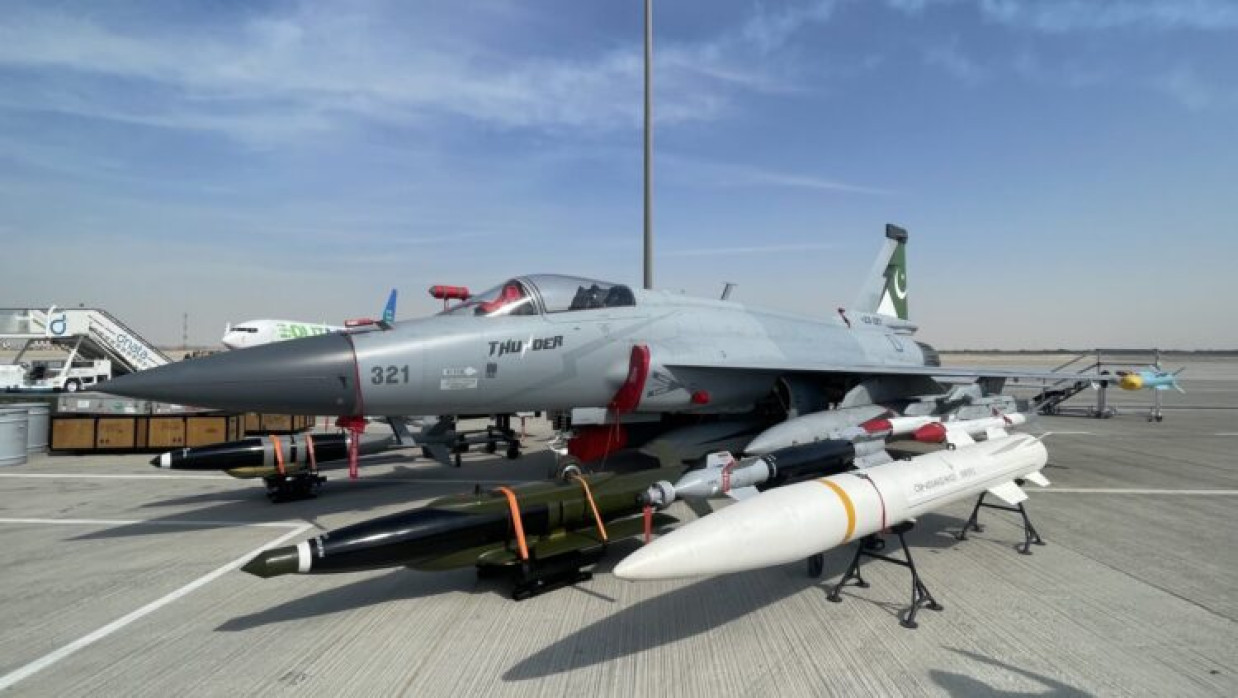
The United States defense assessment considers Pakistan to possess long-range nuclear capabilities which present an imminent risk to American national security. The recent statement about Pakistani missile systems demonstrates how their technical specifications and operational capabilities can be understood through military assessments. The actual situation develops through military capabilities and operational objectives which exist beyond human perception of their true nature.
The strategic stance of Pakistan establishes itself through the particular historical circumstances and geopolitical conditions which exist in its territory. Its nuclear power status, which established Pakistan as a nuclear state, determined its evolution of deterrence strategies through its ongoing territorial conflict with India. The existing rivalry between the two countries establishes itself as a concrete conflict which has persisted through multiple decades and ongoing battles and border conflicts and differences in their conventional military capabilities. Pakistan uses its nuclear weapons for one specific purpose which helps the country achieve two goals: protection from attacks and defense of its territory against enemies who share its land border.
The current situation in Pakistan missile development requires analysis of this historical context. The development of delivery systems shows increased range and platform variety because military needs require Pakistan to keep its deterrence capabilities operational while facing new regional security changes. Pakistan bases its strategic decisions on three Indian military developments which include India missile defense system development and its long-range attack capacity growth and its increasing global military presence. The region interprets what looks like external power growth as a necessary step to counter the emerging changes in power balance of the region.
The critical analytical error lies in assuming that the existence of a capability implies an intention to use it in all theoretically possible scenarios. The nuclear domain presents a special challenge because its deterrence system depends on credible threats instead of actual weapon deployment. Pakistan’s doctrine does not support the notion of global power projection. Its approach establishes minimum credible deterrence which protects against particular threats that exist in South Asia. The United States is not a target for military operations because there is no military policy or deployment or strategic plan that indicates such an intent.
The extension of such assumptions creates a risk that Pakistan will be wrongly identified with countries which have entirely different strategic goals. Pakistan has chosen to maintain a restrained regional focus which differs from other countries that have actively developed intercontinental deterrence systems or displayed aggressive behavior against remote nations. The country maintains this orientation through its nuclear signaling system which defines its force structure and diplomatic activities. The implementation of a universal classification system that treats it as a worldwide danger results in the loss of crucial elements needed to understand its unique nature.
The stability aspect of Pakistan's deterrence capability functions as a critical element which people usually fail to recognize. The presence of nuclear weapons in the region which experiences constant conflicts has created a unique situation that prevents major wars from occurring. The assessment of risk does not disappear through this process yet the assessment reveals defensive capabilities which Pakistan uses for its protection. The system of deterrence maintains a delicate balance which exists between opposing forces because it makes any future conflict between them too costly to carry out. The understanding of South Asian stability maintenance becomes distorted through the incorrect description of this posture as expansionist behavior.
Academic discourse faces serious challenges because this mischaracterization creates problems that exceed its boundaries. The process of threat inflation shapes political decisions which determine the approach to diplomatic relationships and economic policies. The assessment of Pakistan's international status through various methods will impact how other countries view Pakistan which might lead to isolation and increased diplomatic pressure. The actual sources of instability which include ongoing disputes and arms races and ineffective crisis management systems receive increased focus through this process.
The assessment needs to establish that deterrence functions through its relationships with different parties. The system develops itself according to the specific adversarial capabilities together with their operational patterns. Pakistan’s strategic developments, including its missile program, are best understood as part of this relational dynamic. The policies exist through their specific design, which serves as a method to handle existing threats that Pakistan identifies within its regional environment.
The study requires researchers to maintain distinct boundaries between hypothetical scenarios and conclusions that rely on scientific evidence. The observation that certain missile systems have the ability to reach areas beyond South Asia creates a technically accurate statement. The claims lack evidence to support them because they require doctrine and operational and declarative backing to establish their validity. The process of elevating them to strategic assessment will create distortions that impact both policy development and perception management.
The story that Pakistan presents a nuclear danger to the United States lacks actual evidence which supports its existence. This argument extends capability assessment methods into the area of intent evaluation while disregarding the actual conditions of the region. A balanced perspective would instead focus on the dynamics that actually shape South Asia's security environment because Pakistan uses its nuclear capabilities to maintain deterrence instead of projecting power. The requirement to maintain this understanding exists because it helps decision makers make better choices while preventing misinterpretations that lead to dangerous situations.

0 Comments
LEAVE A COMMENT
Your email address will not be published