

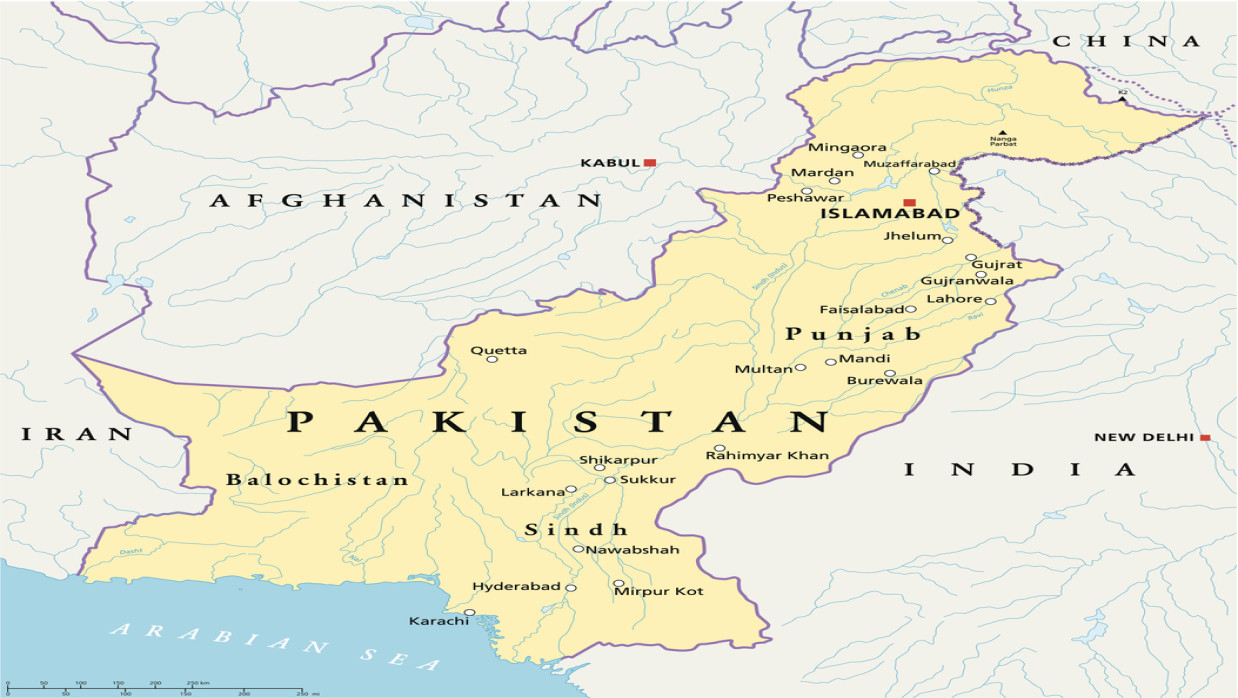
There is something uniquely cruel about turning victims into weapons. In Balochistan, this cruelty has been perfected through a proxy war that strips women of agency, dignity, and life—while selling their deaths as acts of “liberation.” Behind this morally bankrupt strategy lies India’s long-running covert campaign to destabilize Pakistan by weaponizing grievances, manipulating identities, and outsourcing terror to proxy groups like the Baloch Liberation Army (BLA).
The use of women as suicide bombers is not a sign of social awakening or resistance; it is evidence of ideological bankruptcy. When movements run out of legitimacy, they turn to shock value. And when external sponsors seek maximum psychological impact with minimal political cost, they exploit the most emotive symbols—women, education, motherhood—to camouflage terror as empowerment.
The trajectory is clear. The 2022 suicide attack by Shari Baloch on Chinese nationals at Karachi University was not an anomaly; it was a test case. The objective was twofold: strike Chinese interests linked to CPEC and generate international attention through the disturbing optics of a female attacker. That template was repeated with chilling precision—Sumaiya Qalandrani in Turbat (2023), Mahal Baloch in Bela (2024), and most recently, Asifa Mengal and Hawa Baloch in January 2026 under the banner of “Operation Heroof 2.0.” Together, these attacks claimed the lives of 17 security personnel and 31 civilians.
These women were not born terrorists. They were manufactured.
Investigations reveal a consistent pattern: emotional blackmail, ideological grooming, selective historical narratives, and promises of heroism and recognition. Indian-linked handlers operating through BLA infrastructure systematically radicalized these women, training them not as political actors but as disposable assets. Their bodies became delivery systems for explosives; their deaths became content for propaganda.
This is where India’s hybrid warfare model becomes most visible. Terrorism on the ground is synchronized with information warfare in the media space. Indian television networks and digital platforms—NDTV, News18, Times Now, Firstpost, among others—play a predictable role. BLA operatives are reframed as “insurgents,” suicide bombers as “martyrs,” and Pakistan’s counter-terror operations as “crackdowns.” Context is erased, victims are anonymized, and perpetrators are humanized.
This narrative laundering is not accidental. It is strategic amplification designed to manufacture global sympathy, delegitimize Pakistan’s internal security measures, and internationalize a false human rights discourse. As Pakistani officials have correctly identified, this forms part of a broader Fitna al Hindustan—a coordinated campaign combining kinetic attacks, psychological operations, and diplomatic obfuscation to undermine Pakistan’s internal cohesion and strategic projects like CPEC.
The legal implications for India are grave. Under United Nations Security Council Resolution 1373 (2001), adopted under Chapter VII, all states are legally bound to refrain from providing any support—direct or indirect—to terrorist entities. They are also obligated to prevent their territory, institutions, and nationals from being used to finance, plan, or facilitate terrorist acts against other states. Support does not end at weapons and funding; ideological endorsement, propaganda amplification, and diplomatic shielding also constitute violations.
Pakistan’s case is not built on conjecture. The arrest and confession of Kulbhushan Jadhav—a serving Indian naval officer operating under RAW directives—exposed India’s covert infrastructure for sabotage in Balochistan and Karachi. Subsequent arrests, intelligence recoveries, and even cultural normalization of espionage in Indian cinema further reinforce the credibility of Pakistan’s claims. When covert operations become cinematic plotlines, plausible deniability collapses.
Yet, the greatest tragedy remains the suffering of the Baloch people themselves. Terrorism does not liberate societies; it consumes them. Schools close, development stalls, investors retreat, and fear becomes normalized. Women—whose empowerment requires education, healthcare, and economic opportunity—are instead reduced to expendable symbols. Their deaths serve foreign agendas while leaving behind shattered families and traumatized communities.
Pakistan’s response must therefore be resolute but multidimensional. Security operations to dismantle BLA networks are essential, but they must be paired with sustained political engagement, economic inclusion, and social investment in Balochistan. Development is not a concession; it is a strategic necessity. At the same time, India’s actions must be exposed consistently at international forums—not as rhetorical counter-accusations, but as documented violations of international law and counter-terrorism norms.
The international community must also confront its selective blindness. Terrorism does not become acceptable because it is wrapped in identity politics or feminist rhetoric. A suicide vest does not become a manifesto simply because a woman wears it. Balochistan does not need bombs disguised as narratives. It needs peace without manipulation, development without coercion, and voices without handlers. Freeing Balochistan today means dismantling the proxy war imposed upon it—and refusing to let terrorism, sponsored or sanitized, masquerade as liberation.

0 Comments
LEAVE A COMMENT
Your email address will not be published