

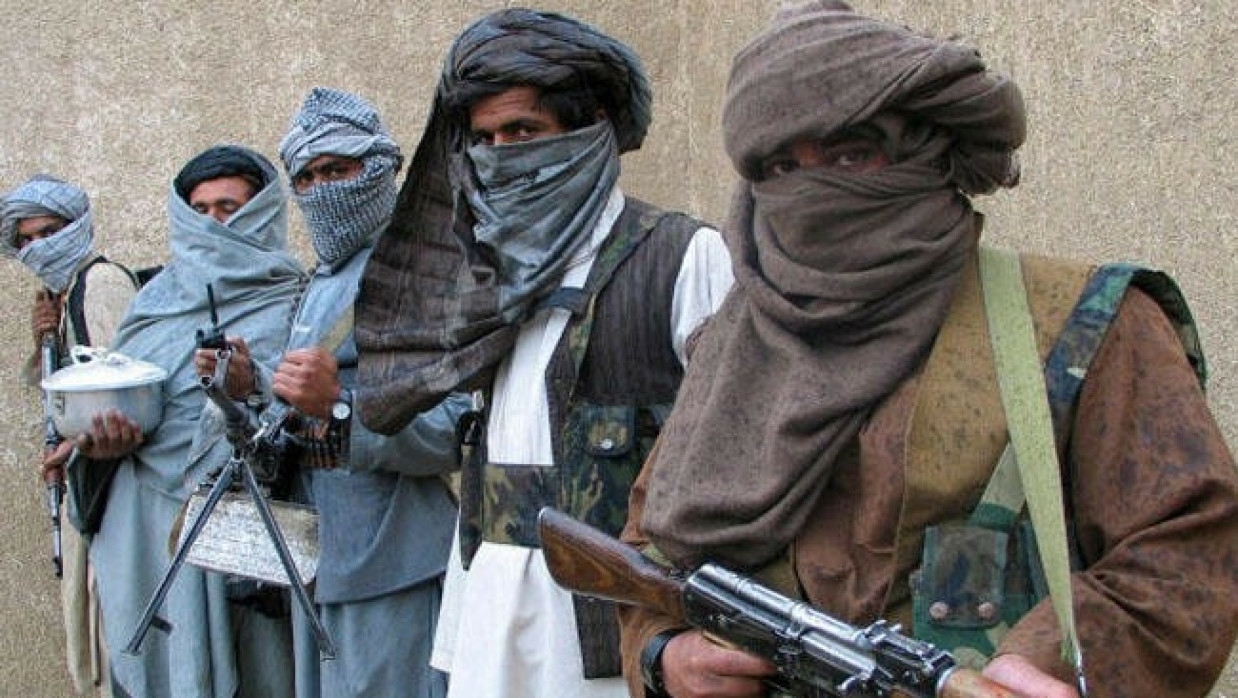
Pakistan’s security experience in 2025 has stripped away any remaining ambiguity about the source of the renewed wave of terrorism. What once could be framed as spillover instability from Afghanistan has now assumed the shape of an organized, sustained, and state-enabled campaign against Pakistan. The uninterrupted infiltration of Tehrik-e-Taliban Pakistan (TTP) terrorist formations since June 2025 exposes a dangerous reality: Afghan territory has effectively been converted into an operational rear base for militancy, with the knowledge and facilitation of the Afghan Interim Government (IAG).
Despite repeated public assurances from Kabul that Afghan soil would not be used against neighboring states, Pakistan’s ground assessments tell a radically different story. Since mid-2025, Pakistan has documented the systematic movement of more than 4,000 armed TTP terrorists, organized into 172 structured tashkeels, into Khyber Pakhtunkhwa. Simultaneously, over 1,200 militants in 83 organized units infiltrated Balochistan from southern Afghan provinces. These were not sporadic crossings by rogue elements; they were coordinated, armed movements executed along established corridors originating from Kunar, Nuristan, Nangarhar, Paktika, Khost, Paktiya, Zabul, and Kandahar.
The scale and continuity of these infiltrations render claims of ignorance implausible. Such movements could not occur without freedom of assembly, training, arming, and logistical coordination inside Afghanistan. The absence of any meaningful resistance or interdiction along these routes points to institutional tolerance at best and active facilitation at worst. Evidence increasingly suggests that elements within the Afghan General Directorate of Intelligence and the Haqqani Network are integral to this enabling environment.
The most revealing indicator of state complicity lies in Kabul itself. The TTP’s chief, Noor Wali Mehsud, continues to reside openly in the Afghan capital under Taliban protection. His unrestricted access to public hospitals, residence in state-controlled housing complexes, armed security, and consistent financial support reportedly amounting to tens of thousands of dollars per month illustrate the depth of protection afforded to him. From this safe haven, Mehsud continues to direct and coordinate terrorist attacks against Pakistan, enjoying a level of impunity that only state patronage can provide.
This protection is not limited to leadership figures. TTP militants now operate with access to advanced US and NATO-origin weapons, including assault rifles, night-vision devices, and thermal optics. These capabilities, left behind after the international withdrawal, have been systematically absorbed into militant arsenals with Taliban facilitation. Their use in attacks inside Pakistan has significantly increased both the precision and lethality of terrorist operations.
Pakistan has not relied on rhetoric alone. It has shared verified intelligence on more than 60 TTP terrorist camps operating across eastern Afghanistan, complete with geospatial data and operational details. Yet, these camps remain intact, allowing militants to recruit, train, regroup, and launch cross-border attacks with impunity. The repeated capture and killing of Afghan nationals during terrorist incidents inside Pakistan further demolish the Taliban’s narrative of non-involvement.
The pattern that emerges is unmistakable. Afghan territory is no longer merely ungoverned space; it is being weaponized for proxy terrorism. This transformation elevates the IAG from a passive actor to an active enabler of Khawarij militancy directed against Pakistan. Such conduct violates basic principles of international responsibility and undermines any claim by Kabul to be a stabilizing force in the region.
For Pakistan, the cost of this duplicity has been immense. With over 94,000 lives lost and economic losses exceeding $150 billion in the fight against terrorism, the country’s calibrated and restrained response reflects strategic maturity, not acquiescence. However, restraint cannot be infinite when confronted with sustained, externally enabled violence.
The lesson of 2025 is unequivocal: counterterrorism cannot succeed when sanctuaries are protected across the border. Pakistan must therefore move from patience to principle—establishing clear red lines, strengthening border enforcement, intensifying intelligence-based operations, and mobilizing diplomatic and international mechanisms to expose state-enabled terrorism. Stability in the region cannot be built on denial and duplicity. If Afghanistan genuinely seeks peace, legitimacy, and economic normalization, it must dismantle the terrorist infrastructure operating under its watch. Until that happens, Pakistan has both the right and obligation to defend itself against a threat that is no longer hidden, accidental, or deniable—but deliberate, organized, and sustained.


0 Comments
LEAVE A COMMENT
Your email address will not be published