

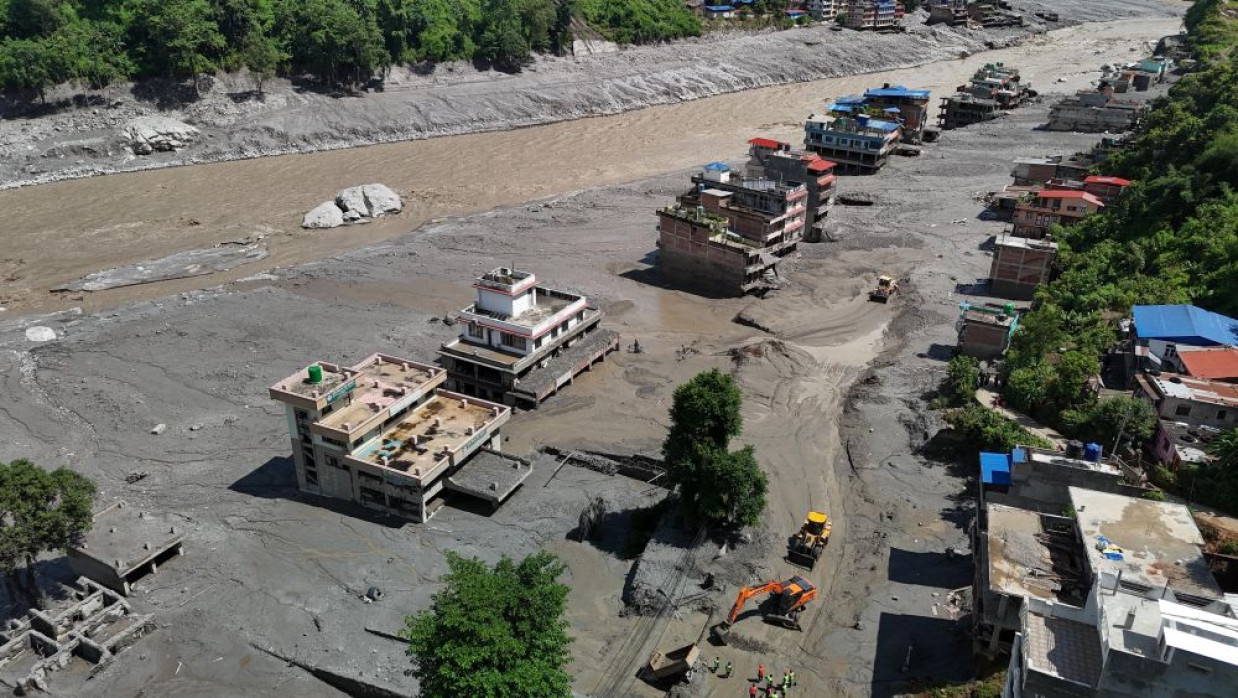
The devastating floods that inundated Nepal and Tibet on August 26 were not just a natural disaster or a humanitarian crisis. They triggered an information crisis too. As rescue workers sifted through mudslides and debris and families anxiously awaited news of loved ones, the combined effects of ruined communications infrastructure, limited access to affected areas, government foot-dragging, and online misinformation made it difficult, if not impossible, to know what was going on. In a humanitarian crisis, reliable journalism is not just another public good. It can help rescue survivors, guide aid delivery, and keep communities safe from additional harm.
In Nepal, journalists have continued reporting despite suffering many of the same losses as the people they cover. According to Reporters Without Borders (RSF), at least four journalists were unreachable or missing when the organization issued its assessment, although the information remained incomplete. Others were working while traumatized, displaced, or unable to contact family members.
"It's not just a matter of human and material losses. In some areas, an entire community's way of life has been wiped out," RSF's Nepal correspondent, Binod Dhungel, observed. "Yet journalists continue to work on the ground."
Their commitment cannot overcome every physical obstacle. Floodwaters and landslides damaged roads, disrupted transport and cut electricity and telephone connections. Several media offices were affected, including Radio Nuwakot and Radio Chimteshwor. Some radio stations were forced off the air, while power outages made newspaper production impossible. Kathmandu-based and international journalists also struggled to reach isolated disaster zones.
The failure of local communications infrastructure allowed misinformation to spread. Rumors of casualties circulated without verification, and accounts of survivors or rescues were duplicated or contradicted. People used archived and stock photos as current flood imagery. Several deepfake videos that independent fact-checkers could not verify as real circulated widely on social media. Fact-checking websites confirmed that several videos of the floods circulated online were actually AI-generated deepfakes of events that never occurred. Others showed footage from natural disasters in different countries. AFP Fact Check published one video shared online, claiming it showed a dam failing and causing the floods. Metadata and a visual watermark revealed the video was AI-generated. Other fact-checking groups debunked recycled and AI-generated images shared as real flood footage.
Fact-checking platform NepalFactCheck, launched by the Center for Media Research-Nepal and MySansar. com started rebutting dubious claims. The site shot down a doctored flood image and debunked a video allegedly capturing Nepal's home minister rushing into a tunnel with army personnel; however, the video was filmed in Uttarakhand, India. Press Council of Nepal launched a portal to help people report misinformation.
Such efforts are welcome, but fact-checkers will never replace timely, reliable information issued by the government itself. When official communication is too slow or patchy, panicked citizens turn to social media to fill the void. Rumors flourish where facts can't be found. Célia Mercier, director of RSF's South Asia desk, has consequently called on Nepalese authorities to share accurate information more regularly, enable safe access for journalists, and allow verified information to circulate freely.
The situation in Tibet is more disturbing. Nepal's information failures arise largely from damaged infrastructure, difficult terrain and shortcomings in crisis management. In Tibet, these barriers are compounded by systematic state restrictions.
RSF says that independent Tibetan media and international news outlets were not allowed free access to the region. Chinese state media outlets provided most coverage, prioritizing official rescue efforts and not independently assessing the full human and material impact of the disaster. Chinese officials also allegedly censored internet users who were accused of creating "rumors," and WeChat deleted or limited searches relating to the floods.
Kalsang Jigme, editor-in-chief of Tibet Radio, told RSF that information control appeared considerably tighter than during previous disasters. Tibetans living abroad reportedly found it difficult to contact relatives. At the same time, some people with family members in the affected region were reluctant to speak publicly for fear of official retaliation.
This environment is why conflicting death tolls are particularly disturbing. Tibet Radio claimed confirmed deaths were higher than China's official count at that time. Journalists can't independently verify either figure due to reporting restrictions. Efforts to limit negative information might therefore create what they're trying to prevent: conjecture, suspicion and hyperbole.
The cases of Nepal and Tibet show how information black holes can stem from different conditions while damaging citizens. Nepal needs better emergency communication infrastructure, freer access for journalists, and institutional support for local outlets. Tibet needs something even more basic: space for independent journalists to work without harassment, intimidation, or political oversight.
Tech companies also have responsibilities here. In times of crisis, their platforms should elevate trusted information, clearly label edited footage, and aggressively remove demonstrably false pleas for help. Deepfake content related to disasters and relief efforts is particularly dangerous because it can divert life-saving resources, spread panic, and cause further distress to loved ones of the missing.
The floods have shown just how fragile Himalayan communities are to swift-onset disasters. They have also shown that the right to know is fundamental to disaster response. Along with roads, power and phone lines, we must restore the flow of information. When journalists can't reach survivors to tell their stories, when frightened citizens are silenced, and when hoax images drown out trusted reporting, the disaster lingers long after the waters have receded. In Nepal and Tibet, ensuring the free flow of accurate information is part of saving lives.


0 Comments
LEAVE A COMMENT
Your email address will not be published