

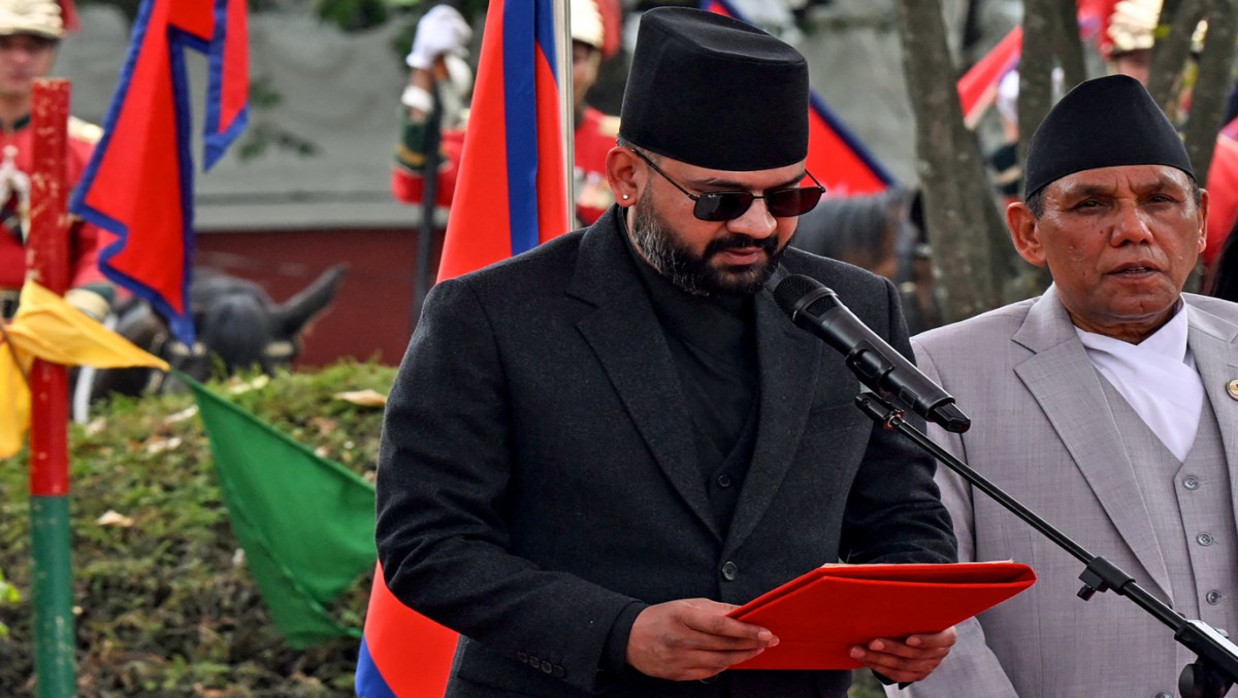
Today, much of South Asia finds itself stuck in limbo between democratic ambition and autocratic slide. In states from Nepal to Bangladesh, India, Pakistan, and Sri Lanka, existing political institutions are being tested by the rising tide of citizen dissatisfaction, fueled by widespread corruption, shrinking political space, and increased centralization of power. While many states in the region suffer from various forms of democratic malaise, Nepal is the exception—albeit an unusual one. "The crisis consists precisely in the fact that the old is dying and the new cannot be born," political theorist Antonio Gramsci noted. Nepal seems to be one of the few exceptions to the rule in South Asia in that regard.
Nepal's Gen Z Moment: Rewriting the Rules of Political Engagement
Recent political developments in Nepal clearly mark a departure from the traditional paradigm in which two major players—the Nepali Congress and the Communist Party of Nepal (Unified Marxist–Leninist)—dominated the country's politics. Perceived by growing numbers of citizens as the custodians of the status quo and the very embodiment of Nepalese politics, these two major players now face the rise of a new, more assertive generation of political leaders.
One of the best examples in this context is the Rastriya Swatantra Party, founded by young politician Rabi Lamichhane. Primarily representing urban youth, professionals, and first-time voters, the party is openly committed to fighting corruption and establishing proper institutions of governance. Lamichhane himself said it better than anyone else when he proclaimed: "Politics should no longer be a profession of privilege, but a platform for public service."
It should be noted that the aforementioned transformation process does not involve any ideologically charged radicalism. Rather, the emerging Gen Z movement is grounded in pragmatism and focuses on results and benefits for the wider society. Using modern communication methods, the new generation of political leaders can communicate with citizens and mobilize and engage them through digital platforms. Unlike the personality cults typical of other regions of South Asia, Nepal's Gen Z is motivated to counter widespread corruption in the country's politics.
Corruption and Authoritarianism in a Region in Transition: South Asian Case Study
If Nepal can serve as an interesting example of political renaissance, Bangladesh, India, Pakistan, and Sri Lanka seem to be following an opposite path characterized by growing corruption, increasing authoritarianism, and democratic backsliding. In this context, the situation in Bangladesh seems to be the most disturbing. Above all else, political power within the state has become excessively centralized among supporters of the ruling party, the Awami League. In addition, the opposition parties in Bangladesh are constrained by their inability to effectively influence the country's politics.
The problems of corruption, politicization, media repression, and the absence of freedom have generated tension in the country’s political environment. “‘The erosion of competitive politics in Bangladesh is less sudden than gradual but no less momentous,’ a regional specialist has said recently.”
Similar worrying trends have emerged in nearby India as well. With the emergence of the Bharatiya Janata Party in Indian politics, the country's future has become a topic of debate. Christophe Jaffrelot says that “India is experiencing a transition from an ethnic democracy to a majoritarian political system.” Similar political phenomena can be seen in Pakistan as well, where, despite occasional shifts towards democracy, the dual nature of its political structures persists. This leads to undermining civilian powers by Pakistan’s military forces.
"In Pakistan, we have never had true democracy," former Prime Minister of Pakistan Imran Khan lamented several years ago. Finally, Sri Lanka has experienced a wave of massive protests in the wake of the country's economic troubles. Despite the ousting of political leaders blamed for poor economic policies, observers warn that "regime change does not automatically translate into systemic reform."
Why Corruption and Authoritarianism Persist in South Asia?
Despite obvious differences, all four nations of South Asia face persistent corruption and authoritarianism. However, unlike the latter, these phenomena should not necessarily be attributed to individual leaders or governments, as they arise from deeper structural factors that determine political behavior.
Above all else, elite capture appears to be an intrinsic aspect of regional politics. As economist Daron Acemoglu points out, "nations fail when institutions turn extractive rather than inclusive." Unfortunately, this statement aptly describes the nature of institutional behavior in South Asia, where political corruption and secrecy reign supreme within governments. What is more, the rule of law can be easily breached in numerous ways by political establishments in the region. In such cases, judges may find themselves susceptible to monetary bribes or other forms of political pressure.
Finally, the rise of populist authoritarianism has created a dangerous political environment in South Asia. Increasingly, regional political leaders are trying to build their popularity on identity politics and nationalism. "The ideal subject of totalitarian rule is not the convinced Nazi or the convinced Communist, but people for whom the distinction between fact and fiction no longer exists," Hannah Arendt once said. Even though South Asian countries are far from totalitarianism, this trend in regional politics remains quite worrisome.
What Lessons Can Be Drawn From Nepal's Experience?
Despite clear differences with its neighbors, Nepal can offer valuable lessons for South Asia amid democratic stagnation and backsliding. For example, Nepal demonstrates the effectiveness of the young generation of leaders, capable of changing established patterns of political relations. By actively participating in elections and shaping political discourse, Gen Z is challenging the supremacy of political elites and dynasties in Nepal.
Secondly, Nepal shows that the rise of new actors in the realm of politics is possible through new communication methods and digital technology. According to one young activist from Nepal, "We don't just vote every five years—we question power every day." Anti-corruption as a key political agenda in Nepal creates unity and common ground regardless of other differences among citizens. Finally, Nepal shows that successful political transformations imply institutional rather than personality politics.
The Limitations of Nepal's Experience
Even though there are various advantages associated with Nepal's political reform, there are also some difficulties. As mentioned above, there is still political instability in Nepal, as none of the coalitions has been able to make any progress. Moreover, most newly elected politicians lack adequate administrative knowledge.
Finally, excessive openness may lead to fragmentation, making political transformations even more difficult. "Change is easier to demand than to deliver," a senior political observer from Nepal pointed out. However, despite some obvious problems, Nepal's experience deserves attention and consideration.
Implications of Nepal's Experience for Bangladesh and Other South Asian Nations
Bangladesh and other South Asian states face many of the same issues Nepal faced prior to the recent political changes. Therefore, Nepal's experience holds important lessons for them.
Is it possible to challenge the political status quo by organizing young citizens into a cohesive opposition movement? Is there room for new political actors in a country's existing institutional framework? Can anti-corruption become the dominant idea in politics?
Unfortunately, there are no simple answers to the above questions. Nevertheless, in the long run, only the development of civil society will allow Bangladesh to move toward a better future. As Nobel Laureate Muhammad Yunus always says, "Young people are not job seekers, they are job creators." The phrase can be applied metaphorically to political affairs as well.
Conclusion: A Critical Inflection Point in South Asia's Politics
Undoubtedly, South Asia is approaching a crucial point in its political history, which may determine the future of democracy in the region in the next few decades. With corruption and authoritarianism growing rapidly, the old model is becoming less relevant.
On the other hand, the political awakening of the region's youth gives hope that a new generation of political leaders can emerge in time and change the course of history in South Asia.

0 Comments
LEAVE A COMMENT
Your email address will not be published