

When War Spreads Beyond Borders
The Middle East has once again emerged as the epicenter of a geopolitical maelstrom. However, this time the issue at hand is no longer merely about alliances, deterrence, or strategic maneuvers. It is about economic meltdown, human suffering, and the test of global responsibility.
What was perhaps a regional clash of interests has now taken on dimensions far beyond the war-torn region's boundaries. The global community, already on shaky ground due to polarization and a lack of trust, is now faced with an even greater test: not merely how to contain the situation, but how to save lives and the economy in a world that is rapidly falling apart.
History has taught us that conflicts in the Middle East seldom remain confined to that region. From the oil embargo of 1973 to the numerous conflicts in the Gulf region, the unstable nature of this strategic region has had a direct bearing on inflation, economic meltdown, refugee crises, and political instability all over the world.
The current tensions in the region are taking place in an even more connected and economically unstable world than before. The economic ripple effects of this war are not merely deeper; they are also more destabilizing.
An Economic Shockwave in a Fragile Global Economy
The Middle East is, and will remain, a vital region in the global energy market. The Strait of Hormuz alone carries a significant chunk of the world’s oil exports. Even the perception of a threat in this region can send oil prices soaring, leading to inflation across the global economy.
This is particularly problematic for developing nations such as those in South Asia and Africa. The increased cost of fuel will directly lead to higher food and transportation costs, as well as fiscal issues for nations already struggling with debt and economic recovery from COVID-19.
Inflation is no longer simply a number on a spreadsheet; it is a reality for millions of people around the world. When bread, electricity, and medicine are no longer accessible, geopolitics is no longer just a game played by nations; it is a reality felt by citizens.
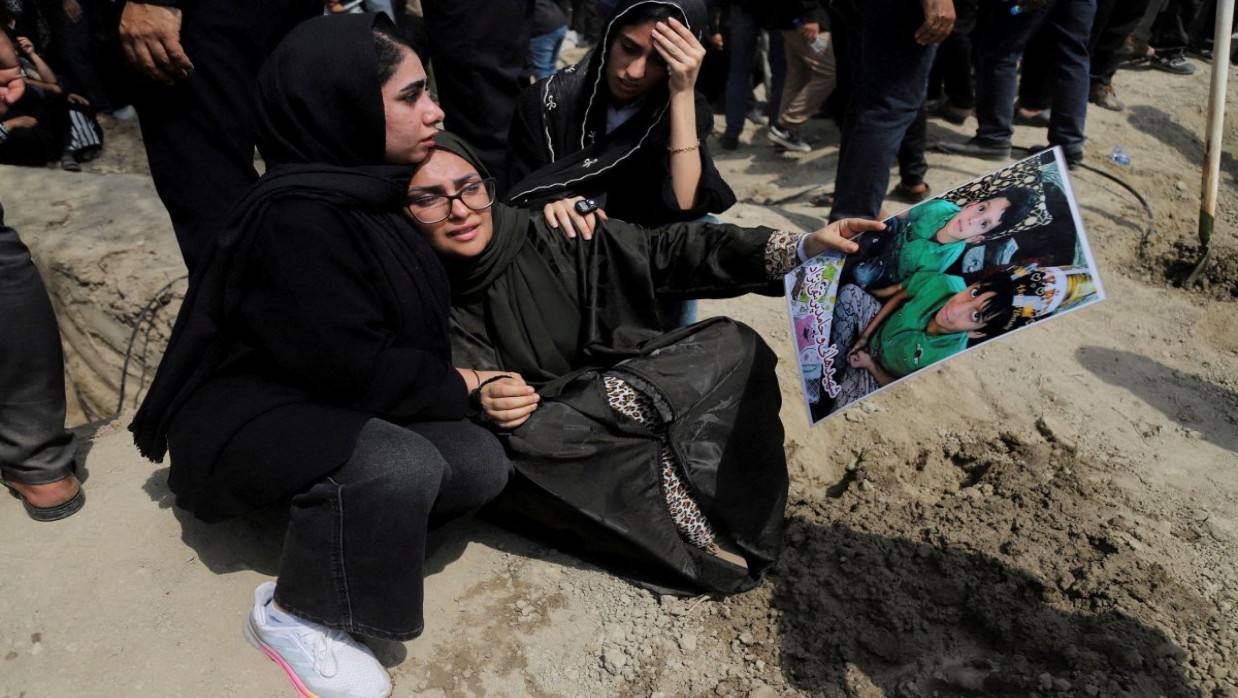
The Human Cost: Civilians at the Center of Crisis
The reality of geopolitics is often obscured by the human reality of war and conflict. Missile strikes, drones, cyber warfare, and sanctions all have one thing in common: they have a significant and often devastating human toll on civilians. The laws and regulations put in place to ensure that civilians are not harmed during conflicts are increasingly politicized and ineffective. The reality is that civilians are often displaced and even permanently displaced as a result of these conflicts.
The reality of sanctions is often overlooked as a tool of warfare and is often considered a non-military approach to conflict. However, sanctions also have a human toll. The reality is that sanctions often have a negative and often devastating human toll on citizens and workers, migrants, and children.
The United Nations: Limited but Indispensable
The United Nations is the only international body that provides a forum for nations and people around the world to engage in dialogue and diplomacy. The reality is that its effectiveness is limited by its structure and its inability to be decisive on issues brought before it, particularly in the UN Security Council.
The reality is that the UN is ineffective as a mediator and peacekeeper in international conflicts. The reality is that without it and without some form of dialogue and diplomacy between nations, the world would be a much more dangerous place than it is today.
The crisis, therefore, is not simply institutional inefficiency; it is political division between the major powers. Debates over reforming the Security Council or limiting the veto power in humanitarian crises have taken on renewed urgency precisely because the stakes have never been higher.
The Multipolar Paradox and Escalation Risks
The world is becoming multipolar, shaped by the strategic influence of the US, China, and Russia. However, there has been no corresponding structure for cooperation between the major powers. Regional conflicts have turned global. Proxy wars, cyber-attacks, economic coercion – they all add up to a tangled web of deterrence and provocation. Both sides have legitimate reasons for self-defense. Both sides feel surrounded.
But in this situation of rivalry without responsibility, there is a high risk of escalation and a low chance of de-escalation.
South Asia – An Interconnected Vulnerability
For South Asia, the Middle Eastern crisis is not very far off. Millions of migrant workers from Bangladesh, India, Pakistan, and Nepal must rely on the economies of the Gulf region. Remittances provide for families and national economies.
Escalation risks not only jobs but also remittances. Energy prices go up; import bills go up. Currencies depreciate; inflation rises. What happens in that region thousands of miles away changes the economic realities here. Therefore, distance does not provide protection. Interconnectedness creates shared vulnerabilities.
From Strategic Optimism to Human-Centered Realism
Regime engineering attempts have consistently led to instability rather than stability. Political systems, especially those driven by political ideologies and revolutions, are not easily toppled or changed by force or coercion. They tend to fragment and become unstable instead.
Strategic optimism about political change must be replaced with realism, because lasting peace is not ensured by change alone but by legitimacy and regional dialogue.
A Moral and Systemic Crossroads
The world is at a crossroads today. The post-Cold War era of unipolarity is long gone. The multipolar world of stability is yet to be established.
The Middle Eastern crisis is not just a crisis between nations in the region; it is a litmus test of whether global actors are ready to prioritize diplomacy and restraint over retaliatory action and domination in international relations.
Military deterrence is not enough; it is time to complement it with diplomacy, dialogue, and economic cooperation mechanisms that ensure the safety and security of vulnerable populations in the region.
Reclaiming Responsibility
History is often shaped by moments of brinkmanship and crisis. This could be such a moment.
The choice before the international community today is clear: allow competitive escalation and risk tearing asunder what is already a fragile status quo or reclaim responsibility and put in place the pillars of multilateral responsibility and human dignity.
The future of global stability will not be shaped on the battlefields of nations nor in grand declarations of intent. It will be shaped by whether nations are willing to intervene to save economies from collapse, civilians from suffering, and institutions from irrelevance.
The question is not whether war will expand; it is whether humanity and its institutions will rise up and ensure that a wider unraveling does not occur.

0 Comments
LEAVE A COMMENT
Your email address will not be published