

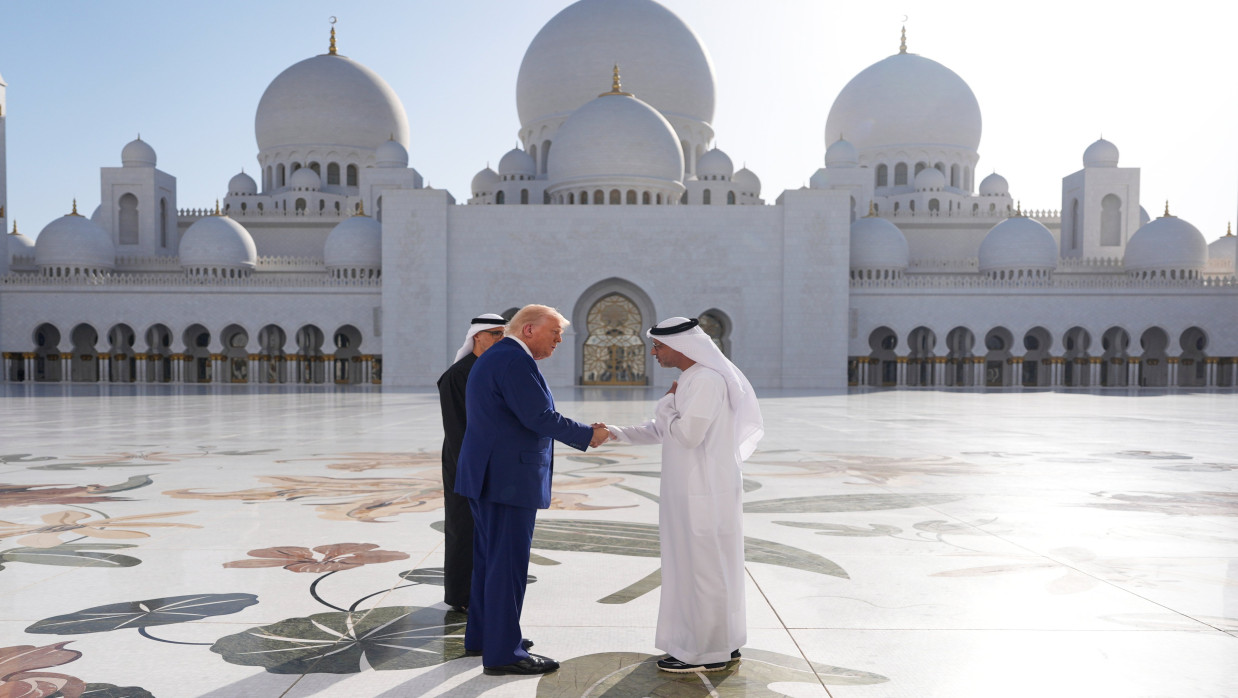
Rising tensions between Washington and Iran are now threatening to reach the United Arab Emirates (UAE), a U.S. ally. Hamidreza Moghaddamfar, an adviser to the commander-in-chief of Iran’s Islamic Revolutionary Guard Corps (IRGC), warned in February that assets in the UAE linked to U.S. President Donald Trump and his son-in-law Jared Kushner could be targeted in the event of an escalation.
In 2022, the Iranian-backed Houthis struck Emirati infrastructure after the UAE supported a successful offensive against them in the Yemen war, showing the real and immediate risks facing the country. Abu Dhabi entered the conflict in Yemen in 2015 to curb Iranian influence on the Arabian Peninsula and to secure critical maritime routes along the Red Sea and Bab el-Mandeb, a decision that has carried several consequences.
Despite tensions with Tehran, the UAE has a history of cooperating with its neighbor, and was Iran’s second-largest trading partner in 2025. But sensing Iran’s strain, Abu Dhabi is moving to consolidate influence at its rival’s expense. The UAE enters this period of geopolitical uncertainty somewhat insulated. Over the past three decades, it has strategically embedded itself deeply within U.S. political, economic, and military systems and has become financially integral and politically familiar in Washington as the region confronts major change.
“The Emirati goal with each successive U.S. president, it seemed, was to be considered America’s favorite Arab state. That effort was largely a success. For many in Washington and across the United States, the UAE became a model for the Middle East,” stated a 2025 article in the Center for Strategic and International Studies (CSIS).
Part of the UAE’s success stems from operating one of the most active foreign lobbying networks in Washington, D.C. Major bipartisan firms have been hired to sustain regular contact with congressional offices and the executive branch, and senior American officials have taken on advisory roles and been paid speaking fees during and after their public service, including former Secretary of Defense Jim Mattis. Together, these networks helped lay the groundwork for deeper institutional integration that accelerated under the Biden administration, including the “UAE’s designation as a major U.S. defense partner.”
Speaking engagements and investments involving Bill and Hillary Clinton further demonstrate Abu Dhabi’s efforts to maintain ties across the political spectrum. They have also replicated this strategy in Europe. Former British prime ministers, including Tony Blair and David Cameron, have also engaged in advisory and speaking roles tied to Abu Dhabi.
Nonetheless, the UAE’s lobbying money comes from the oil and gas wealth that underpins its power, which has now expanded into a powerful network of state-linked investment vehicles. Sovereign funds such as Mubadala, Abu Dhabi Investment Authority, and the Investment Corporation of Dubai hold substantial positions in Western global infrastructure, the tech industry, and defense-linked manufacturing that Western governments consider strategically sensitive.
Welcomed by policymakers, in March 2025, the UAE announced a $1.4 trillion 10-year investment framework in the United States, adding to the $1 trillion already invested in the country.
Across Europe, Emirati capital has similarly flowed into critical transport and digital infrastructure, from the expansion of the UK’s London Gateway port to investing billions of euros for an AI data center in France. These projects are part of the UAE’s €38 billion in committed investments across the continent, highlighted at a “high-level reception” held on the sidelines of the 2026 Munich Security Conference. Emirati funding has also flowed to Western universities, policy institutes, and research centers that help influence political approaches to the Middle East.
But what sets the Emirati presence in the U.S. and Europe apart from some of its neighbors is its political restraint. Abu Dhabi has not linked its investments to a transnational religious agenda like Saudi Arabia is doing abroad in other contexts, nor has it used media platforms to promote politically charged messaging the way Qatar is doing with Al Jazeera. By avoiding the export of ideology or political doctrine, the UAE is positioning itself as a quiet, reliable source of capital and a pragmatic partner for Western governments while trying to manage public perception and foreign meddling.
Africa and Regional Tension
With Western support and security coordination in place, the UAE has turned much of its attention toward Africa in recent years. Between 2019 and 2023, it invested roughly $110 billion across the continent, making it Africa’s fourth-largest foreign investor after the U.S., China, and the EU.
Playing a central role in global trade and logistics forms a major part of the UAE’s strategy. Emirati firms, including AD Ports Group, majority-owned by the Abu Dhabi Developmental Holding Company (ADQ), and DP World, fully owned by the government through the Port and Free Zone World FZE, have become leaders in developing African infrastructure and logistics.
DP World, for example, signed a 30-year concession in 2023 to upgrade and operate Tanzania’s Dar es Salaam port, and in 2025, it opened an $80 million logistics hub near the Suez Canal in Egypt to advance the UAE’s historical efforts to link Africa, Asia, and Europe.
Resource extraction is another focus for Abu Dhabi, which has attracted scrutiny: The U.S. Treasury Department reported in 2022 that more than 90 percent of gold from the Democratic Republic of Congo (DRC) is smuggled to neighboring states before being exported internationally, “particularly the UAE.” Abu Dhabi also signed a $1.9 billion deal with the DRC in 2023 to develop four critical mineral mines.
It has acquired land across nearly a dozen African countries for “food production and carbon-offset projects,” as well. “Like other oil-producing nations in the Persian Gulf, the Emirates is looking to diversify its economy away from fossil fuels, and it sees Africa as an essential part of the plan. The continent has vast mineral resources, a growing population, agricultural potential, and a strategically important location bordering the Red and Mediterranean Seas as well as the Indian and Atlantic Oceans,” stated the New York Times.
To reinforce its economic ambitions in Africa, the UAE has expanded its military engagement on multiple fronts. Beginning in the mid-2010s, Abu Dhabi used its military, trained, equipped, and staffed by the West, to build formal defense cooperation with several African states through training, equipment sales, and occasional joint operations. It established the Mohammed bin Zayed Defense College in Mauritania in 2016, training senior officers from Mauritania, Mali, Chad, and other Sahel states in counterterrorism and border security. Similar programs were later extended to Ethiopia and Somalia.
The UAE has also pursued additional defense agreements and larger weapons sales. In 2023, the EDGE subsidiary Abu Dhabi Ship Building signed a contract to supply corvettes to Angola’s navy, with additional military exports extending to Kenya, Uganda, and Ethiopia.
The UAE’s growing military cooperation has translated into indirect and direct involvement in regional wars. In Libya, Abu Dhabi has conducted hundreds of drone and jet strikes and other operations in support of the Libyan National Army Commander, General Khalifa Haftar, for several years. The UAE views Haftar as a partner against political Islam and Islamist-linked factions and has supplied him with military support to help secure eastern Libya and its oil-rich regions.
During the Tigray war from 2020 to 2022, the UAE provided Ethiopian government forces “with around 120 Il-76 airlifts in 2021. Ethiopia received precision-guided missiles and assault rifles, amongst other things,” according to the International Institute for Strategic Studies. Although this assistance generated some pushback from Washington, which publicly urged restraint and placed restrictions on Ethiopian officials, it did not seriously strain bilateral ties. Ethiopia does not rank among Washington’s core priorities, allowing the relationship with Abu Dhabi to absorb the friction despite U.S. criticism of atrocities committed during the conflict.
Beyond supporting national militaries, Abu Dhabi has also backed regional security structures to expand its economic and strategic presence. The UAE once primarily supported Somalia’s federal government, but now backs semi-autonomous regional authorities, which Mogadishu argues undermines national cohesion. Rather than relying on central governments, Abu Dhabi is seeking political influence at regional levels to secure port access, protect maritime routes, and entrench its position along the Red Sea corridor.
Sudan’s Rapid Support Forces (RSF) militia, meanwhile, allegedly received arms and logistical aid, and Colombian mercenaries recruited through private military companies based in the UAE have also been accused of participating in the Sudanese conflict. Combined with a Western-trained and highly capable Emirati military, these tools have made Abu Dhabi a decisive actor in East African conflicts. While often tactically effective, this approach has also deepened instability in already fragile states, and with Iran’s influence waning, the UAE is likely to extend the use of private military contractors to Yemen, shielding it from direct costs even as it fuels longer-term volatility.
Still, the UAE is careful to project the image of a diplomatic peacemaker. It recently hosted the U.S.-Russia summit that helped reestablish high-level military communications in February. And since recognizing Israel in 2020, it has steadily deepened ties with Washington by positioning itself as a reliable regional partner while many neighbors continue to balance competing interests. If Iran’s influence wanes, Abu Dhabi stands to consolidate its privileged access to U.S. security backing and diplomatic leverage in the region.
Yet once Iran ceases to be the region’s immediate concern, the UAE will undoubtedly be pulled back into its own direct neighborhood. Its proxy gains in Yemen in late 2025 were quickly reversed by Saudi-backed forces, prompting a UAE drawdown from Yemen. This was a continuation of its earlier withdrawal from Yemen’s Socotra Island in 2018 following previous Saudi military intervention, and reflects the Saudi desire to keep smaller Gulf States in line. The UAE also finds itself supporting opposite sides to Turkey in other countries such as Libya, Somalia, and Sudan, which similarly wants to curb Emirati foreign policy.
The UAE’s strategy of deploying capital and selective military engagements to punch above its weight offers a potential model for smaller middle powers navigating an increasingly fragile world order. Yet its rapid ascent in recent decades has drawn scrutiny and resistance. With only 1.3 million citizens in a country of nearly 11 million residents, the UAE’s domestic stability and capacity to project power remain dependent on American security guarantees and a foreign workforce that underpins its economy. Without sustained support from Washington, Abu Dhabi’s regional and global ambitions will struggle to withstand the pressures of more powerful neighbors, regardless of what happens in Iran.

0 Comments
LEAVE A COMMENT
Your email address will not be published