

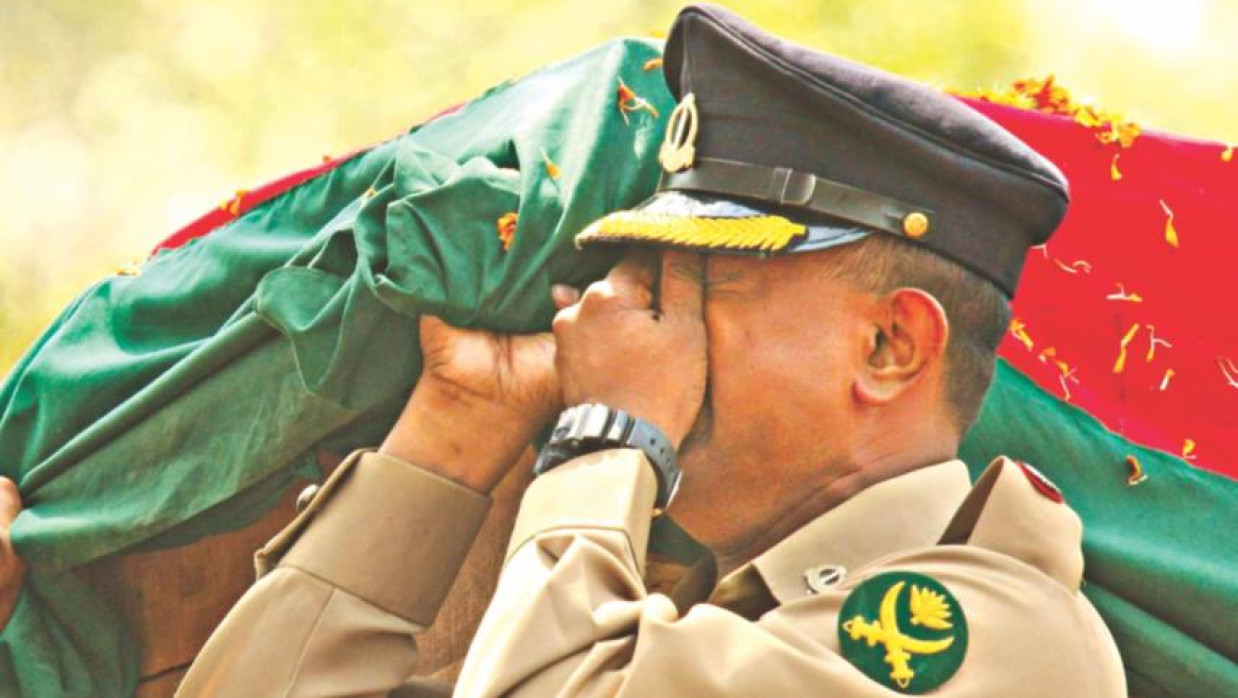
A National Catastrophe: February 25, 2009
On 25 February 2009, Bangladesh experienced one of the most traumatic and violent episodes in its modern history. A mutiny erupted at the Bangladesh Rifles (BDR) headquarters in Pilkhana, Dhaka, during the annual “BDR Week” gathering attended by senior army officers deputed to the paramilitary force.
Within hours, the compound became a killing field. Fifty-seven Bangladesh Army officers—including Colonel Kudrat Ilahi, Colonel Gulzar Uddin Ahmed, Brigadier General Shakil Ahmed, and many others were brutally murdered. Their bodies were later discovered in mass graves, sewer lines, and hidden corners of the compound.
The massacre shocked the nation and the world. The Bangladesh Army lost a generation of experienced officers in a single day, leaving an institutional and emotional scar that remains unhealed.
Among the bereaved was Saquib Rahman, son of Colonel Kudrat Ilahi. Years later, now an advocate, he has emerged as a public voice for the families of the slain officers, demanding transparency, accountability, and closure.
The Victims and Their Families
The officers killed in Pilkhana were not merely uniformed personnel; they were fathers, husbands, and sons. Their families suddenly faced not only personal grief but also the burden of unanswered questions.
Saquib Rahman’s recollections capture the anguish of many such families. He recalls the last conversations with his father, the confusion as news of the mutiny spread, and the desperate attempts to reach loved ones inside Pilkhana. For days, families waited outside cantonments and hospitals, hoping for news that never came.
Many families later reported feeling isolated. While the state held official ceremonies and provided limited compensation, they say emotional and institutional support was insufficient. A one-time financial payment and educational concessions for children could not compensate for the loss of a parent and the uncertainty surrounding the circumstances of death.
For these families, the tragedy did not end in 2009. It continues as a long struggle for truth and recognition.
The Investigations and the Unpublished Report
Following the massacre, multiple investigations were initiated. Criminal trials began against thousands of BDR personnel, while separate inquiries examined broader circumstances.
One of the most discussed outcomes was the report of an independent investigation commission formed by the interim government. According to various accounts, this commission completed its findings and submitted its report in late November.
However, the report has never been officially published.
Advocate Saquib Rahman and other family representatives argue that the non-publication of this report is one of the greatest obstacles to justice. They believe the report contains sensitive findings, including references to individuals whose roles have not been publicly scrutinized.
Officials have offered differing explanations for the delay. Some suggest that releasing the report could damage institutional reputations or inflame tensions. Others say the matter involves national security considerations.
For the families, however, the absence of transparency has deepened mistrust and prolonged trauma.
Questions of Responsibility and Institutional Challenges
There have been numerous theories put forward about how the mutiny happened and why things spiraled out of control in the way they did. Many questions have been raised about why authorities did not know about rumors and possible unrest in the BDR prior to the mutiny, while others have asked why it took commanders and authorities so long to respond once the killings began. Questions have also been raised about whether the tragedy could have been avoided had it not been for dereliction of responsibility at the military/political/administrative level dereliction of responsibility. A number of senior officials have been accused (based on media/whistleblower documents), but firm conclusions have yet to be proven by convictions in a court of law.
Political and military sensitivities make this subject difficult to examine. The Bangladesh military is known to be a very close-knit organization, which prides itself on institutional cohesion. Naming senior officers who may have messed up would be seen as slandering military morale. Political missteps during the first few months of the Awami League administration in 2009 also shape how certain issues are highlighted.
Competing Narratives and Political Context
The official version was that it was a mutiny caused by dissatisfaction within BDR over pay, conditions, and benefits. People bought this line initially. But soon questions were raised. Mutiny with conspiracy angles. A mutiny that was hijacked by some invisible forces. Others said that the version being peddled was too simplistic. Opponents of the government accused it of playing politics by releasing the story and conducting investigations. Pro-government voices said there was no solid evidence to back the charge, and it was dangerous to speculate at a time like this and divide the nation further. Who controlled the narrative became almost as important as the probe itself. Pilkhana became a war of narratives. Who speaks for truth, responsibility, and accountability?
Allegations of Wider Conspiracy
Claims of political, military, and intelligence involvement have been levelled in public forums through testimony, newspaper articles, and commentary. Accusations of foreign involvement or Middle Eastern geopolitics have also been made.
So far, most of these claims have been disputed, and the courts have mainly dealt with the accused who actually participated in the mutiny. However, many still feel that the full truth has not been revealed. There are still many questions surrounding the tragedy that the families of the victims want answered.
Judicial Proceedings and Their Limits
Thousands of BDR members were arrested and charged with crimes ranging from mutiny to murder and unlawful possession of explosives. Many were sentenced to prison terms; some were acquitted or released after serving their sentences.
Critics of the prosecutions argue they have been selective, targeting rank-and-file BDR members while leaving unanswered questions. Some middle-ranking prosecutions have been slow to go forward. Appeals in cases already decided are still pending before higher courts.
Inability to access the complete report of the investigations, including the unpublished commission report, has left families and attorneys reluctant to try to hold others accountable.
The Human Cost Beyond Statistics
Beyond politics and courts, there are human lives lost. Families of officers killed in the mutiny are still waiting, wondering what happened and why. Many lost their husbands; some lost their homes and community as well.
Children who were infants in 2009 have now grown up with fractured memories of fathers they do not remember. Many family members say they are still fighting for acknowledgement of their loss and that justice be done.
Saquib Rahman, who has taken his fight for answers to the streets, says it’s not about seeking revenge. It’s about the truth.
Truth. An honest, transparent review of events could at least provide some answers as to why such a tragedy occurred.
Calls for Transparency and Reconciliation
Seventeen years later, the Pilkhana massacre is still considered a sensitive topic for the country of Bangladesh. Periodically, there have been calls to release all documentation for an independent review.
Supporters of making the information public believe it would help regain the public's trust and help families find closure. They think Bangladesh needs to face hard truths to heal as a nation and ensure it never happens again.
Opponents of releasing more information believe it could destabilize institutions and reopen old political wounds. They want to ensure the integrity of our institutions and nation.
Memory, Justice, and Historical Truth
Nothing will heal the wounds suffered by Colonel Kudrat Ilahi's family and other victims until the truth about what happened at Pilkhana is known. Many of us have forgotten about Pilkhana, but some victims' families, like Saquib Rahman, Advocate, have made it their life's work to find out what happened to their loved ones. They will not rest until justice is served, nor will they allow the memories of those who were killed at Pilkhana to be quietly forgotten. Bangladesh must know what happened at Pilkhana so that it never happens again. The Pilkhana massacre isn't history yet.
We'll keep digging until we get some answers.


0 Comments
LEAVE A COMMENT
Your email address will not be published