

SOUTH ASIA JOURNAL | POLITICAL ANALYSIS
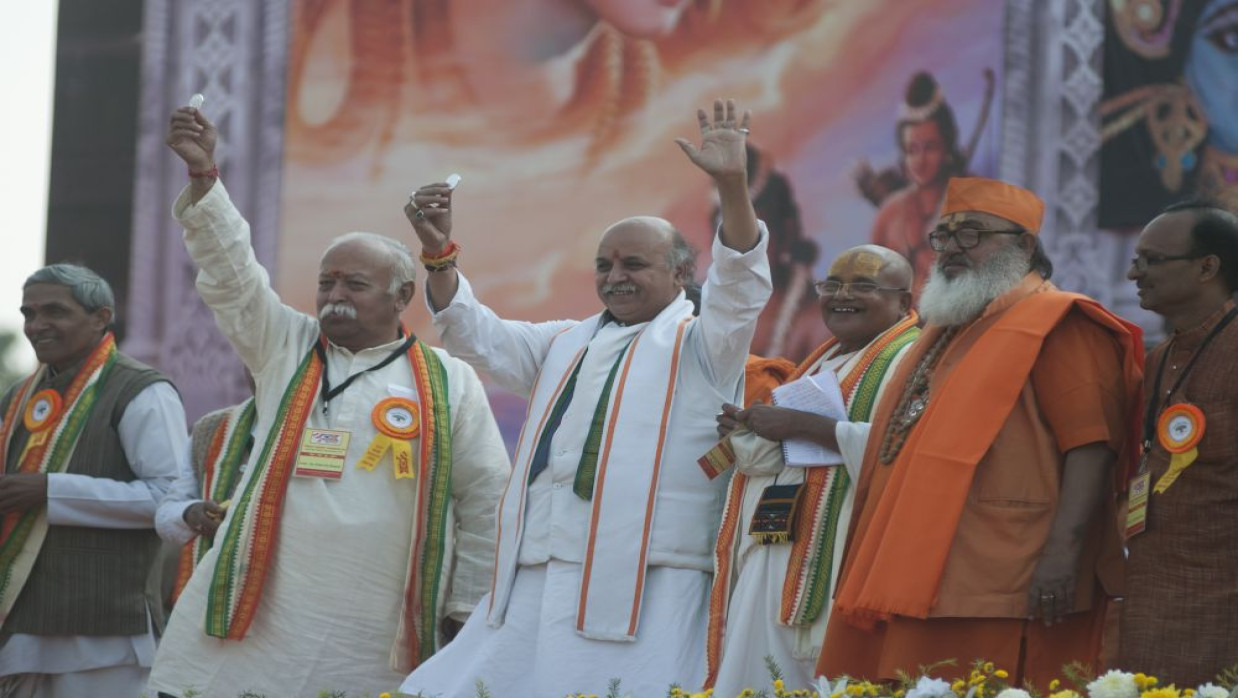
With the rise of the Bharatiya Janata Party in India, we have seen much more than just consecutive wins in general elections. What we have witnessed is an ideology taking over the minds of the Indian people. From politics to culture and identity, Hindutva has made its mark on almost every aspect of our day-to-day lives and on how our state deals with other religions in the country. The RSS plays a huge role in this movement.
Will we see this ideology diminish if we ever see the BJP lose power? This is a difficult question to answer. Parties can lose elections. Politicians can step down from their positions. But ideologies that have taken root in schools, organizations, political parties, and our minds will continue to thrive even after the BJP falls.
Since its inception in 1925, the RSS has amassed many followers who all share the goal of spreading Hindu Nationalism. This differs from our constitution, which was implemented when India gained independence in 1947. Although they try to portray themselves as trying to better our nation, they ultimately want to bring our many religions and cultures under one umbrella of Hinduism.
The BJP was created in 1980 as an outgrowth of the RSS. Although the two have disagreed at times, they remain close and will always share some political similarities.
This changed under Modi. Modi took office as Prime Minister in 2014. Under Modi, the BJP has been transformed. With Modi's unique personal charisma, the BJP has gone from a party reliant on mass organization and team leadership to becoming more of a one-man show.
This has effects beyond the BJP. Modi has been able to communicate with the masses. His campaign strategies and image have allowed him to speak directly to voters. At times, this has shifted focus away from the BJP and given more power to Modi and his inner circle.
However, Modi should not be confused with the RSS; the RSS has influence. The RSS is an organization that will outlive Modi. It has already outlived many political careers before Modi.
This matters when talking about elections and power. Any government can be voted out of office. However, people's thoughts and beliefs don't disappear just because of a vote.
In India, we saw this in the recent election. While the BJP still won the most seats in parliament and allowed Modi to stay on as Prime Minister, it did not win a majority on its own. This shows that elections matter and will continue to play a role. But people's thinking will remain.
Another area of concern is the freedom of democratic institutions. People who oppose the BJP and RSS have argued that too many like-minded people may be working within these institutions. From administrators to police officers and professors to some of our judges.
That changed with Modi. Modi came into power in 2014. Since then, the BJP has changed dramatically. Modi has brought about a change no other leader could. Because of his charismatic image, the BJP has become more of a one-person party.
This doesn't just affect the BJP. Modi can reach out to the masses. Through his campaigning and image, he can speak to the people. This can shift the focus from the BJP to Modi and those around him.
Modi should not be thought of without the RSS's influence. The RSS will be around long after Modi is done. It has survived many other political figures before him.
Keep this in mind when it comes to voting and power. People can always take down governments by voting them out. But people's thoughts will not be.
As seen recently in India's elections. Although the BJP came out on top with more seats than any other party and Modi will remain as Prime Minister, they did not get a majority. So, we can see that voting has an effect, but people's thoughts will continue to exist.
There are also concerns about our democratic institutions. Those who disagree with the BJP and RSS believe that there could be too many people with similar views. Administrators, police officers, professors, and even some judges.
It would still be conjectural to say that the RSS is just biding its time to take back over the BJP. Perhaps their aim is not to take over certain people but to create an ideology and system of thought that they can manipulate through others.
That is why we can't just rely on defeating the BJP at the polls to save Indian pluralism. We also need more activism from citizens, free thinking in education systems, transparency in government institutions, harmony between religions, and an active citizenry that embraces its status as citizens of India.
India has many things working in its favor on this issue. The country is diverse, with states that hold different political ideologies, many languages, and groups that have stood against Hindutva in the past.
At its core, this debate is about what kind of Republic we want to be. Will India become a Hindu state, or will it continue to believe that all religions are equal under our constitution?
Only time will tell if we can maintain these values as Indians, no matter what religion we may practice.
This further supports my points stated above. As of 2026, Freedom House classifies India as Partly Free, with a score of 62/100.


0 Comments
LEAVE A COMMENT
Your email address will not be published