

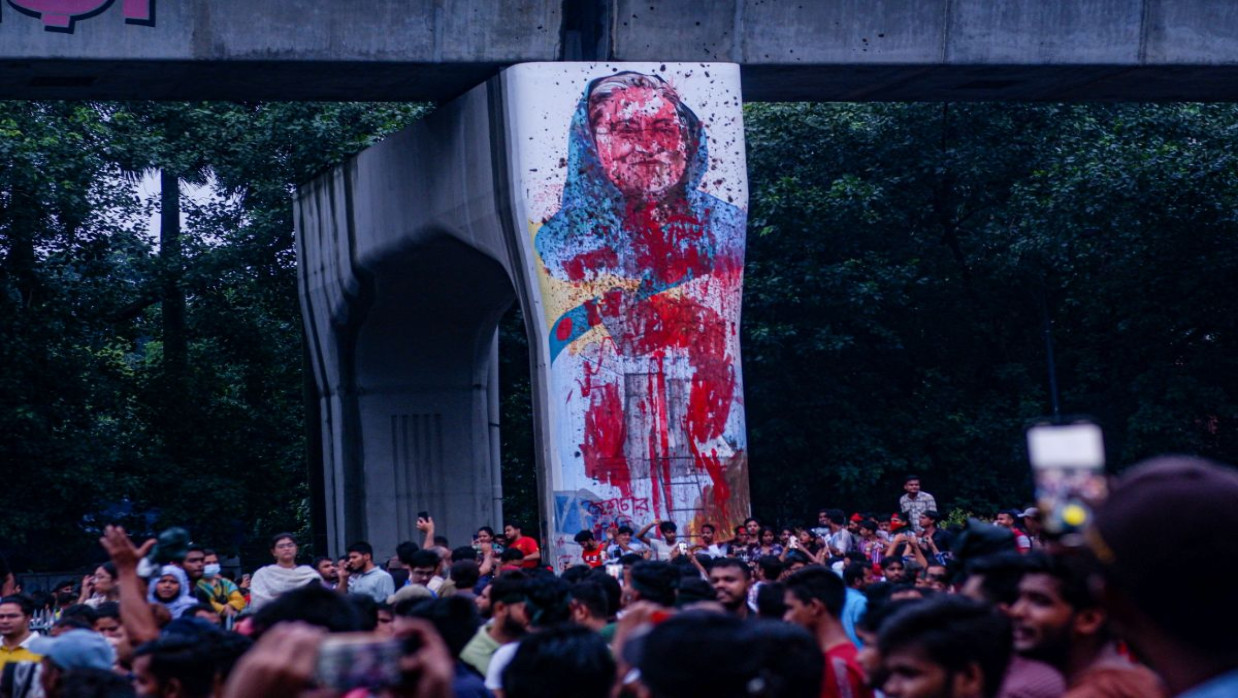
August 2024 will go down in history as the month that ended Sheikh Hasina's rule in Bangladesh. It is therefore remarkable that the Awami League, and many others associated with and supportive of them abroad, have been so active over the last 2+ years, seeking to restore as many of their leaders as possible to positions of prominence and authority, to question the mandate and authority of the present Government, and to seek to rewrite history regarding the events since July 2024. Activities of these groups in a wide variety of locations around the world, including New York, London and New Delhi, are starting to mirror the political battle being fought within Bangladesh.
There has been much criticism about the manner in which Prof. Yunus was harassed, in his wheelchair, on his way to catch a plane out of JFK. If reports of similar treatment meted out to an NCP leader in the UK are true, it is clear that some people are prepared to go to extreme lengths to further their political campaigns related to Bangladesh.
Many media houses in India (the favorite term to describe them by dissidents being "Godi" media) have given extensive airtime to pro-Hasina views, much of it very critical, if not denigratory, of authorities and individuals in Bangladesh since 2024. All governments can and should expect to be criticized, but there are limits, and deliberate misinformation with obvious political agendas, and seeking to depict all of Bangladesh as ungovernable at all times, should be challenged.
Various incidents of murder with apparent political motives, setting fire to buildings, other acts of wanton destruction, and targeting of some Grameen Bank centers have all caused considerable alarm amongst many people. It is very difficult to see how any attack on the Grameen Bank can be justified in any circumstances, given its laudable aims of improving the standard of living for poor and underprivileged sections of the population. In the end, it is the poorest and most deprived, largely women living in remote areas of the country, who would suffer any adverse consequences.
It is not surprising, therefore, that many people have called for the Awami League to be declared a terrorist organization. Depending, of course, on the outcome of proper investigations, following due process of law, and with appropriate and reliable evidence against individuals, particularly senior members and office-bearers of that party, this may well be warranted. However, it would be wrong to seek to implicate all members and sympathizers of the party. It is important for all concerned in present-day Bangladesh to show that the country can move forward on an entirely different basis from the abuses which took place previously.
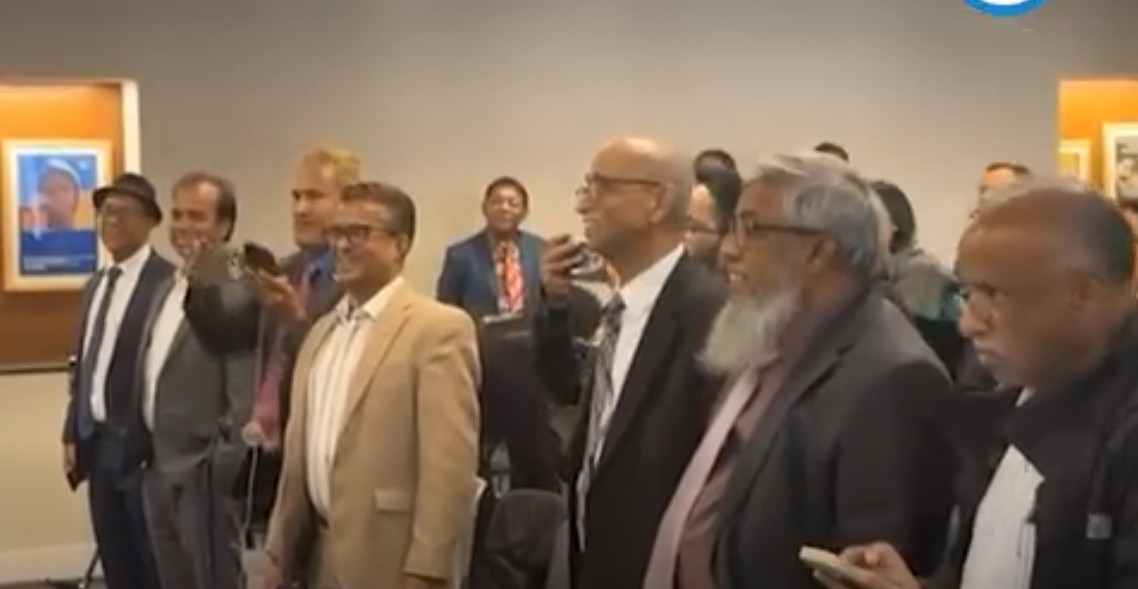
In this context, it is somewhat ironic to see an event being held on 24 November 2026, at 777 UN Plaza, New York, by the International Center for Democracy, Human Rights and Sustainability, apparently associated with various Awami League members and sympathizers. Appropriate rhetoric about supporting all aspects of democracy, human rights, wide participation, and the rule of law featured prominently, with Sheikh Hasina as the Chief Guest (by video link).
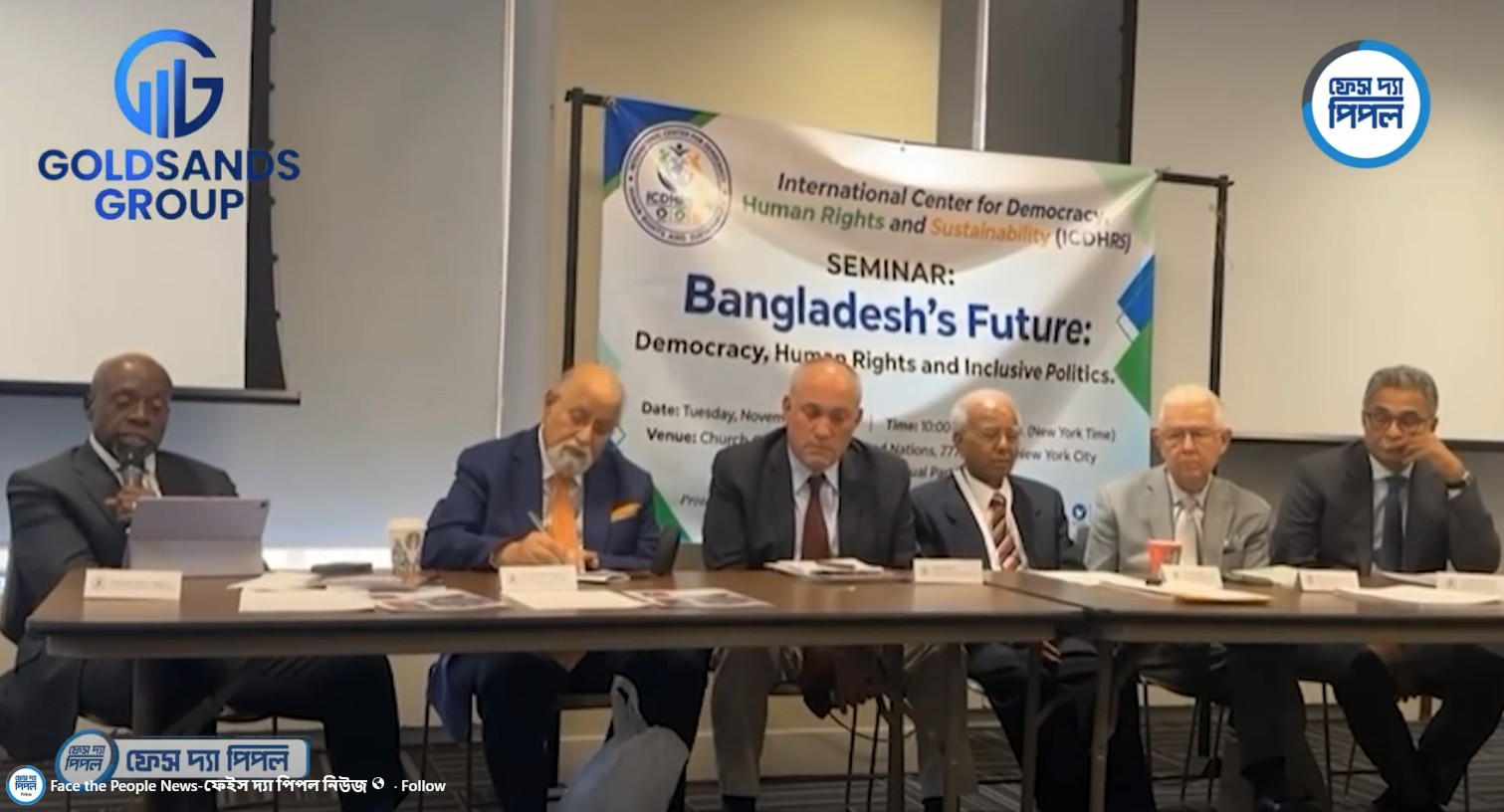
Among those reportedly associated with the gathering was former Bangladesh Foreign Minister A.K. Abdul Momen, whose renewed involvement in Awami League political activities attracted attention.
The location was particularly significant. The Church Center for the United Nations, located across from the United Nations headquarters, is an independently operated facility that offers conference rooms for private gatherings. Holding an event there does not constitute United Nations sponsorship, recognition, or endorsement. Renting a conference room overlooking the United Nations confers about as much diplomatic legitimacy as booking a hotel overlooking the White House confers American presidential approval.
In addition, the organizers invited US ex-Ambassador to Bangladesh Harry K. Thomas Jr., who might have been expected to lend the event some international respectability. Judging from reports of his speech, this was far from the message he chose to convey.
He not only paid tribute to his love of the country and its people over many years, but also wished the Tarique Rahman government success and urged that a strong opposition, or oppositions, grow. He acknowledged the result of the February 2026 general election, including BNP winning about two-thirds of all parliamentary seats, and the desirability of peaceful changes of government at the polls.
These were significant statements to be made in the presence of, and to, Sheikh Hasina.
He referred to the large number of casualties which the UN Office of the Human Rights Commissioner had thought could be as many as 1,400, who died as a result of events in July 2024, a considerable number at the hands of the forces of law and order. He paid tribute to one student, Abu Sayed, fatally injured in Rangpur, and a little girl of about six killed in Narayanganj, and also to members of the police and other law and order forces, whose deaths he felt should also be remembered.
It was an implicit exhortation not to lose sight of all those who had laid down their lives to make this change to democratic rule possible.
Naturally, he was not prepared to give an unqualified endorsement to current government policies, drawing attention to detentions, respect for fundamental human rights, due process of law and other matters under the Constitution. The Government ought to weigh all these matters carefully. There would be little hope of achieving a stable democratic system if it followed many of the practices of the previous regime.
Thomas also highlighted Bangladesh’s ongoing engagement with the United States, including economic cooperation, investment opportunities, labor reforms, energy cooperation, and diplomatic initiatives on the country’s graduation from least-developed-country status. His observations challenged the narrative that Bangladesh has become internationally isolated following Hasina’s departure.
It would be difficult to take seriously any attempt by the Awami League to lobby internationally for greater safeguards. After more than 15 years in power at home, it is hard to see how they could approach the world community on this issue, given the charges of rigging elections, abductions, detention, persecution of opponents and other forms of violence.
That there may be elements within the party hoping for Sheikh Hasina to come back as early as 16 December (Victory Day) is indicative of the political tensions. Of course, this is pure conjecture at this stage. If she did return to Bangladesh, she would presumably be liable to answer for offenses under the various International Crimes Tribunal judgments, in due course of law.
Ironically, the tribunal was established under Hasina’s own administration and was used to prosecute and execute several prominent opposition figures. Nevertheless, the administration of justice must remain independent of political vengeance. Any punishment, appeal, or review must follow the applicable law and internationally recognized standards of due process.
The Awami League’s supporters have every right to organize peaceful political gatherings abroad, express their grievances, and challenge the policies of Bangladesh’s current government. They do not, however, possess the right to intimidate political opponents, engage in violence, or misrepresent privately organized gatherings as internationally sanctioned diplomatic events.
The November 24 gathering in New York demonstrates the limitations of political public relations. International legitimacy cannot be purchased through conference room rentals, cultivated through sympathetic media coverage, or manufactured by association with distinguished diplomats. It must be earned through accountability, democratic conduct and an honest examination of the past.
Bangladesh's destiny should not be at the mercy of individual politicians or political families. All areas of government, in particular the courts, should be strengthened to work effectively for all Bangladeshis; all minorities should be protected, and all people should be free to engage in political and other activities.
It would be right for the Awami League to start the rehabilitation process by recognizing the grounds on which large numbers of their supporters and others rejected them, and by accepting the extent of their culpability. The current Government will need to avoid slipping into blanket condemnation of others and further authoritarian rule.
Organizers would have liked to borrow some UN glitter and the standing of an ex-US Ambassador. Instead, they found an appropriate tribute to those lost in July 2024, acknowledgment of the lawfully constituted authorities, and exhortations to pursue accountability.
None would be adequate without proper accountability at home.


0 Comments
LEAVE A COMMENT
Your email address will not be published