

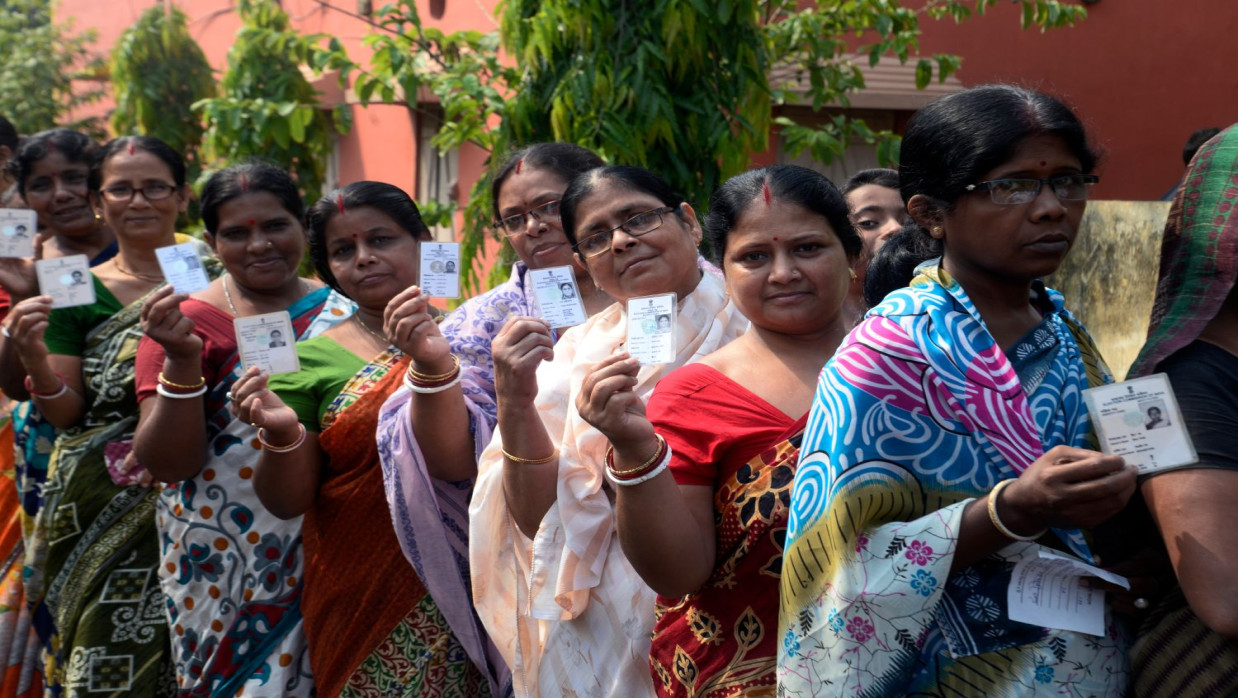
Decisions of great import for a democracy begin to be made even before the first vote is cast. Who appears on the electoral register? Who will get his papers verified? And who must explain his absence? Questioning these decisions turns what might have been an administrative task into a matter of national legitimacy. India faces this threat now. According to Reuters, some 130 million names have been deleted from electoral registers through the process called the Special Intensive Revision, or SIR, which started last year. The Election Commission’s numbers include names listed as dead, moved away, or untraced. This situation calls for closer scrutiny, but it also demands greater precision because 130 million deletions do not necessarily mean 130 million legitimate citizens were wrongfully disenfranchised. The critical issue is how many legitimate voters got left out and under what procedure. This makes it all the more important for accountability to be sought. Electoral rolls must be accurate. They must also be protected against administrative errors, discriminatory objections, or interference by political parties.
Why the Anger Has Reached the Streets
The issue has moved beyond press releases and protests. Youth movements and political parties alike have rallied around concerns that elections are being used to exclude political opponents. The Associated Press said opposition leaders walked to the Supreme Court on October 12 to seek action on the revisions and the appointment of Chief Election Commissioner Gyanesh Kumar. police crackdowns and large numbers of arrests have escalated the situation. apnews.com
Those caught in the situation cannot be guaranteed anything beyond concern for their immediate future. According to The Guardian, Shahida Fakir, a citizen of India, claims that she provided proof of her Indian citizenship, got her electoral registration canceled, and was expelled to Bangladesh from there. She represents the dire consequences when a dispute over voter qualifications becomes tied to immigration. These cases should be independently investigated. A missing name doesn’t just mean a lost vote. The Election Commission has refuted any charges of political bias and has assured that people who have been wrongly disenfranchised can re-register themselves. Similarly, the BJP has also refuted any charge of manipulation. This needs to be included in any balanced discussion. However, the mere option to register again doesn’t guarantee a fair process or access for all voters.
Understanding the Political Incentives
Why could it be advantageous for the ruling party if minorities are excluded from voting? The political theory suggests reasons for such incentives. Without proof, it is impossible to determine the motives behind each specific exclusion. The first reason is electoral calculus. With a small change in voter turnout in a very tight constituency, the election outcome may differ. If many exclusions are made in error, especially among groups that tend to vote for the opposition, the government gains an advantage without convincing more people. This means it is necessary to analyze the constituency's demographics and the people who have been disqualified.
The second explanation is majoritarian nationalism. A constitutional democracy grants citizens equal political standing regardless of religious or cultural differences. A majoritarian understanding of nationhood can weaken that equality by treating some communities as more naturally representative of the nation than others. Whereas minority groups continue to be linked to illegal immigration, a document-checking process may assume additional political dimensions beyond accuracy of identification. Authorities and private actors may start seeing identity as suspicious, and citizenship as something individuals must constantly prove. Third, red tape can exclude people. Although these policies may be neutral, they can have unequal impacts. For example, an employer-owner with all documents in his possession will comply faster than a migrant, an elderly person, or a woman with papers under a different name or address.
Thus, exclusion may occur in procedures that are equally available to everyone but feasible for only a few people. Both intentional discrimination and discriminatory effects are relevant.
Finally, democratic erosion offers another explanation for why election administration should be considered separately from voting. Changes in appointments, control, access, and enforcement can create unequal political competition, even when elections continue. These frameworks help understand the risks to be investigated. They must never replace the investigation itself.
Why Remaining in Power Matters
Like other parties, the BJP seeks office to implement its program, reward public confidence, and shape national policy. Seeking repeated electoral victories is legitimate. Incumbency lets parties influence appointees, institutions, budgets, and how political debate is framed. Parties with an ideological agenda can leverage multiple elections to further cement it. The question is whether they do it through fair competition. A mandate gives authority to run the government for a specified period but does not authorize changes to political participation.
Uncertainties related to the elections of 2024 in India have been highlighted in the following points. The BJP won only 240 seats in parliament, fell short of the 272-seat majority, and thus Modi's re-election depended on cooperation.
The Demands and Their Democratic Merits
The supplied opposition-demand document identifies six principal proposals. These should be presented as demands described in the material, rather than assumed to constitute a single verified platform endorsed by every participating organization.
|
Demand in the supplied material |
Democratic issue requiring attention |
|
Resignation of Chief Election Commissioner Gyanesh Kumar |
Accountability for alleged misconduct and loss of institutional confidence, assessed through evidence and applicable constitutional procedures. |
|
Suspension or rollback of SIR |
Whether disputed procedures should continue before their effects on eligible voters are independently assessed. |
|
Restoration of earlier electoral rolls |
How to restore wrongly excluded voters while correcting verified deaths, duplicates, and other genuine inaccuracies. |
|
An independent inquiry |
Access to decision records, internal objections, deletion grounds, and evidence of unequal treatment. |
|
A return to paper ballots |
Public confidence in voting technology, counting procedures, and independently verifiable results. |
|
Transparent reform of appointments |
Whether the selection process adequately protects commissioners’ independence. |
Each proposal deals with a separate problem. Changing the voting machines will not bring back an eligible voter who is left out of the list. Similarly, correcting the earlier list without evaluating other errors will not fix them. A strong agenda to consider immediately includes clear deletion records, an appeals process, error evaluation, and restoring eligible voters in time to vote.
The appointments should also be considered very carefully. In the new 2023 system, the committee is appointed by the prime minister, a Union Cabinet minister, and the opposition leader of the Lok Sabha. The committee has two government members and one opposition member.
How the World Sees Indian Democracy
No single evaluation in the international arena can describe the nature of Indian democracy. Many countries, businesses, academics, media professionals, and human rights organizations measure India through different means. However, certain evaluations raise doubts about India's democracy. According to Freedom House's 2026 report, India is “Partly Free,” with a rating of 62 out of 100. In the same year, V-Dem's report categorizes India as an autocracy. Moreover, India's claim to democracy depends on its ability to let people protest, question, participate in elections, and seek remedies. Protests show that expectations for accountability persist among India's people. Depending on how authorities respond, this energy can either reaffirm belief in institutions or further alienate people from them. Peaceful protests highlight the issues that the institutional system ignores. Turning them into security issues complicates their resolution.
The Republic Must Account for Every Eligible Voter
What India faces is not just whether an administrative function has been badly handled. It goes to the heart of the connection between citizenship and politics. It should be in a position to justify itself, follow conventions, rectify its errors, and be subjected to adequate scrutiny. On the other side, the opposition needs to substantiate its claims and propose solutions for conducting fair elections. All citizens who are entitled must have a clear path to the polls. No one must be denied that right due to being poor and thus unable to present necessary documents, due to being a migrant and therefore uncertain about their address, or due to having a religion that provokes suspicion. This will determine the democratic credentials of the country at stake. The country keeps its promise only when all eligible citizens can walk into the polling station knowing their equal status in the country has been acknowledged.
Gujral’s Warning: Protect the Vote, Preserve the Republic
According to I. K. Gujral, “India would be jeopardizing its unity and integrity by trying to fit its composite population in the mould of uniformity.” Gujral’s warning is even more pertinent today; a country unified through equal citizenship undermines itself when religion becomes the criterion for belonging or administrative processes become obstacles to political participation. Thus, safeguarding minorities is crucial to the survival of the republican democratic regime.
India must deal with the electoral dispute through investigations, oversight, and quick restoration of every voter who is wrongfully disenfranchised. It is crucial that Muslims, Christians, Dalits, Adivasis, and other groups receive the same level of safety, respect, and representation in politics as any other citizen. No electoral majority can legitimize a government that undermines those safeguards.
As President Lyndon B. Johnson declared, “In our system the first and most vital of all our rights is the right to vote.” That principle reaches beyond America: without an effective vote, citizens lose their strongest peaceful means of defending every other right. Gujral's warning should be seen as a call for constitutional awareness. India's strength lies in its ability to sustain diversity, hear dissenting voices, and keep the government accountable to its citizens. Making sure that every citizen votes and protecting minorities will make sure India belongs to all Indians.


0 Comments
LEAVE A COMMENT
Your email address will not be published