

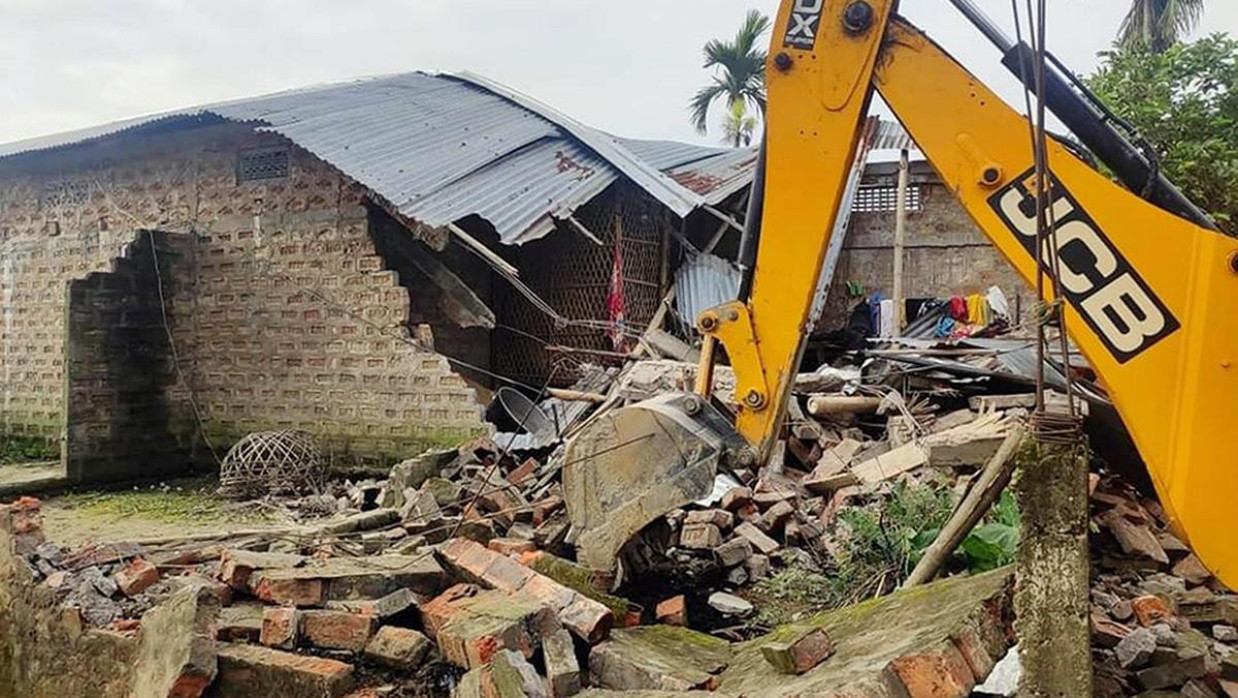
The demolition of 73 homes in Assam’s Goalpara district has brought an old question back into India’s public debate: where does administrative authority end and due process begin? On September 7, 2026, the Goalpara district administration carried out an eviction drive in the Krishnai area, demolishing homes across several villages under the Matia Revenue Circle. The administration justified the action on the grounds that residential structures had been constructed on land classified for agricultural use without the required change in land-use status. Yet the manner in which the operation was conducted has generated questions that extend well beyond land regulation.
The administration’s position deserves consideration. According to officials, the affected families had purchased the land but had constructed houses without obtaining the necessary permission to convert agricultural land for residential purposes. Officials also argued that some structures affected agricultural activity and natural drainage. From this perspective, the issue was one of enforcing land-use regulations and protecting agricultural land rather than targeting any particular community.
But legality cannot be examined only through the existence of a regulatory violation. The procedure through which the law is enforced matters equally. Reports indicate that residents were given only 24 hours to vacate and dismantle their homes before the demolition operation began. For families who had reportedly lived on the land for years, such a short period raises obvious questions about their ability to challenge the decision, obtain legal assistance, safeguard their belongings or seek alternative accommodation.
The issue became more significant when the Gauhati High Court examined the matter. In proceedings concerning the demolitions, the court questioned the urgency behind the administration’s action and raised concerns about whether the affected residents had been provided an adequate opportunity to respond. Subsequent reporting on the proceedings described the court as finding the demolition prima facie unauthorised and questioning compliance with principles of natural justice. This distinction is important. A government may possess legitimate authority to regulate land use, remove illegal structures and protect public resources. However, administrative power is not synonymous with unrestricted discretion. Due process requires that the state demonstrate not only what rule has been violated, but also that the affected person has been given a meaningful opportunity to contest the action.
The Goalpara case is particularly sensitive because the demolished homes reportedly belonged to Muslim families. Residents have disputed the characterization of their properties as simple encroachments and have stated that they possessed land documents. Some reports also say that affected residents had moved into the area after losing property to river erosion. These claims require independent verification on a case-by-case basis, but they illustrate why blanket descriptions of “illegal occupants” can obscure complicated questions of ownership, land classification and displacement.
There is consequently a broader institutional question: are land laws being applied through predictable legal procedures, or is demolition becoming the first instrument of enforcement? The distinction matters because a bulldozer has consequences that a notice, penalty or administrative proceeding does not. Once a home has been destroyed, a later legal remedy cannot fully restore the security, possessions and social stability that were lost.
India’s constitutional framework places significant emphasis on equality before law and procedural fairness. That principle becomes particularly important where administrative decisions affect vulnerable communities. If a structure violates land-use regulations, the state should be able to enforce the law. But enforcement should remain proportionate, transparent and subject to meaningful judicial and administrative review. The same standards should apply regardless of the religion, ethnicity, political affiliation or social status of those affected.
The controversy also illustrates the danger of allowing legitimate land-management objectives to become entangled with communal perceptions. Assam has longstanding debates surrounding land, migration, demographic change and settlement. In such an environment, complaints alleging that outsiders have acquired land can acquire political significance very quickly. Reports indicate that the Goalpara operation followed complaints concerning alleged unauthorised settlement and land occupation. That context makes impartial application of the law even more important, not less.
The fundamental issue, therefore, is not whether governments should enforce land laws. They should. Nor is it whether agricultural land should be protected. It should. The real question is how those objectives are pursued. A state demonstrates its institutional strength not simply by possessing the capacity to demolish a structure, but by demonstrating that such power is exercised according to law, after adequate notice, through proportionate procedures and with avenues for meaningful appeal. In Goalpara, the dispute has moved beyond land classification to the credibility of that process itself.


0 Comments
LEAVE A COMMENT
Your email address will not be published